
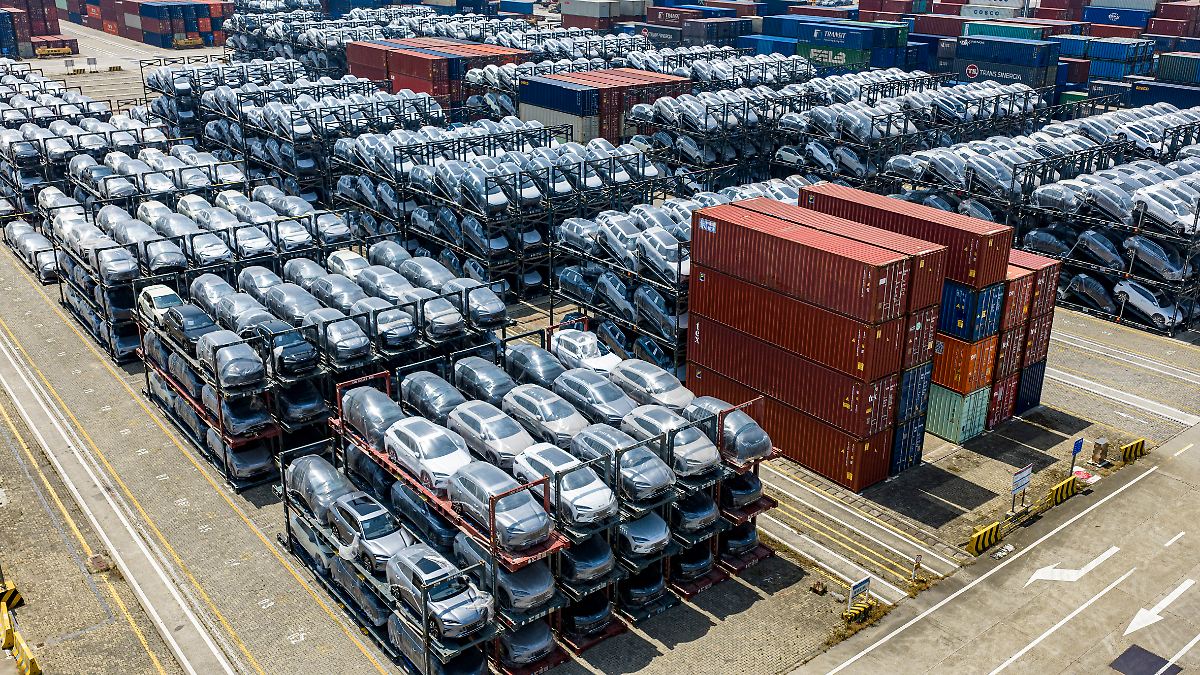
For the first time in its industrial history, China has reached a pivotal turning point in its automotive strategy. In April 2026, the nation exported more electric and plug-in hybrid vehicles than traditional gas or diesel-powered cars, signaling a fundamental shift in the global automotive trade landscape.
This milestone comes as Chinese automakers aggressively pivot toward international markets to offset a cooling domestic environment. While the surge in China EV exports reflects a technological leap, it also reveals a growing tension between global demand and geopolitical barriers, particularly as the United States maintains strict trade protections.
The shift is driven by a combination of weakening internal demand and a strategic push to capture market share in regions where trade barriers are lower. As the world’s largest manufacturer of electric vehicles, China is now redirecting its massive production capacity toward Europe and Latin America, effectively bypassing a locked American market.
A Historic Shift in Export Volumes
According to data from the China Passenger Car Association, New Energy Vehicles (NEVs)—which include both battery-electric and plug-in hybrid models—accounted for 52.7% of China’s total auto exports in April. Out of a total of 769,000 vehicles exported during the month, NEVs represented 406,000 units. This figure marks a significant increase, as NEV exports more than doubled compared to the same period a year earlier per industry reports.
This transition to EV-dominant exports occurs against a backdrop of rising oil prices, which have accelerated the global shift away from internal combustion engine (ICE) vehicles. However, the aggressive expansion overseas is not merely a sign of strength; We see a necessary response to a struggling home market.
Inside China, the automotive sector is facing a challenging period. Passenger car retail sales fell 21.5% year-over-year in April, dropping to 1.38 million units. This followed a further 16% decline from March. Even the highly sought-after NEVs were not immune to this domestic slump, with retail sales of electric and plug-in hybrid cars within China falling 6.8% to 849,000 units in April according to the China Passenger Car Association.
BYD’s Global Ascent
Among the players driving this export surge, BYD has emerged as a dominant force. The company reported record overseas sales in April, moving 134,500 passenger cars and pickups—a 70.9% increase year-over-year. This expansion is now a core part of the company’s business model, with overseas volume accounting for more than 40% of BYD’s total monthly sales as reported by CBT News.

BYD’s trajectory has already rewritten the industry hierarchy. In 2025, the company surpassed Tesla to become the world’s largest electric-vehicle maker by volume. This shift underscores the scale at which Chinese manufacturers are now operating, leveraging vertically integrated supply chains to produce vehicles at a volume and price point that challenges established Western legacy automakers.
Tariffs and the Geopolitical Map
Despite the record-breaking export numbers, the American market remains almost entirely closed to Chinese EVs. Since 2024, a 100% tariff on Chinese-made electric vehicles has effectively blocked these cars from American showrooms, a move supported by both the U.S. Congress and domestic automakers seeking to protect the local industry from low-cost competition per trade data.
This trade wall has forced Chinese manufacturers to seek alternative destinations. Europe and Latin America have become the primary absorbers of the vehicles that cannot enter the U.S. Market. This redirection is creating new economic dependencies and shifting the competitive dynamics in those regions, where Chinese brands are often able to undercut local competitors on price.
The future of this trade dynamic may hinge on upcoming diplomatic engagements. President Trump is scheduled to meet with Chinese leader Xi Jinping in Beijing this week. The global auto industry is watching these talks closely, as any shift in trade negotiations could potentially reopen the U.S. Market or, conversely, lead to further restrictions that would push Chinese EVs even more aggressively into other global markets.
Key Export and Sales Data (April 2026)
| Metric | Value / Percentage | Trend |
|---|---|---|
| NEV Share of Total Exports | 52.7% | First time over 50% |
| Total Auto Exports | 769,000 units | Mixed |
| NEV Export Volume | 406,000 units | More than doubled YoY |
| Domestic Retail Sales | 1.38 million units | Down 21.5% YoY |
| BYD Overseas Sales | 134,500 units | Up 70.9% YoY |
As the Beijing summit unfolds, the automotive world remains in a state of flux. The ability of China to maintain its export momentum in the face of varying international tariffs will determine whether its domestic EV surplus becomes a global windfall or a strategic liability.

The next critical checkpoint for the industry will be the official readout from the Trump-Xi summit in Beijing, which may signal changes to current trade tariffs or the establishment of new trade frameworks for the automotive sector.
Do you believe high tariffs are an effective way to protect domestic industries, or do they simply push global competition into other markets? Share your thoughts in the comments below.