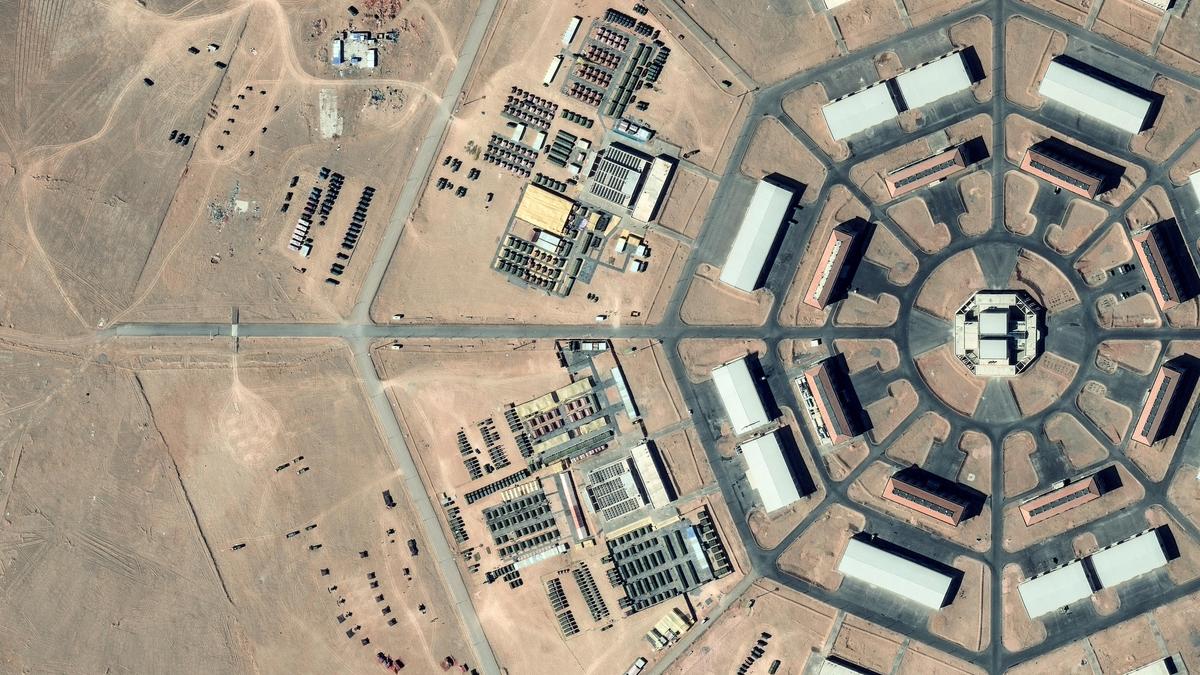
As the global security architecture continues to shift, international observers are closely monitoring reports that China is building launch pads near its nuclear missile silos. These developments, analyzed through satellite imagery, suggest a strategic evolution in the People’s Liberation Army (PLA) Rocket Force’s operational capabilities. For those of us tracking the modernization of nuclear arsenals, these findings are not merely technical observations but significant indicators of how Beijing is recalibrating its deterrence posture in an increasingly multipolar world.
The identification of these structures follows broader concerns expressed by international security analysts regarding the expansion of China’s nuclear infrastructure. While the exact number of operational units remains a subject of rigorous study, researchers from institutions like the Federation of American Scientists have documented the construction of hundreds of new missile silos across remote regions, signaling a departure from the country’s historical “minimum deterrence” strategy. Understanding the intent behind these pads—which may support mobile launchers and air-defense batteries—is essential for grasping the current trajectory of global nuclear stability.
The Strategic Significance of Mobile Launch Capabilities
The core of the recent discussion centers on the utility of hardened launch pads in proximity to silo fields. Unlike fixed silos, which are easily targeted once their coordinates are known, mobile launchers offer a “shoot-and-scoot” capability, significantly enhancing the survivability of a nuclear deterrent during a potential conflict. By integrating these pads into existing infrastructure, the PLA Rocket Force can effectively increase the unpredictability of its movements, complicating the targeting calculus for any adversary.
According to the 2023 Department of Defense report on Military and Security Developments Involving the People’s Republic of China, Beijing is on track to possess at least 1,000 operational nuclear warheads by 2030. This rapid expansion is supported by a sophisticated industrial base and a clear political mandate to modernize all branches of the military. The construction of these pads is widely viewed as a logistical necessity to support this growing inventory, ensuring that the fleet remains mobile and protected against preemptive strikes.
Analyzing the Scale and Deployment
The observation of more than 80 potential pads raises questions about the specific tactical role these sites play. Analysts suggest that these sites provide the necessary hardened surfaces for heavy, transporter-erector-launchers (TELs) to operate in challenging terrain. The integration of air-defense batteries at these locations further implies a layered defense strategy, designed to protect the missile assets from both conventional air strikes and surveillance overflights.
Transparency remains a significant hurdle. China has historically maintained a high degree of secrecy regarding its nuclear doctrine and arsenal size, often citing the need for strategic ambiguity. However, as independent researchers utilize commercial satellite imagery to map these developments, the gap between official statements and observed infrastructure continues to widen. The Stockholm International Peace Research Institute (SIPRI) has noted that China is one of several nuclear-armed states currently modernizing its arsenal, though it remains behind the United States and Russia in terms of total warhead count.
Key Factors in Modernization
- Survivability: The shift toward mobile launchers reduces vulnerability to a first-strike scenario.
- Infrastructure: The construction of roads, support facilities, and launch pads indicates a long-term commitment to a larger, more dispersed force.
- Deterrence: Beijing’s stated goal of “world-class military” status by 2049 includes a credible nuclear triad capable of responding to evolving regional and global threats.
The Global Implications of Nuclear Expansion
What happens next in this space depends heavily on diplomatic engagement and the willingness of major powers to participate in arms control frameworks. Currently, China has declined to join the New START-style agreements that govern the nuclear relationship between Washington and Moscow, arguing that its arsenal is significantly smaller than those of the two superpowers. However, as the gap closes, the international community is increasingly calling for greater transparency.

The potential for miscalculation is a primary concern for policymakers. In the absence of direct communication channels regarding nuclear posture, the interpretation of satellite data by intelligence agencies can lead to heightened tensions. For the global audience, the question is whether these developments will lead to a new arms race or if they will serve as a catalyst for a new generation of multilateral security dialogues.
As we monitor these developments, the next critical checkpoint will be the release of subsequent defense white papers from the Chinese Ministry of National Defense, which may provide more insight into the modernization timeline. The international community awaits the next round of UN-sponsored discussions on disarmament and non-proliferation, where the expansion of nuclear forces is expected to be a central topic of debate.
What are your thoughts on the shifting nuclear landscape? Does the expansion of these launch capabilities change your perspective on global security? Share your insights in the comments section below or join the conversation on our social media platforms.
- Apple CEO Transition: John Ternus Faces Supply Constraints & AI Challenges
- Côte d’Ivoire Selects 30 Startups and SMEs Under Startup Act to Build Digital Champions
- Ghost Fleet Tankers Build Up Off Pakistan Coast (news-usa.today)
- China’s AI Sector Challenges US Rivals With High-Performance Models (archyworldys.com)