
Global manufacturing is currently navigating a volatile transition as multinational corporations attempt to balance their operational needs with escalating geopolitical risks. While the trend of moving supply chains from China has accelerated, new evidence suggests that the People’s Republic of China (PRC) is employing a combination of inducements and coercive force to ensure that core inputs, intellectual property and talent remain within its borders.
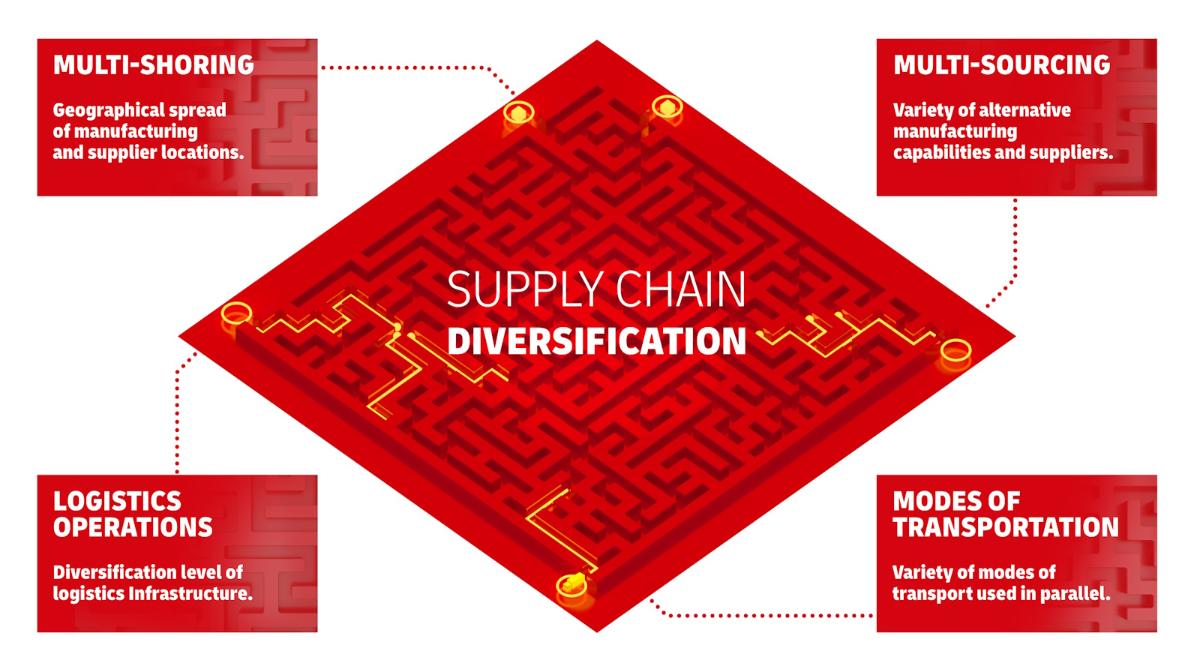
For many firms, the goal is not a total exit but a strategic diversification known as the “China-Plus-One” strategy. This supply chain management approach allows a company to retain substantial production capacity in China—leveraging the country’s massive manufacturing ecosystem—while simultaneously establishing production in at least one other country to mitigate risk. However, this hybrid model often leaves internal value chains anchored in China, providing the PRC with significant leverage over international interests.
The shift toward diversification is driven by a cocktail of regulatory hurdles, competition risks, and statecraft concerns. In the United States, this movement is further incentivized by government pressure, tariffs, and specific reshoring incentives designed to bring advanced manufacturing back to American soil. Yet, analysts warn that focusing solely on capital expenditure and job creation may overlook the lingering vulnerabilities created by deep-seated value-chain dependencies.
The Mechanics of the China-Plus-One Strategy
The “China-Plus-One” or “China-Plus-Many” framework is designed to reduce the systemic risk associated with over-reliance on a single geography. By maintaining a footprint in China while expanding elsewhere, multinationals hope to protect themselves against sudden disruptions, whether caused by pandemics, trade wars, or political instability. According to a report published on February 23, 2026, by the Information Technology and Innovation Foundation (ITIF), many advanced manufacturers in East Asia are indeed expanding investment into the U.S. Economy as part of this risk-reduction effort.
Despite these shifts, the reality of “decoupling” is often more complex than it appears on a balance sheet. While a company may open a new factory in the U.S. Or Vietnam, the “internal value chain”—the flow of components, specialized tools, and proprietary knowledge—often remains dependent on Chinese suppliers. This dependency creates a strategic bottleneck, allowing the PRC to maintain influence over the global production of high-tech goods even as the final assembly moves elsewhere.
PRC Leverage and the Cost of Diversification
The PRC has not remained passive as firms seek to diversify. The government has adopted a dual-track approach: offering inducements to preserve firms invested while utilizing coercive force to prevent the flight of critical intellectual property (IP) and talent. This strategy is specifically aimed at maintaining China’s lead in core inputs that are hard to replicate elsewhere.

This resistance to supply chain migration is supported by China’s massive investment in its own domestic capabilities. The country’s manufacturing advantage has evolved from a reliance on low labor costs to a sophisticated manufacturing ecosystem powered by research and development. For instance, data indicates that China’s total R&D spending reached USD 660 billion in 2021, making it second only to the United States at that time, according to a January 2024 analysis by MSCI.
Given that of this deep integration, some industries—particularly those that are resource-intensive or highly innovative—may find it harder to shift away from China than others. The sheer scale of the existing ecosystem makes the cost of complete independence prohibitively high for many multinational firms.
Reshoring, Friendshoring, and the U.S. Response
In response to these vulnerabilities, the U.S. Has prioritized industrial policies that encourage reshoring (bringing production back to the home country) and “friendshoring” (shifting production to geopolitical allies). These efforts are intended to secure critical supply chains and reduce the leverage the PRC can wield during diplomatic or economic disputes.
However, there is a growing critique that U.S. Policymakers are measuring success through the wrong metrics. By focusing on the amount of inbound investment and the number of jobs created, the U.S. May be ignoring the degree of actual supply-chain independence. If a new factory in the U.S. Still relies on Chinese-made core components, the strategic vulnerability remains. Experts suggest that the success of inbound investment should instead be measured by the degree of independence from China in potential decoupling scenarios.
Key Supply Chain Shifts at a Glance
| Strategy | Primary Objective | Key Driver |
|---|---|---|
| China-Plus-One | Risk mitigation while maintaining China access | Geopolitical uncertainty & regulatory risk |
| Reshoring | Bringing production back to the home country | National security & domestic incentives |
| Friendshoring | Moving production to allied nations | Political alignment & trust |
| Nearshoring | Moving production closer to the end market | Logistics efficiency & reduced lead times |
Strategic Archetypes: Producing ‘In China for China’
Not all firms are attempting to leave. Some have adopted a strategy of producing “in China for China.” This archetype involves creating a localized supply chain where products sold in the Chinese market are manufactured using Chinese components and labor. According to McKinsey & Company, this approach can mitigate supplier concentration risks and allow multinationals to benefit from the capabilities of cost-effective emerging players within China, while insulating their global operations from local disruptions.
This “local-for-local” model effectively separates the Chinese operation from the rest of the global value chain. While it allows firms to continue accessing the massive Chinese consumer market, it also acknowledges that the risks associated with integrated global supply chains have become too high to manage under a single, centralized model.
What Which means for the Global Economy
The struggle over supply chain control is more than a corporate logistics issue; it is a central feature of modern economic statecraft. The transition away from “just-in-time” logistics toward “just-in-case” resilience is fundamentally changing how companies value efficiency versus security.
For investors and policymakers, the critical question is no longer just where a product is assembled, but where the components originate. As the PRC continues to use its manufacturing ecosystem as a tool of leverage, the true measure of supply chain resilience will be the ability of firms to find or create viable alternatives for the core inputs that currently keep them anchored to China.
The next critical checkpoint for these developments will be the continued rollout of U.S. Industrial policy financial tools and the PRC’s subsequent regulatory responses to inbound and outbound investment flows.
World Today Journal encourages readers to share their perspectives on global supply chain shifts in the comments below.