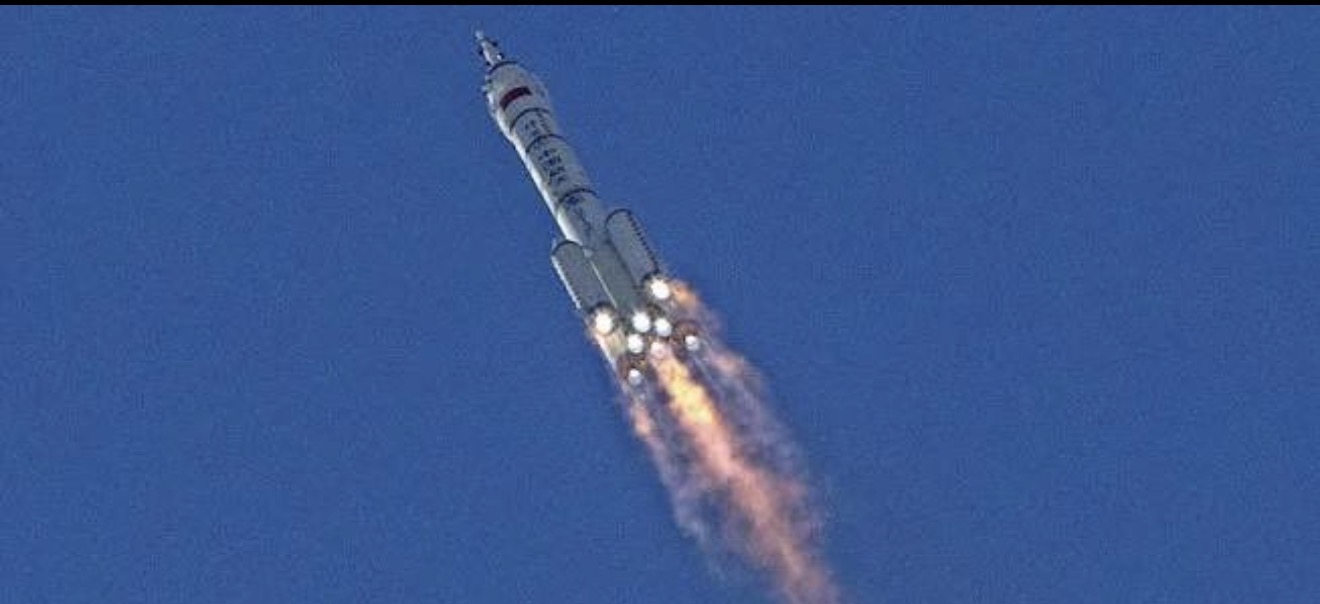
## China’s Shenzhou-21 Mission: A New Generation Takes Flight to Tiangong
Teh future of China’s space program is launching on Friday, October 31st, 2025, with the Shenzhou-21 mission. This isn’t just another crew rotation to the Tiangong space station; it marks a significant step forward, featuring the nation’s youngest astronaut ever sent to orbit and a groundbreaking experiment involving lab mice. Understanding this mission requires looking at China’s broader ambitions in space,it’s rapid advancements,and the strategic importance of Tiangong. This article will delve into the details of the Shenzhou-21 mission, explore China’s space program goals, and what this launch signifies for the future of space exploration.
Did You Know? China is the third nation to independently send humans into space, following the United States and Russia. Their program has accelerated dramatically in the last decade, achieving milestones like landing rovers on the far side of the Moon.
### The Shenzhou-21 crew and Payload
Set to launch at 11:44 pm (1544 GMT) from the Jiuquan Satellite Launch Center, the Shenzhou-21 mission boasts a carefully selected crew. Leading the team is veteran space pilot Zhang Lu, a seasoned astronaut who previously participated in the Shenzhou-15 mission. Joining him are payload specialist Zhang Hongzhang and flight engineer wu Fei, both embarking on their inaugural spaceflights.
But the most notable aspect of this crew is Wu Fei‘s age – just 32 years old. He will become the youngest Chinese astronaut to venture into space, representing a new generation of Chinese space explorers.This selection signals China’s commitment to fostering young talent within its aspiring space program.
Pro Tip: Following the Shenzhou-21 mission closely will provide valuable insights into China’s evolving space capabilities and its approach to long-duration spaceflight. keep an eye on official updates from the China Manned Space Agency (CMSA).
Adding a unique element to the mission are four lab mice - two males and two females. These tiny passengers aren’t just along for the ride; they are the subjects of China’s first in-orbit experiments on rodents. This research will focus on understanding the effects of microgravity on mammalian physiology, possibly paving the way for future long-duration human spaceflights and biomedical research. what specific biological changes do you think scientists hope to observe in the mice during their time in orbit?
### Tiangong: China’s Orbital Cornerstone
The Tiangong space station,the destination for the Shenzhou-21 crew,is the centerpiece of China’s space ambitions. This modular station, continuously crewed by rotating teams of three astronauts every six months, represents a significant technological achievement. Billions of dollars have been invested in its development, demonstrating China’s determination to rival the United States and Russia in space.
here’s a quick comparison of key space station features:
| Feature | Tiangong | ISS (International Space Station) |
|---|---|---|
| Country of Origin | China | International Collaboration (US,Russia,Canada,Japan,Europe) |
| nominal Crew Size | 3 | 7 |
| Mass | ~66 tons | ~450 tons |
| orbit Altitude | ~400 km | ~400 km |
| Primary Focus | Scientific Research,Technology Demonstration | Broad Range of Scientific Disciplines |
Tiangong isn’t just a symbol of national pride; it’s a crucial platform for conducting cutting-edge research
Keep reading
- Snapchat on YouTube: Share Your Videos and Content
- Spain Projects 17 Million Visitors for 2026 Total Solar Eclipse
- China’s AI Surge: Alibaba Qwen3.8-Max and DeepSeek’s Low-Cost Models Shake the Market (newsdirectory3.com)
- China’s AI Sector Challenges US Rivals With High-Performance Models (archyworldys.com)