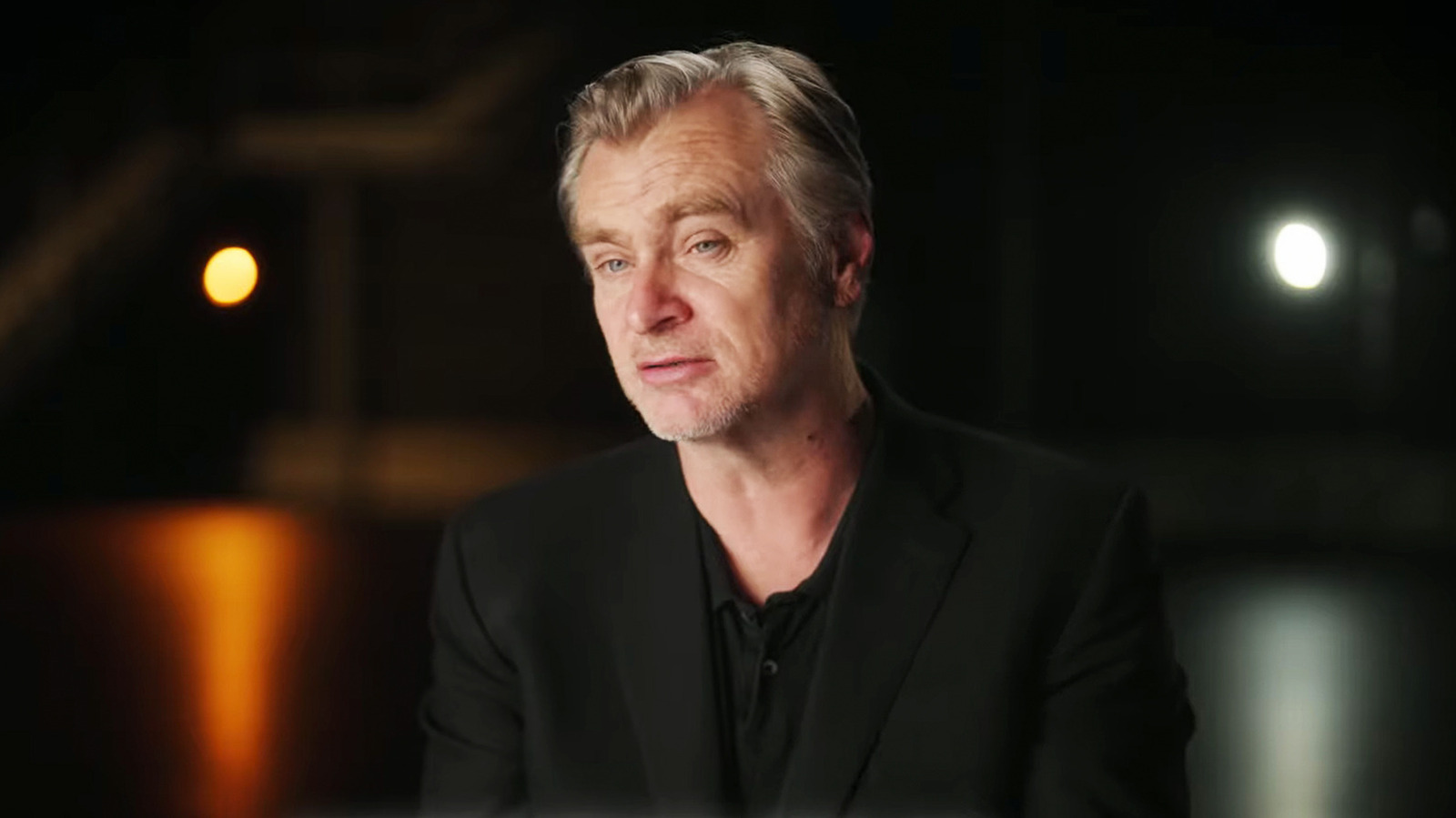
Director Christopher Nolan, the filmmaker behind acclaimed projects like Oppenheimer and The Dark Knight trilogy, recently offered a distinct perspective on the role of a film director, characterizing the position not as an absolute authority, but as a proxy for the viewer. According to Nolan, the director’s primary responsibility is to act as the audience, maintaining a constant awareness of how a narrative is being perceived by someone experiencing the story for the first time.
This philosophy highlights the tension between a director’s technical control and the necessity of preserving a fresh, objective perspective throughout the long-term production process. In discussions regarding his craft, Nolan has emphasized that while a director manages hundreds of technicians and actors, the most critical lens is that of the spectator.
The Director as the Ultimate Spectator
The core of Nolan’s argument is that the director must resist the temptation to become too immersed in the minutiae of production. By remaining the audience, the filmmaker can better gauge the pacing, emotional resonance, and clarity of a film. This approach is central to his methodology, which often involves complex, non-linear storytelling that requires a strict adherence to internal logic to ensure the audience remains engaged rather than confused.

Nolan’s career, which has spanned over two decades, has been defined by a commitment to large-scale, original filmmaking. His most recent work, Oppenheimer, earned him his first Academy Award for Best Director at the 96th Academy Awards, held on March 10, 2024, as confirmed by official records from the Academy of Motion Picture Arts and Sciences. The film’s success underscored his reputation for balancing dense, historical subject matter with the demands of a global theatrical audience.
For Nolan, the challenge lies in the “curse of knowledge.” Once a director spends years developing a script and overseeing post-production, they lose the ability to see the film with fresh eyes. By consciously assuming the role of the audience, he attempts to simulate the experience of a viewer seeing the film’s narrative arcs and visual motifs for the first time.
Maintaining Audience Perspective in Large-Scale Production
The practical application of this philosophy is evident in how Nolan manages his sets and editing suites. He is known for his preference for practical effects over computer-generated imagery, a choice often cited as a way to ground the audience’s experience in physical reality. By filming real explosions or building massive sets—such as the rotating hallway in Inception—he provides the audience with tangible visual cues that help anchor them within the story’s more abstract concepts.
This commitment to the audience experience is further documented in his collaborative history with editors and cinematographers. Nolan often works with long-term partners like editor Jennifer Lame, who worked on Oppenheimer and Tenet, to ensure the narrative flow remains coherent. According to reporting from The New York Times, Nolan’s process involves rigorous testing and refining of the cut to ensure that the audience’s cognitive load is managed effectively during his complex films.
Why the Director-Audience Dynamic Matters
The distinction Nolan makes—that the director is, in essence, the audience—serves as a reminder of the collaborative nature of cinema. While the director provides the vision, the film only exists in its complete form when it is viewed. This perspective influences how he structures his scripts, often utilizing “puzzle-box” narratives that challenge the audience to participate actively in deciphering the plot.
This approach has significant implications for modern cinema, where the gap between blockbuster spectacle and narrative substance is frequently debated. By prioritizing the audience’s perspective, Nolan aims to deliver films that are both intellectually challenging and commercially successful. His films have consistently performed well at the global box office; for instance, Oppenheimer grossed over $975 million worldwide, according to data from Box Office Mojo.

As the film industry continues to evolve with new technologies and distribution models, Nolan’s focus on the fundamental relationship between the creator and the viewer remains a consistent anchor. Whether he is directing a gritty superhero drama or a sweeping biographical epic, his stated goal remains the same: to create a cinematic experience that respects the audience’s intelligence while providing a compelling, immersive journey.
Future updates regarding Nolan’s upcoming projects are expected to be shared through official studio announcements or his production company, Syncopy. For those interested in his ongoing contributions to film, official industry news outlets and the Academy’s archives provide verified updates on his work and accolades. Readers are invited to share their thoughts on Nolan’s directorial style and how his perspective on the “audience” has shaped their own viewing experiences in the comments section below.
Keep reading