
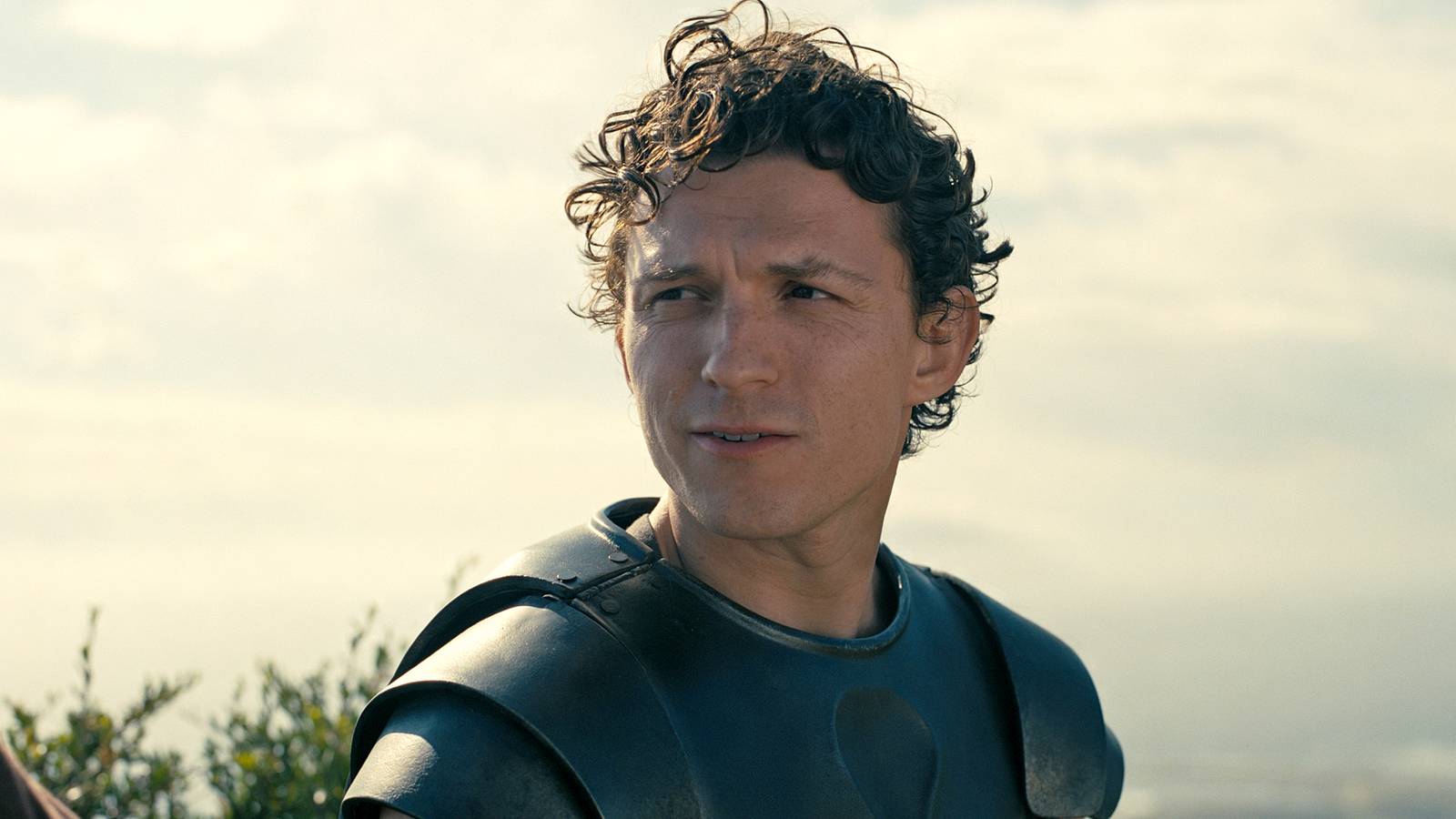
The cinematic world has long awaited Christopher Nolan’s take on one of history’s most enduring epics. When the first full trailer for The Odyssey finally arrived on May 5, 2026, it provided the first extended glimpse into how the director intends to translate Homer’s ancient Greek poem to the modern screen. However, rather than a universal celebration of Nolan’s vision, the release has ignited a firestorm of criticism across social media platforms.
As an editor who has covered the intersection of celebrity culture and cinema for over 15 years, I have seen this pattern before. Whenever a director of Nolan’s stature tackles a historical or mythological subject, a segment of the audience shifts from being viewers to being historians. While the passion for accuracy is admirable, the current wave of backlash against Christopher Nolan’s ‘The Odyssey’ trailer misses the fundamental point of cinematic storytelling.
The controversy is currently split between two primary camps: those outraged by the costume design and those stunned by the casting choices—specifically the vocal performances. While the “internet pitchforks” are out, a closer look at the trailer suggests that these “errors” may be deliberate creative decisions designed to elevate the mythological nature of the story over a dry historical reenactment.
The Battle Over Bronze Age Armor
The most heated debate centers on the depiction of the Laestrygonians, the mythological giants known for their appetite for humans. Eagle-eyed viewers on X pointed out what they perceive as a glaring anachronism: the use of full plate armor. Since the story is set around the 12th century BC, during the end of the Bronze Age, the presence of medieval-style plating has been labeled “disgusting” and “futuristic” by some critics.

One user on X questioned, “Who in ancient Greece had full plate armor?” while another suggested the design was so far removed from the era that the production “might as well be turning up in helicopters.” These criticisms, as detailed by BoredPanda, reflect a desire for strict historical adherence.

However, this critique ignores the fact that the Laestrygonians are not humans—they are mythological giants. In the realm of epic poetry, the line between the historical and the supernatural is intentionally blurred. By giving these creatures armor that feels “too modern” or “futuristic,” Nolan may be visually signaling their otherworldly nature or their superiority in strength and technology compared to the humans of the Bronze Age. When dealing with a myth, the internal logic of the film’s world always supersedes the textbooks of a history class.
The Accent Debate: Matt Damon and the American Tongue
Beyond the wardrobe, the trailer has sparked a second wave of ire regarding the auditory experience. Specifically, fans have expressed shock at hearing Matt Damon utilize an American accent in a story set in ancient Greece. According to Forbes, this choice has left some audiences feeling disconnected from the setting.
The demand for “authentic” accents in period pieces is a common trope of modern fandom, but it often overlooks the purpose of casting. Matt Damon is an actor whose presence brings a specific weight and familiarity to a role. In a global production distributed by Universal Pictures, the use of a neutral or American accent can often be a tool for accessibility, ensuring the dialogue remains clear for a worldwide audience without the distraction of potentially inconsistent or forced regional dialects that can sometimes pull a viewer out of the experience more than a familiar accent would.
Nolan has a history of prioritizing the emotional truth of a scene over literalism. If the goal is to make the struggle of Odysseus feel universal and timeless rather than a localized historical study, the vocal choices become a matter of artistic direction rather than a mistake in research.
Artistic Vision vs. Historical Literalism
The tension we are seeing online is a classic conflict between “historical accuracy” and “mythological storytelling.” The Odyssey is not a documentary about the 12th century BC; it is a poem about longing, survival, and the human spirit. By treating the trailer as a checklist for historical errors, critics are ignoring the atmospheric and thematic work Nolan is doing.
Nolan is a filmmaker known for manipulating time and space to serve a narrative. Whether it is the shifting timelines of his previous works or the scale of his IMAX presentations, his goal is always immersion. If the armor of a giant looks “wrong” or an accent feels “out of place,” it is worth asking why those choices were made. Often, these decisions are intended to evoke a feeling of timelessness, suggesting that the themes of Homer’s epic are as relevant today as they were three thousand years ago.
The internet’s tendency to find “glaring inconsistencies” in a two-minute trailer often leads to premature judgments. We are seeing a reaction to fragments of a story, not the complete tapestry. The “unfounded ire” currently directed at the production is a symptom of a culture that values the “gotcha” moment of a social media post over the patience required to experience a piece of art in its entirety.
the trailer for The Odyssey succeeds in what a trailer is meant to do: it generates conversation, showcases the scale of the production, and establishes a mood of epic grandeur. Whether the armor is historically accurate or the accents are geographically precise is secondary to whether the film can capture the soul of the original poem.
We will continue to monitor official updates from Universal Pictures regarding the film’s rollout. For now, the best course of action for audiences is to step back from the social media discourse and wait for the full cinematic experience.
Do you agree with the critics, or do you trust Nolan’s creative instincts? Share your thoughts in the comments below and let us know if you’re planning to observe this epic on the big screen.