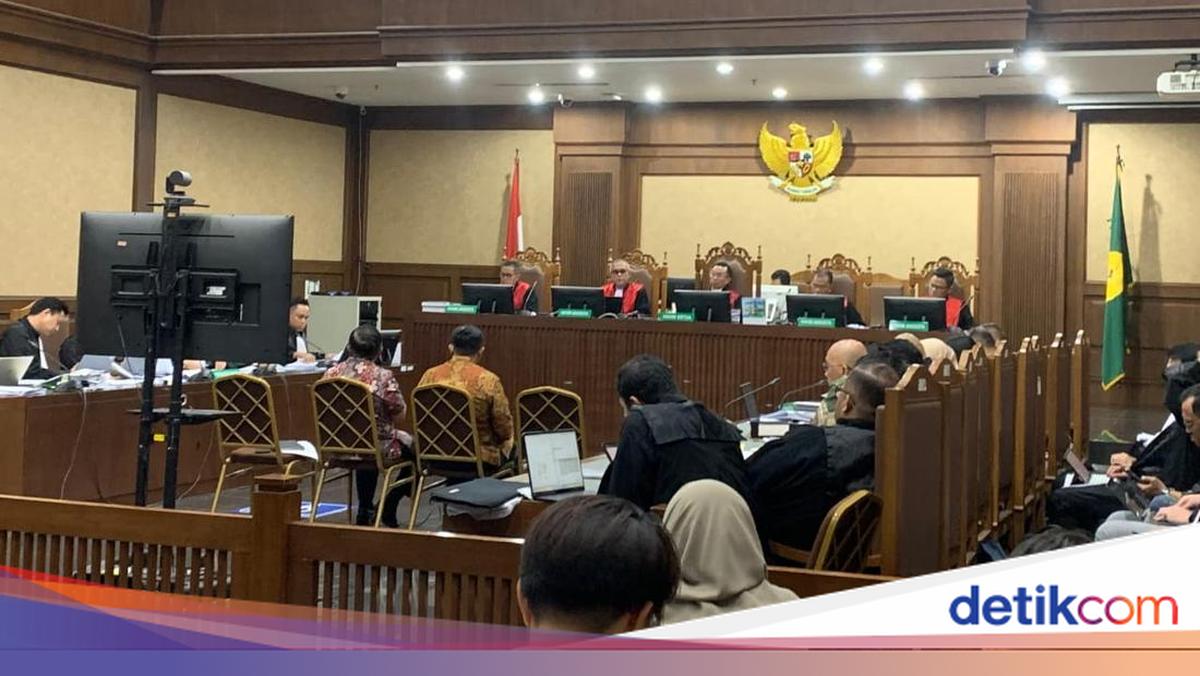
A sweeping corruption case involving the Indonesian Ministry of Education, Culture, Research, and Technology (Kemendikbudristek) has come to light, with allegations of over 2.1 trillion Rupiah in state financial losses. The case centers around the digitalization of education programs spanning from 2019 to 2022.
Recent court proceedings revealed that several individuals allegedly benefited from the scheme. Dhany Hamiddan Khoir is accused of receiving 200 million Rupiah and 30,000 USD, while Purwadi Sutanto allegedly gained 7,000 USD. These accusations were presented during the arraignment of Ibrahim (known as Ibam),Mulyatsyah,and Sri on December 16,2025.
The core of the alleged fraud revolves around inflated pricing and unnecessary procurement. A significant portion of the 2.1 trillion Rupiah loss-approximately 1.5 trillion Rupiah-stems from an overestimation of Chromebook laptop prices by 1,567,888,662,716.74 Rupiah.
Furthermore, prosecutors claim that the procurement of Chrome Device Management (CDM) software, deemed both unnecessary and ineffective, contributed another 621.387.678.730 Rupiah (equivalent to 44.054.426 USD) to the financial damage.
Here’s a breakdown of the alleged losses:
* Chromebook Price Inflation: 1.5 trillion Rupiah
* Unnecessary CDM Procurement: 621.387.678.730 rupiah (44.054.426 USD)
* Total Alleged loss: 2.1 trillion Rupiah
The financial calculations are based on a report from the Supreme audit Agency of the Republic of Indonesia (BPKP), dated November 4, 2025 (report number PE.03.03/SR/SP-920/D6/02/2025).This report meticulously details the alleged financial irregularities within the Kemendikbudristek’s digitalization program.
I’ve found that cases like these underscore the critical importance of obvious procurement processes and rigorous oversight in public spending. Ensuring accountability at every stage is vital to safeguarding public funds and maintaining trust in government institutions.
The legal proceedings are ongoing, and the accused will have the possibility to respond to these charges. The outcome of this case will undoubtedly have significant implications for the future of educational technology initiatives in Indonesia.
Keep reading