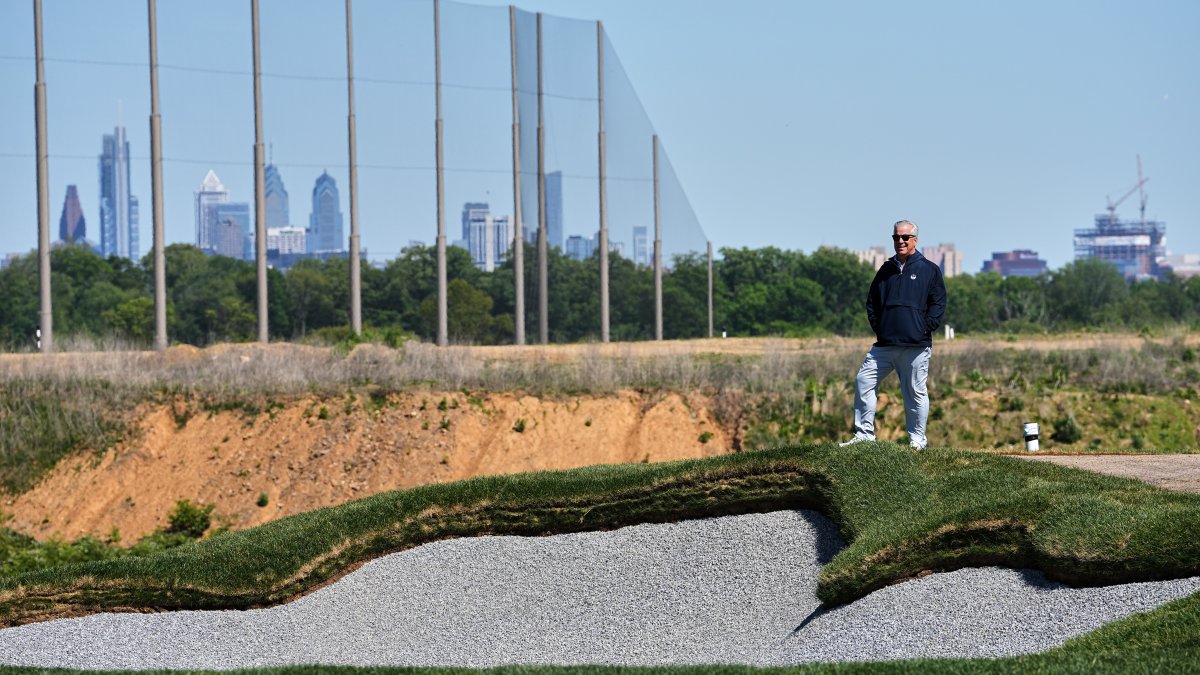
Cobbs Creek Golf Club: How a West Philly Landmark Is Redefining Inclusion in Golf
West Philadelphia’s Cobbs Creek Golf Club—once a hidden gem for Black and female golfers during an era of exclusion—is undergoing a $180 million rebirth that blends championship golf with groundbreaking education. With backing from Tiger Woods, Jordan Spieth, and a community-driven foundation, the course aims to restore its historic 1916 layout while creating a model for how sports can drive social change.
While the Philadelphia region has hosted major championships at prestigious clubs like Merion and Aronimink, Cobbs Creek’s legacy runs deeper. Opened in 1916, it was one of the few courses in the U.S. To admit women before they could vote and Black golfers at a time when segregation was rampant. Hall of Famer Charlie Sifford, who broke golf’s color barrier in 1961 as the first Black member of the PGA Tour, called Cobbs Creek home. Now, a century later, the club is poised to reclaim its status as a beacon of opportunity—this time with a focus on education, accessibility, and economic empowerment.
The revival is led by the Cobbs Creek Foundation, which has partnered with Woods’ TGR Foundation to open a 30,000-square-foot TGR Learning Lab on the property. The facility, which launched in April 2025, offers STEAM (science, technology, engineering, arts, and math) programs for grades 1–12, with profits from golf operations funding scholarships and after-school initiatives. Since its opening, over 7,000 students have participated, including Corrine Schultz, an 18-year-old homeschooled senior who joined the lab’s robotics team and plans to return after starting at Drexel University.
Why it matters: Cobbs Creek’s story is more than a golf course restoration—it’s a case study in how historic sites can be repurposed to address modern inequities. With plans to restore three miles of creek and 20 acres of wetlands, the project also serves as an environmental model, proving that revitalization can be both socially and ecologically regenerative.
A Course Ahead of Its Time
Cobbs Creek’s origins trace back to 1916, when it was designed by Hugh Wilson—who also crafted nearby Merion—and assisted by legendary architects like George Crump (Pine Valley) and A.W. Tillinghast (Winged Foot). Unlike most courses of the era, Cobbs Creek was publicly owned and explicitly designed to serve those excluded from private clubs. Women could play there before the 19th Amendment granted them the right to vote, and Black golfers like Sifford and Howard “Buth” Wheeler (a United Golf Association champion) found a welcoming home.

The course’s inclusive legacy was cemented in 1947 when it hosted the Negro National Open, with heavyweight boxing champion Joe Louis leading the first round. In 2021, Cobbs Creek was inducted into the National Black Golf Hall of Fame, recognizing its pivotal role in the sport’s history.
Yet by the 2020s, decades of flooding, military encroachment (including four missile silos built in the 1950s), and mismanagement had left the course closed. Enter Enrique Hervada, COO of the Cobbs Creek Foundation, who described the restoration as a “herculean effort” requiring drainage overhauls, wetlands restoration, and a return to Wilson’s original design. “We’re building this for the next 100 years,” Hervada said in a 2025 interview.
Golf as a Gateway to Opportunity
Tiger Woods’ involvement in the project stems from his deep connection to Sifford, whom he called “the grandfather I never had.” Woods named his son Charlie after Sifford and has long championed initiatives that use golf to break barriers. At Cobbs Creek, his TGR Foundation opened its second TGR Learning Lab, following the first in Anaheim, California (2006). The $250,000 junior putting green, funded by Jordan Spieth’s foundation, symbolizes the project’s dual focus: restoring the course while creating pathways for youth.
Woods framed the effort as broader than golf: “I didn’t start the foundation to produce golfers that hit golf balls. I started it to produce the greatest humans possible.” Spieth echoed this vision during the putting green’s opening, emphasizing accessibility: “There’s a lot of new ways people are picking up the game now, and you’ll have all of that available here. Do golf however you want to do golf.”
“Coming here, to a place he played, he grew up, he called home… for me to have the support of the entire community, to be able to build something. A home, a safe place, innovation.”
STEAM on the Green: How Golf Funds Scholarships
The TGR Learning Lab’s 30,000-square-foot facility is the first structure completed on the revitalized campus. Originally targeting schools within a 1.5-mile radius, it now serves students across West Philadelphia, with Meredith Foote, executive director, highlighting its role in “opening doors and opportunities.” The lab’s robotics team, for example, gave Schultz her first taste of competitive sports—a experience she credits with shaping her college plans.
Financially, the model is sustainable: profits from golf operations will underwrite the lab’s programs, ensuring long-term viability. Foote notes that the lab’s impact extends beyond academics: “The legacy is the kids who come in trying to find their passion and go on to do amazing things.” Schultz, now at Drexel, plans to return to the lab to mentor younger participants, embodying the foundation’s ethos of giving back.
| Program | Participants (2025) | Funding Source |
|---|---|---|
| STEAM After-School | 7,000+ students | TGR Foundation + golf revenues |
| Robotics Team | 45+ active members | Drexel University partnership |
| Junior Golf Clinics | 2,000+ annual | Spieth Foundation donation |
Note: Figures reflect 2025 program data. Full financial reports are available on the Cobbs Creek Foundation’s transparency page.
From Flooding to Future Championships
The restoration faces hurdles, including permitting delays and the $180 million price tag. Hervada acknowledges the “stops and starts” but emphasizes progress: drainage systems are operational, wetlands are being restored, and the Olde Course (designed by Wilson) is nearing completion. Golf architects Gil Hanse and Jim Wagner—who restored nearby Aronimink—are leading the rebuild, aiming to host a PGA Tour event in the future.
Environmentally, the project includes restoring three miles of creek and creating 20 acres of wetlands, addressing decades of flooding. Hervada calls it “a herculean effort,” but one with lasting benefits: “We’re not just fixing a golf course. We’re building a community asset.”
Why Cobbs Creek’s Revival Matters
- Historic Inclusion: One of the few U.S. Courses to admit women and Black golfers before the 1960s.
- Education First: The TGR Learning Lab uses golf as a tool to teach STEAM skills, serving 7,000+ students since 2025.
- Sustainable Funding: Golf revenues will fund scholarships and programs indefinitely.
- Environmental Model: Restoration includes wetlands and creek revitalization to combat flooding.
- Legacy of Change: Tiger Woods and Jordan Spieth are leveraging their platforms to address systemic inequities in sports.
Frequently Asked Questions
When will the full golf course reopen?
The Olde Course is expected to reopen in phases, with the first 9 holes available by late 2026. The full 18-hole restoration is targeted for 2027, pending final permits.
How can I visit the TGR Learning Lab?
The lab welcomes public tours and school groups. Visit TGR Foundation’s website to schedule a visit or enroll in programs.
Will Cobbs Creek host a PGA Tour event?
Plans are underway to bid for a PGA Tour event, with officials citing the course’s historic significance and restored infrastructure. No official dates are set, but discussions are ongoing with the PGA Tour.
Get Involved
Cobbs Creek’s story is still unfolding. To support the foundation, volunteer, or learn about upcoming events, visit:
Share your thoughts or experiences with Cobbs Creek in the comments below. How can historic sites like this inspire change in your community?
Worth a look