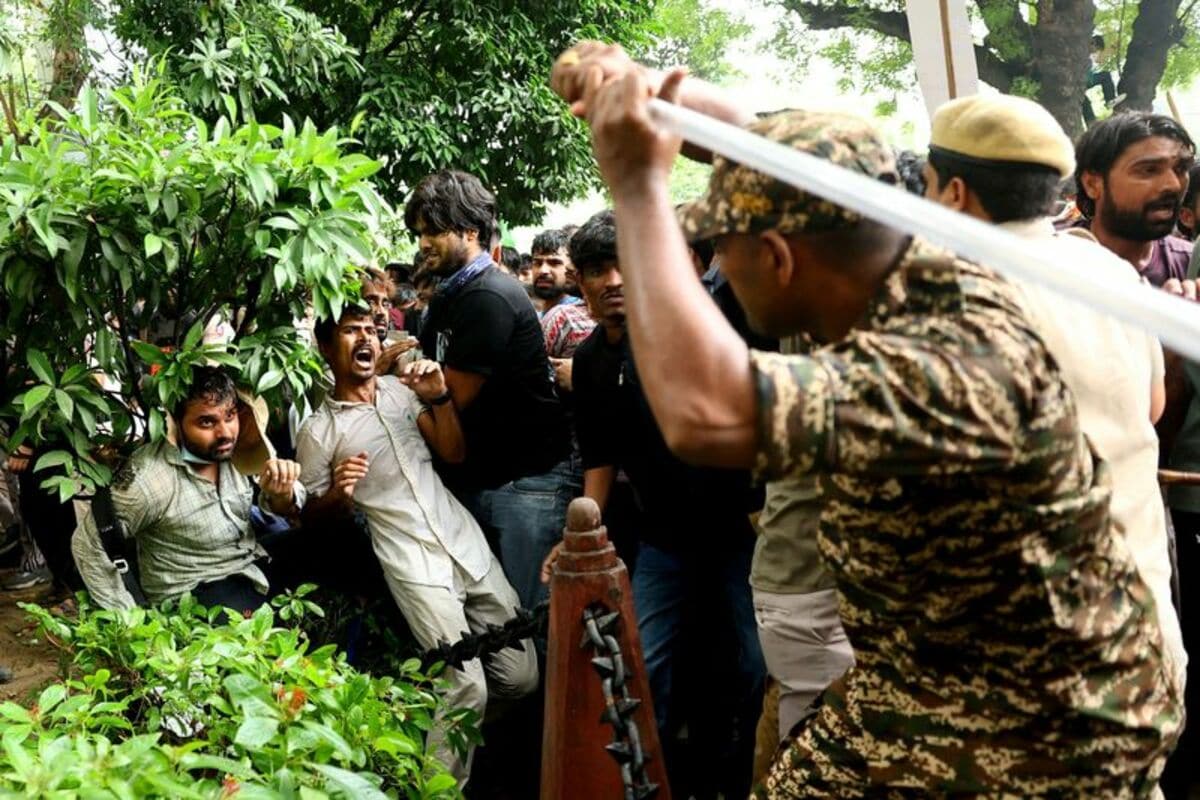
Protesters from the political group identified in local reports as the “Gokiburi Party” clashed with police in New Delhi on July 20, 2026, as the group escalated demands for the resignation of the incumbent education minister. The demonstration, which took place in the heart of the Indian capital, resulted in a significant security response and has prompted the Indian government to formally review the protesters’ grievances.
The unrest follows mounting public pressure regarding current educational policies, with the Gokiburi Party—a group known for its vocal opposition to administrative appointments—targeting the Ministry of Education. According to initial reports from the scene, security personnel deployed barricades and utilized crowd-control measures as the protest transitioned from a demonstration into a physical confrontation near key government buildings.
Escalating Tensions Over Education Policy
The primary driver of the July 20 protest was a demand for the immediate resignation of the Minister of Education, whom demonstrators accused of failing to adequately address systemic issues within the national curriculum and administrative oversight. The demonstrators, who had gathered in significant numbers, sought to march toward the ministry headquarters before being intercepted by police forces tasked with maintaining order in the high-security zone.
In the aftermath of the skirmishes, the Indian government has signaled that it will review the concerns raised by the demonstrators. While officials have not committed to any personnel changes, the decision to evaluate the protesters’ demands marks a shift in how the administration is engaging with the recent wave of civil dissent. The Ministry of Home Affairs is expected to monitor the situation closely to determine if further security measures are required to prevent a recurrence of the violence.
New Delhi, July 20, 2026: A scene of the confrontation between protesters and security forces. (Photo: Anushree Fadnavis/Reuters)
Context of the Gokiburi Party Protests
The Gokiburi Party has become increasingly visible in recent months as it challenges the federal government’s handling of public sector appointments. Their methodology often involves high-profile street protests designed to draw media attention to their core platform. Observers of Indian political movements note that while the group maintains a dedicated following, its methods frequently lead to direct conflict with law enforcement agencies, particularly when protests occur in proximity to government installations.

This incident comes at a time when the government is navigating a complex landscape of educational reform, with various stakeholders debating the efficacy of current policies. The demand for the education minister’s resignation is part of a broader criticism of the current administration’s approach to civil service accountability. As the government reviews the events of July 20, the focus remains on whether the administration will offer a formal response to the specific allegations leveled by the protesters or if it will maintain its current stance on the minister’s tenure.
Looking Ahead: Government Review
The situation in New Delhi remains fluid. The Indian government has not provided a specific timeline for when its review of the protest grievances will be concluded, nor has it released a statement addressing the specific accusations against the Minister of Education. The next critical checkpoint involves a scheduled briefing by the Ministry of Home Affairs regarding the maintenance of law and order in the capital, which is expected to occur later this week.
For those following these developments, official updates regarding the government’s response and any potential policy shifts can be found through the Ministry of Education’s press portal and the official bulletins issued by the Delhi Police. As the investigation into the July 20 clashes continues, the public is encouraged to monitor reliable news outlets for verified updates on the status of the education minister and potential future demonstrations.
What are your thoughts on the recent political demonstrations in New Delhi? Join the conversation in the comments section below and share this report to keep your network informed on global economic and political developments.
Worth a look