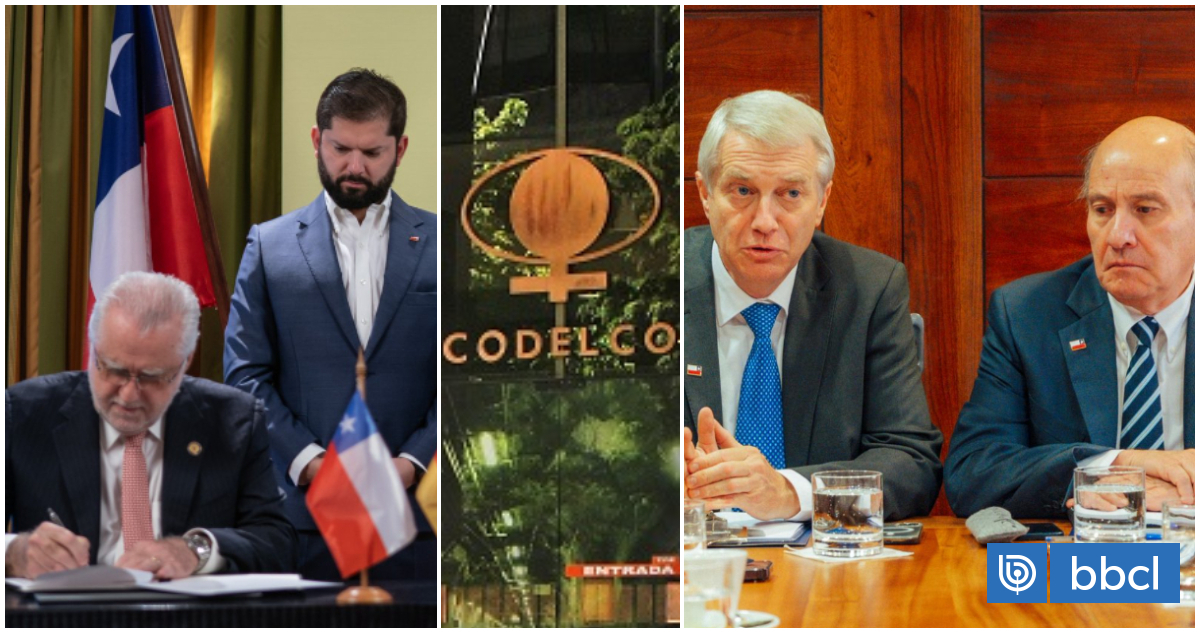
On Tuesday, April 21, 2026, a shareholders’ meeting of Codelco, the world’s largest copper producer, unfolded in an atmosphere described by attendees as so tense it “se cortaba con cuchillo” — cut like a knife. The gathering, held in Santiago, Chile, marked the first major confrontation between the administration of President José Antonio Kast and the leadership appointed during the previous government of Gabriel Boric. At the center of the tension was Máximo Pacheco, the chairman of Codelco’s board, who was appointed by Boric and remains in his post despite the change in national leadership.
The meeting came amid growing concern over Codelco’s declining output. According to reports from the session, the company has invested over $17 billion since 2022 yet has seen its copper production fall by approximately 20% in recent years. This decline has raised alarms both within the government and among industry analysts, particularly as Chile relies on copper for roughly half of its export revenues. The Kast administration has signaled its intent to reinvigorate the sector, but the confrontation at Codelco highlighted the challenges of implementing change within a state enterprise shaped by the prior administration’s policies.
During the meeting, government representatives questioned the lack of self-criticism in Codelco’s management, particularly regarding operational performance and strategic direction. Attendees reported direct exchanges between state officials and board members, reflecting broader ideological differences over the role of state-owned enterprises in Chile’s economy. While the Boric era emphasized a stronger state presence in strategic industries like lithium and copper, the Kast government has signaled a preference for market-driven approaches, though it has pledged to respect existing legal agreements, including joint ventures such as the one with SQM.
The discussion also touched on long-term goals, including Codelco’s stated aim to recover its 2019 production levels by 2030. Though, independent analyses cited in recent reports suggest that due to aging infrastructure and financial constraints — including over $20 billion in debt — the timeline for peak production may now extend to 2034. These structural challenges complicate efforts to reverse the downward trend in output, even as global copper prices remain strong, with forecasts for 2026 ranging between $11,400 and $12,500 per tonne.
Beyond immediate production concerns, the meeting underscored the broader transition in Chile’s natural resource governance. The country remains the world’s top copper producer and a major lithium supplier, but its mining sector faces increasing scrutiny over permitting efficiency, environmental review processes and the balance between state control and private investment. The Ley Marco de Autorizaciones Sectoriales (Law 21.770), introduced under Boric to streamline sectoral permits, continues to be implemented, while reforms to environmental impact assessment remain under legislative review.
Industry observers note that Chile’s mining investment pipeline has been revised upward to approximately $104.5 billion through 2034, reflecting renewed interest in the sector despite perceptions of bureaucratic complexity and political risk. How the Kast administration navigates these dynamics — particularly in relation to state-owned enterprises like Codelco and ENAMI — will be critical in shaping the country’s ability to capitalize on global demand for critical minerals used in clean energy technologies, electric vehicles, and data center infrastructure.
As of the close of the meeting, no formal resolutions or leadership changes were announced. The board, led by Pacheco, remains in place, and the government has not indicated plans to intervene directly in Codelco’s management. However, the intensity of the exchange signals that oversight and accountability will be heightened under the new administration. Future developments to watch include the company’s next operational update, any forthcoming board evaluations, and how the Kast government’s broader economic reform package — including proposed tax adjustments and support for modest and medium enterprises — may indirectly influence the mining sector’s performance.
For readers seeking to follow this evolving story, official updates from Codelco are available through its investor relations portal, while the Chilean Ministry of Mining publishes regular reports on sector performance and policy implementation. The next major checkpoint in this narrative will likely be Codelco’s annual report or a subsequent shareholders’ meeting, where further details on production trends, financial health, and strategic direction are expected to be disclosed.
We invite our global audience to share insights, observations, or questions about the implications of this political and industrial transition in Chile. Your perspective helps deepen the conversation on how resource-rich nations navigate shifts in leadership while managing strategic assets critical to the global economy.