The Weight of a Name: Galerie Colbert and France’s Colonial Legacy Under Scrutiny
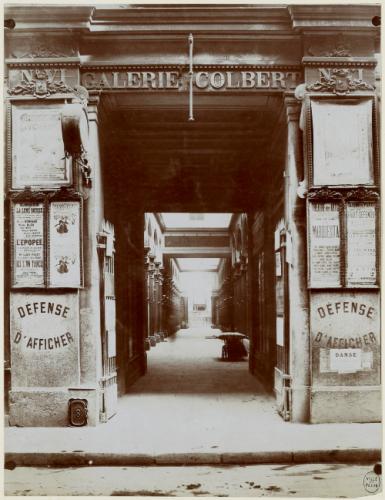
In Paris, the names of streets, squares and public spaces often carry the weight of history. But increasingly, those names are being re-examined through a contemporary lens, prompting demanding conversations about the past and its enduring impact. The Galerie Colbert, a stunning covered passage in the 2nd arrondissement, is the latest site to become a focal point for this debate. Built in 1827, the gallery’s name honors Jean-Baptiste Colbert, a powerful figure in 17th-century France, but also a key architect of the nation’s early colonial empire – an empire built on the exploitation of resources and, crucially, the transatlantic slave trade. A recent roundtable discussion hosted by the Institut national d’histoire de l’art (INHA), which is housed within the Galerie Colbert, has brought these complex issues to the forefront, sparking a wider conversation about memory, commemoration, and the responsibility of public institutions.
The Galerie Colbert, linking Rue des Petits Champs with Rue Vivienne, is admired for its architectural elegance, particularly its grand rotunda and intricate glass and metalwork. As The Parisian Guide notes, the gallery’s name is a direct tribute to Jean-Baptiste Colbert, who served as finance minister under King Louis XIV. However, this seemingly straightforward homage obscures a darker truth. While celebrated for his economic reforms and patronage of the arts and sciences, Colbert was also instrumental in establishing France’s first colonial empire, an economic system deeply intertwined with the brutal realities of plantation economies and the enslavement of African people. This historical context is now prompting critical questions about the appropriateness of honoring him in a space dedicated to art and historical research.
The INHA’s roundtable, held in partnership with the Fondation pour la mémoire de l’esclavage (Foundation for the Memory of Slavery), aimed to “expose the embarrassment” – as described by participants – that the gallery’s name evokes for some. The discussion, framed within the context of France’s ongoing “dé-commémorations” – a movement to re-evaluate and, in some cases, remove monuments and symbols associated with colonialism and slavery – sought to explore the implications of placing research and education in art history under the patronage of a figure so closely linked to these injustices. The event coincided with the recent renovation of the Galerie Colbert, providing a timely opportunity to reassess the symbolic weight of its name. The timing also aligns with the celebration of the 25th anniversary of the Loi Taubira, a French law recognizing the transatlantic slave trade and slavery as crimes against humanity, passed in 2001. More information on the 25th anniversary of the Loi Taubira can be found on the Fondation pour la mémoire de l’esclavage website.
A Complex Historical Figure
Jean-Baptiste Colbert (1619-1683) was a dominant figure in French politics during the reign of Louis XIV. He implemented mercantilist policies designed to strengthen the French economy and increase its global power. His efforts included promoting domestic manufacturing, establishing colonies, and developing a strong navy. However, these policies were inextricably linked to the exploitation of colonial resources and the expansion of the slave trade. Colbert codified the laws governing slavery in French colonies, known as the *Code Noir* (Black Code) in 1685, which detailed the harsh conditions and legal status of enslaved people. The *Code Noir* remained in effect for nearly a century, shaping the lives of generations of enslaved Africans and their descendants. While the *Code Noir* was not created by Colbert, his policies laid the groundwork for its implementation and enforcement.
The Galerie Colbert itself was not directly built by Colbert; it was constructed decades after his death, in 1826-1827, on the site of the former Hôtel Bautru, which Colbert acquired in 1665. According to Wikipedia’s entry on the Galerie Colbert, the gallery was built for the company Adam & Compagnie, with plans drawn up by architect Jean Billaud. The choice to name the gallery in his honor, however, reflects a historical tendency to celebrate figures like Colbert without fully acknowledging the darker aspects of their legacies. The gallery’s design, inspired by other Parisian passages like the Galerie Vivienne, aimed to create a comfortable and elegant commercial space, but the symbolic weight of its name now raises questions about whose stories are being honored and whose are being marginalized.
Diverse Perspectives on Commemoration
The INHA roundtable brought together a diverse group of scholars, artists, and activists to discuss these issues. Participants included Lotte Arndt of the Université Paris 1 Panthéon-Sorbonne, Vivian Braga dos Santos of the Universidade de São Paulo, Victor Claass of the Musée d’Orsay, Thaïs Dabadie, a researcher and cultural mediator, Alexandre Girard-Muscagorry of the INHA, Anne Lafont of the EHESS, Meredith Martin of NYU, artist Laura Nsengiyumva, and Coralie de Souza-Vernay of the Fondation pour la mémoire de l’esclavage. Each participant brought a unique perspective to the conversation, reflecting the complexities of grappling with colonial legacies in the 21st century.
The discussion likely explored the broader context of “dé-commémemoration” – a growing movement in France and elsewhere to re-evaluate public symbols and monuments that celebrate figures associated with colonialism, slavery, and other forms of oppression. This movement has gained momentum in recent years, fueled by increased awareness of systemic racism and historical injustices. The debate over the Galerie Colbert’s name is part of a larger conversation about how societies choose to remember – and forget – their pasts. The recent renovation of the Galerie Colbert provided a concrete opportunity to address these concerns, but the roundtable suggests that a simple name change may not be sufficient. The discussion likely focused on the need for a more nuanced and critical engagement with history, one that acknowledges the full complexity of figures like Jean-Baptiste Colbert and the lasting impact of colonialism.
The INHA’s “Les Voix de l’histoire de l’art” (Voices of Art History) cycle, within which this roundtable took place, aims to showcase the scientific activity of art history and heritage. These monthly meetings, open to the public, invite researchers, curators, and art professionals to discuss their projects and the intersection of art history with the contemporary world. The cycle’s commitment to fostering dialogue on societal issues underscores the growing recognition of the importance of addressing difficult historical questions within the academic and cultural spheres.
What Happens Next?
As of March 16, 2026, there has been no official announcement regarding a name change for the Galerie Colbert. However, the INHA roundtable represents a significant step in raising awareness of the issues surrounding the gallery’s name and prompting a broader public conversation. The ongoing discussions, coupled with the momentum of the “dé-commémorations” movement and the commemoration of the Loi Taubira, suggest that the question of the Galerie Colbert’s name is unlikely to disappear. Further developments are expected as the INHA continues to engage with stakeholders and consider potential options for addressing the concerns raised by the roundtable participants.
The debate surrounding the Galerie Colbert serves as a microcosm of a larger struggle to reconcile with the complexities of the past. It highlights the importance of critically examining the legacies of historical figures and acknowledging the enduring impact of colonialism and slavery. As societies grapple with these difficult truths, spaces like the Galerie Colbert can become sites of both contention and potential transformation, prompting a more inclusive and equitable understanding of history.
What are your thoughts on the debate surrounding the Galerie Colbert? Share your perspectives in the comments below, and please share this article with others who may be interested in this important conversation.
Related reading