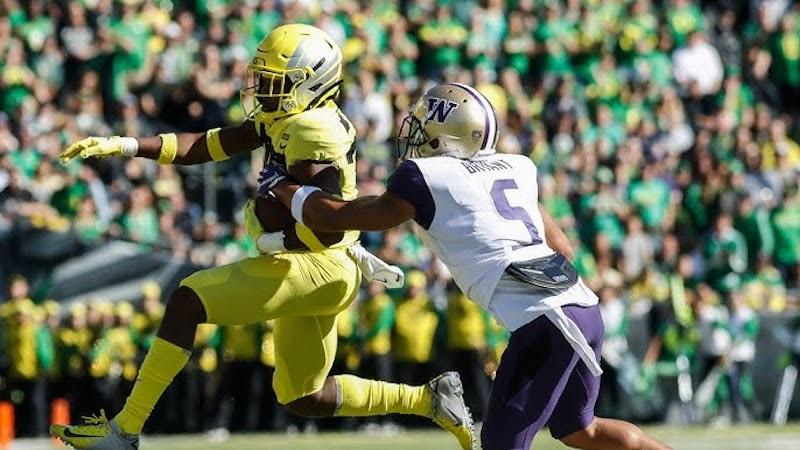
From 2016 to 2025, college football programs in the Western United States demonstrated varying levels of efficiency when playing as home favorites, with the University of Oregon maintaining the highest win percentage at 94.7%. Data tracking these ten seasons reveals that consistent success at home often correlates with sustained program stability, as teams like Washington, Utah, and Boise State also secured high win rates when entering games with an advantage at their own venues.
As the sports editor for World Today Journal, I have spent over a decade analyzing the metrics that define competitive advantages in collegiate athletics. Home-field advantage is a frequently debated topic in sports analytics, often attributed to factors ranging from crowd noise and travel fatigue for visitors to the familiarity of local environmental conditions. When a team enters a game as the betting or projected favorite, the expectation of victory becomes a measurable benchmark for program performance.
Performance Trends of Western Programs
Over the ten-year period ending in 2025, the landscape of Western college football saw several programs establish themselves as formidable hosts. According to performance records, Oregon led the region, finishing its tenure as a home favorite with a 54-3 record. This high success rate suggests an ability to capitalize on home-field variables effectively. Washington followed closely with a 91.2% win rate, recording 52 victories against only five defeats when favored at home.
The consistency of these programs is often tied to institutional investment and coaching continuity. For instance, Utah, a program that has transitioned through different conference alignments during this decade, maintained an 87.0% win rate, securing 47 wins as a home favorite. These figures provide a baseline for understanding how regional powerhouses managed expectations throughout the 2016–2025 period.
Home Favorite Winning Percentages (2016–2025)
| Team | Win % | Record |
|---|---|---|
| Oregon | 94.7% | 54-3 |
| Washington | 91.2% | 52-5 |
| Utah State | 90.3% | 28-3 |
| Utah | 87.0% | 47-7 |
| Hawai’i | 86.2% | 25-4 |
| USC | 85.2% | 46-8 |
| Boise State | 85.0% | 51-9 |
| UCLA | 65.8% | 25-13 |
Factors Influencing Home-Field Success
While winning percentages provide a clear quantitative picture, the “why” behind these numbers involves complex variables. Intimate stadium environments and remote locations can create logistical challenges for visiting teams. Research into home-field advantage consistently highlights the impact of travel distance and the intensity of the home crowd on the visiting team’s communication and execution.
For programs like Utah State and Hawai’i, the geographical isolation of their home venues has historically been cited as a contributing factor to their success as favorites. Utah State recorded a 90.3% win rate (28-3), while Hawai’i finished at 86.2% (25-4). Conversely, larger programs like USC, which finished with an 85.2% rate (46-8), often rely on high-intensity recruiting and depth to maintain their home-field dominance regardless of the opponent’s travel requirements.
Comparative Analysis of Regional Performance
When comparing programs, the data shows a distinct gap between the top-tier perennial favorites and those in the middle of the pack. While the leaders often boast percentages above 90%, programs such as UCLA (65.8%) and UTEP (59.1%) faced more volatility when favored at home. This variance often reflects broader shifts in program health, coaching changes, and the competitive parity within their respective conferences.
It is important to note that these records only account for games where the team was the designated favorite. Upsets, where a favorite loses to an underdog, remain a statistical reality in college football. The data indicates that even the most successful programs, such as Oregon, experienced three losses when favored, underscoring that home-field advantage is a significant factor but never a guarantee of victory.
Future Outlook for College Football Analytics
As we look toward the 2026 season and beyond, the integration of advanced sports analytics will likely provide deeper insights into these trends. Teams are increasingly using data to optimize everything from practice schedules to pre-game preparation, aiming to mitigate the impact of external variables on their home performance. The next official update on these regional performance metrics is expected following the conclusion of the 2026 collegiate season, as programs look to adjust their strategies in a rapidly evolving landscape.
Readers interested in the ongoing performance of these teams should monitor official conference records and updated betting market data throughout the coming season. If you have observations on how your local team performs at home, feel free to share them in the comments section below or join the conversation on our social media platforms.
Keep reading