Colombia Advances Digital Education Strategy with Regional Consultations
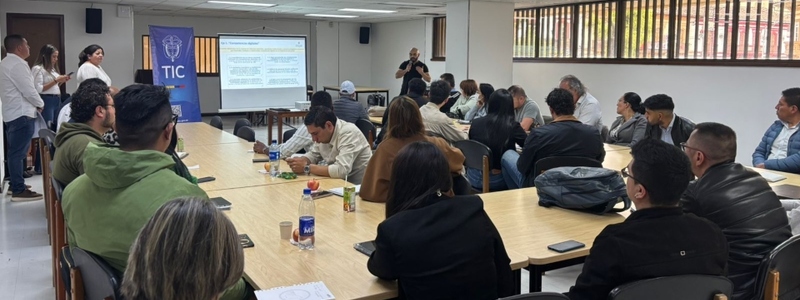
Pasto, Colombia – The Colombian government is actively seeking input from local communities as it develops a national policy aimed at expanding digital education access and improving technological skills across the country. A recent territorial meeting, hosted by the Ministry of Information Technologies and Communications (MinTIC) in Pasto, brought together educators, local government officials, and regional authorities to contribute to the construction of the CONPES de Educación Digital – a comprehensive plan for digital education. This collaborative approach underscores the government’s commitment to bridging the digital divide and ensuring equitable access to learning opportunities for all Colombians.
The initiative comes at a critical time, as access to technology and digital literacy become increasingly vital for participation in the modern economy and society. The consultations are designed to identify specific challenges faced by educational institutions and communities in adopting and utilizing digital technologies effectively. This localized approach is intended to ensure that the CONPES plan is tailored to the unique needs and circumstances of different regions within Colombia, maximizing its impact and fostering sustainable growth in digital education.
The meeting, held at the Banco de la República in Pasto, served as a platform for dialogue and the sharing of experiences. Representatives from the Viceministerio de Transformación Digital presented a preliminary diagnosis outlining the current state of digital education in Colombia, highlighting a significant gap in connectivity – both in schools and in households – as a major obstacle to inclusive learning. This lack of access disproportionately affects students in rural and underserved areas, hindering their ability to fully participate in technology-mediated educational environments.
Participants engaged in focused working groups, sharing insights and proposing solutions to address these challenges. Discussions centered on improving access to connectivity services, providing necessary technological devices, and enhancing digital skills training for both students and educators. These elements are considered crucial for driving the transformation of the Colombian education system and preparing citizens for the demands of a rapidly evolving digital landscape. The government recognizes that simply providing technology is not enough. effective implementation requires a holistic approach that includes robust infrastructure, relevant content, and skilled personnel.
Addressing the Digital Connectivity Gap
Sergio Sotelo, an advisor with the Dirección de Apropiación TIC, emphasized the importance of these regional consultations. “These territorial meetings are fundamental because they allow us to listen directly to the communities and gather their contributions for the construction of a public policy that responds to the realities of each region,” Sotelo stated. “Digital education is key to closing gaps and expanding learning opportunities for students and citizens throughout the country.” This sentiment reflects a broader government strategy focused on leveraging technology to promote social inclusion and economic development.
The insights gathered during the Pasto meeting will directly inform the development of actionable proposals to be incorporated into the CONPES de Educación Digital. The government, through the Ministry of Education and MinTIC, aims to establish digital education as a cornerstone of its efforts to reduce inequality, promote territorial equity, and expand access to quality learning experiences for all Colombians. This policy is expected to outline specific targets, timelines, and investment strategies for achieving these goals.
MinTIC is actively encouraging participation from a wide range of stakeholders, including teachers, students, academic institutions, the private sector, and local government officials. The ministry believes that a collaborative, multi-stakeholder approach is essential for ensuring the success of the CONPES plan and fostering a culture of innovation and digital literacy throughout the country. The goal is to build a digital education ecosystem that is responsive to the needs of communities and empowers citizens to thrive in the digital age.
The collaborative effort extends beyond Pasto, with further regional meetings scheduled in Pereira (March 10th), Arauca and Bucaramanga (March 11th), and Mitú (March 12th). These ongoing consultations demonstrate the government’s commitment to a nationwide dialogue on the future of digital education in Colombia.
Pasto’s Role in the National Digital Transformation
The city of Pasto is likewise poised to benefit directly from investments in digital infrastructure and education. In December 2024, the Alcaldía de Pasto (Pasto City Hall) and MinTIC signed an agreement to construct a Centro PontencIA – a “Center of Power” – dedicated to information and training. This project, valued at over 9 billion Colombian pesos (approximately $2.25 million USD as of March 6, 2026), is expected to benefit more than 680,000 people through education programs focused on artificial intelligence.
According to Pasto Mayor Nicolás Toro Muñoz, the Centro PontencIA will be a “smart building” offering information and training resources, as well as community-based zonal centers. A key component of the project is ensuring connectivity in rural areas, addressing a critical need identified in the national digital education assessment. The total investment in Pasto, in coordination with the Nariño Governorate, is projected to exceed 1 trillion Colombian pesos (approximately $250 million USD as of March 6, 2026).
Minister of ICT, Mauricio Lizcano, indicated that the project has received approval and is moving into the bidding phase, with construction slated to begin in March 2025. The center is expected to be fully equipped and operational within 12 to 14 months of the start of construction. Lizcano also announced additional investment to provide connectivity to remote areas of the municipality, further expanding access to digital resources for residents of Pasto.
Nariño’s Broader Digital Roadmap
The efforts in Pasto are part of a larger initiative to develop a comprehensive digital roadmap for the Department of Nariño. In June 2025, the Nariño Governorate will host the first Cumbre de CIOs (Chief Information Officers) – a summit bringing together technology leaders from all 64 municipalities in the department. The summit, supported by MinTIC, CINTEL (the Center for Research and Development in Information and Communications Technologies), and ANE (the National Spectrum Agency), aims to create a Strategic Plan for Information Technologies (PETI) to guide digital development across the region.
Jonnathan Huertas, Secretary of TIC, Innovation and Open Government for Nariño, explained that the summit will provide a platform for leaders to analyze, reflect, and agree on a roadmap for a more connected, efficient, and citizen-centric government. The PETI will serve as a crucial instrument for decision-making, taking into account the specific needs of each territory within Nariño. This coordinated approach demonstrates a commitment to leveraging technology to address regional challenges and promote sustainable development.
The ongoing consultations and planned investments represent a significant step forward in Colombia’s efforts to harness the power of digital technology to transform its education system and empower its citizens. The next key milestone will be the completion of the CONPES de Educación Digital and the subsequent allocation of resources to implement its initiatives. Readers are encouraged to follow updates on the MinTIC website and engage in the ongoing dialogue about the future of digital education in Colombia.
Worth a look