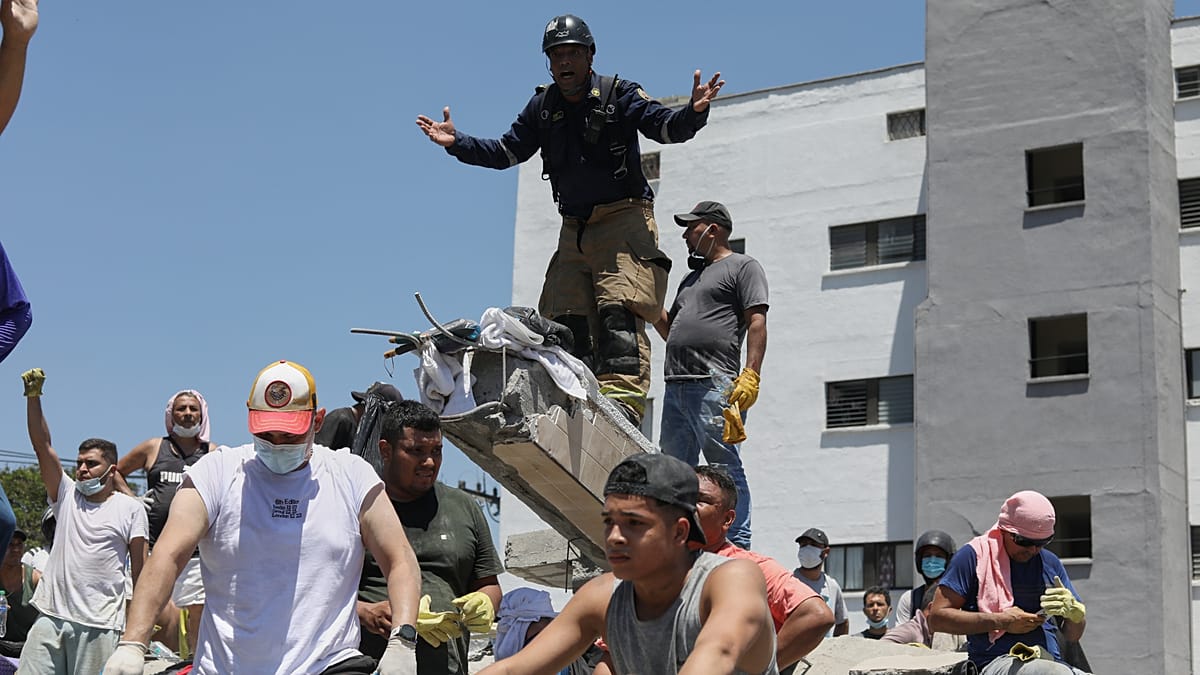
An earthquake of 7.4 magnitude struck western Colombia on Monday, August 10, 2026, registering as the country’s strongest seismic event of the 21st century and leaving at least 132 people dead, according to updates from the Colombian Association of Capital Cities. The disaster struck close to San Jose del Palmar in Choco province at a depth of 107 kilometers, according to data from the U.S. Geological Survey, sending powerful tremors across multiple regions and severely testing the newly inaugurated administration of President Abelardo de la Espriella.
Rescue teams, military personnel, and volunteers worked through the night in Cali, Pereira, Manizales, and surrounding municipalities. Emergency responders cleared rubble by hand and formed human chains to pass debris, while hospitals evacuated patients after structural failures. Newly sworn-in President Abelardo de la Espriella declared a national state of emergency during an address at 1 p.m. local time on Monday, deploying national resources to coordinate rescue operations and address widespread infrastructure damage.
The earthquake struck western Colombia just days after President Abelardo de la Espriella assumed office, thrusting his administration into an immediate humanitarian and logistical crisis. According to a national address cited by CNBC, the president stated that the primary focus of the government remains the rescue of individuals trapped beneath collapsed structures. De La Espriella traveled to Quibdo, the capital of Choco province, to promise rent subsidies for displaced residents before heading to Cali, western Colombia’s largest city. While local media outlets and the Colombian Association of Capital Cities cited an overall death toll reaching 132, official figures provided directly by the president for Valle del Cauca province alone confirmed 35 fatalities and 700 injuries in that specific jurisdiction.
Cali Rescue Operations and Humanitarian Response
In Cali, Colombia’s third-most populous city, rescue workers and residents confronted widespread devastation as buildings buckled under the seismic force. Footage broadcast by Caracol Television and reported by Africanews and CNBC captured dramatic moments of survival, including bystanders pulling a six-month-old baby girl and her mother from beneath a five-story building. Mauricio Andrade, a firefighter in Cali, told Reuters that his crew successfully rescued two adult women and two children from a collapsed structure, noting that ongoing efforts were focused on clearing space to extract additional survivors.
Carmen Yasmin Garcia, a 43-year-old Cali resident and rescue volunteer, described a desperate race against time to reach people trapped under fallen masonry. “A moment ago there was scratching but now we can’t hear anything, we still have faith that the dog is alive and we can get these people out,” Garcia told Reuters after her group assisted seven survivors from a ruined building where four individuals and a pet remained trapped. Security concerns accompanied the disaster; Cali Mayor Alejandro Eder reported that threats of looting prompted the deployment of additional police and military personnel, alongside a newly announced municipal curfew. President de la Espriella pledged 1,000 extra security officers to the city, where local authorities also postponed the upcoming Petronio Alvarez Pacific music festival.
Infrastructure Damage Across Affected Provinces
The impact of the earthquake extended far beyond Cali, causing catastrophic structural failures across several departments. In Pereira, located in the hard-hit coffee region, emergency crews utilized cranes and heavy equipment to clear debris from a four-story building that crumbled during the tremor. Local television reports indicated that rescue workers established verbal contact with a young boy trapped beneath a collapsed bakery. Meanwhile, footage from Manizales documented the partial collapse of one of the side towers of the city’s historic neo-Gothic cathedral, which scattered heavy masonry onto surrounding streets.
Nationwide, more than 1,600 buildings sustained damage, and at least 86 structures collapsed entirely, according to disaster assessments cited by Africanews. Pereira alone recorded 60 fatalities. Hospitals in multiple cities suffered structural compromises, forcing medical staff to evacuate patients through windows and doors using emergency rigging and ladders. With at least 188 people reported missing, municipal leaders in Cali, Armenia, and Manizales enforced strict nighttime curfews to protect damaged commercial and residential zones while search operations continued into Tuesday, August 11, 2026.
Official Guidance and Next Steps
Federal and local agencies continue to coordinate emergency response efforts across Valle del Cauca, Choco, and Risaralda provinces. Residents in affected zones are advised to monitor official communications from the Colombian Geological Service and local municipal authorities regarding structural safety inspections, road closures, and shelter locations. Relief coordination centers have been established to manage incoming assistance from Bogotá and Medellín, following urgent appeals issued by regional mayors.
Keep reading
- Trump Signs Executive Order Reducing Childhood Vaccines to 11, Citing Autism Concerns
- Halloween: The Game Banned in Australia and New Zealand Over Drug Mechanic
- Colombia Recognizes Israeli Sovereignty Over Golan Heights (archynewsy.com)
- Colombia Quake: 111 Dead After Country’s Strongest 21st-Century Tremor (time.news)