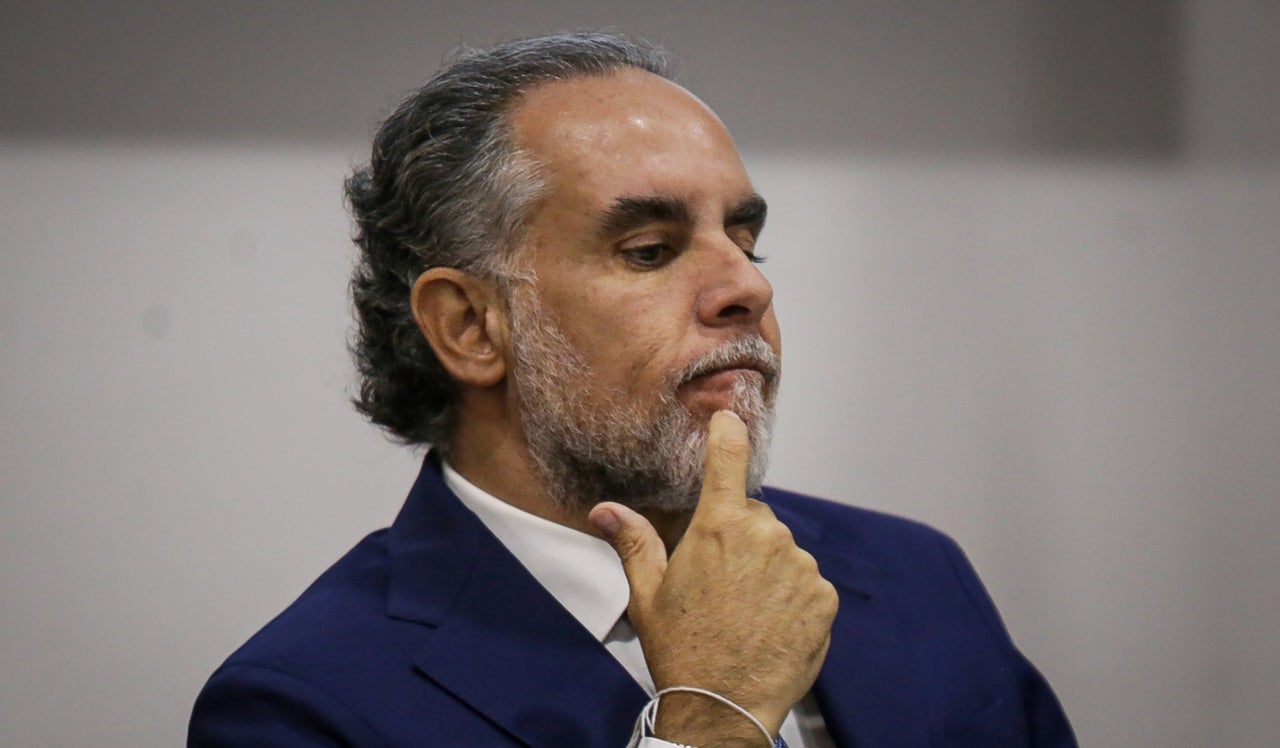
Bogotá, Colombia – The appointment of Armando Benedetti as Colombia’s Minister of the Interior has been definitively upheld by the Administrative Court of Cundinamarca, dismissing a legal challenge that questioned his suitability for the role. The ruling, delivered by magistrates Claudia Elizabeth Lozzi Moreno, Luis Manuel Lasso Lozano, and Felipe Alirio Solarte Maya, marks a significant victory for President Gustavo Petro’s administration and allows Benedetti to continue serving in his position. This decision comes after scrutiny surrounding Benedetti’s past, including allegations related to substance use and questions about his academic qualifications.
The legal challenge, brought forth by the Francisco de Paula Santander Lawyers Collective, sought to nullify Decree No. 0245 of March 1st, 2025, which officially appointed Benedetti to the Ministry of the Interior. The plaintiffs argued that Benedetti did not meet the necessary requirements for the position, specifically citing concerns about his physical and psychological fitness. The core of their argument centered on claims of past struggles with drug and alcohol addiction, suggesting these issues could impede his ability to effectively perform his duties. The case has drawn attention to the intersection of personal history and public service within the Colombian government.
Court Rejects Claims of Unsuitability
The Administrative Court of Cundinamarca ultimately rejected the claims made by the lawyers collective. The court determined that any alleged misconduct related to substance use occurred outside of Benedetti’s capacity as a public servant and therefore did not fall under the purview of electoral nullity control. Instead, the court suggested that such matters should be addressed through internal control offices or by the Attorney General’s Office, emphasizing the separation between a public official’s private life and their professional conduct, provided the private actions do not directly impact their public service. This ruling underscores a legal precedent regarding the scope of judicial review in appointments to public office.
the plaintiffs questioned the veracity of Benedetti’s academic credentials and professional experience, alleging a lack of supporting documentation. They pointed to his resume, noting the absence of specific details regarding his university education, specializations, or master’s degrees, and argued that he lacked the necessary experience for the position. However, the court did not discover these arguments sufficient grounds to overturn the appointment. The court’s decision highlights the challenges in scrutinizing the qualifications of political appointees and the balance between ensuring competence and respecting individual privacy.
Benedetti’s Background and Previous Roles
Armando Alberto Benedetti Villaneda, born on August 29, 1967, has had a long and varied career in Colombian politics and diplomacy. According to his official biography, he currently serves as Minister of the Interior, a position he assumed on March 3, 2025. Wikipedia details a career spanning several decades, including roles as Chief of Staff of the Casa de Nariño (from February 3, 2025, to March 1, 2025), Ambassador of Colombia to Venezuela (from August 24, 2022, to July 19, 2023), and Ambassador of Colombia to the Food and Agriculture Organization (FAO) (from February 8, 2024, to November 25, 2024). He has also held positions as a Senator and a Member of the Chamber of Representatives, demonstrating a consistent presence in Colombian legislative bodies.
Prior to his ambassadorships and ministerial role, Benedetti served as President of the Social Party of National Unity from June 8, 2016, to October 20, 2017, and as President of the Senate from July 20, 2010, to July 20, 2011. His political affiliations have evolved over time, beginning with the Liberal party in 1998, transitioning to the Social Party of National Unity in 2005, and currently aligning with the Historic Pact for Colombia since 2021. This trajectory reflects the shifting political landscape of Colombia and Benedetti’s adaptability within it.
The Legal Challenge and its Implications
The lawsuit filed by the Francisco de Paula Santander Lawyers Collective specifically referenced Benedetti’s public acknowledgment, on November 25, 2024, of his ongoing rehabilitation for drug and alcohol use, and his admission of struggling with addiction since the age of 18. The plaintiffs argued that this history raised concerns about his reliability and ability to fulfill the responsibilities of a high-ranking government official. They expressed skepticism about his sustained recovery, suggesting that relapse could compromise his performance as Minister of the Interior. This argument tapped into broader societal concerns about the impact of personal struggles on public service.
However, the court’s ruling emphasized that disciplinary action, if warranted, should be based on conduct occurring *while* in office, not on past behavior. This distinction is crucial in understanding the court’s reasoning. The magistrates concluded that the alleged conduct did not fall within the scope of electoral nullity control and should be addressed through appropriate internal channels and, if necessary, by the Attorney General’s Office. This decision reinforces the principle that legal challenges to appointments should focus on demonstrable deficiencies in qualifications or legal impediments to holding office, rather than on personal matters unrelated to official duties.
Impact on Petro’s Administration
The confirmation of Armando Benedetti’s appointment is a significant win for President Gustavo Petro, who has faced challenges in navigating a complex political landscape since taking office. Petro’s administration has been focused on implementing progressive policies and addressing deep-seated social and economic inequalities in Colombia. Maintaining stability within his cabinet is crucial for advancing his agenda. The successful defense of Benedetti’s appointment demonstrates the administration’s ability to withstand legal challenges and maintain its core team. This outcome will likely bolster confidence within the government and allow it to focus on its policy priorities.
The case also highlights the increasing scrutiny faced by public officials in Colombia, particularly those with a history of public struggles. The legal challenge brought by the Francisco de Paula Santander Lawyers Collective reflects a growing demand for transparency and accountability in government. While the court ultimately sided with the administration, the case serves as a reminder of the importance of ethical conduct and the potential for legal challenges to appointments based on perceived conflicts or concerns about suitability. The outcome of this case will likely influence future legal challenges to appointments in Colombia.
The decision, as reported by Hoy Diario del Magdalena, was adopted by a panel of magistrates including Claudia Elizabeth Lozzi Moreno, Luis Manuel Lasso Lozano, and Felipe Alirio Solarte Maya. The court’s ruling, documented in process number 25000-2341-000-2024-00428-00, effectively closes the legal challenge and allows Benedetti to continue serving as Minister of the Interior. The court’s decision, outlined in a formal communication on June 12, 2025, underscores the importance of adhering to legal procedures and respecting the boundaries between personal life and public service.
Looking ahead, Benedetti is expected to continue playing a key role in President Petro’s administration, focusing on implementing policies related to internal security, citizen participation, and regional development. The next major checkpoint will be the ongoing implementation of the administration’s peace talks with armed groups and the continued efforts to address the root causes of conflict in Colombia. Readers interested in following these developments can find updates on the Ministry of the Interior’s official website and through reputable Colombian news sources.
The confirmation of Benedetti’s appointment provides a degree of stability for the Petro administration, but it also underscores the ongoing challenges of navigating a complex political landscape and addressing deep-seated societal issues. The case serves as a reminder of the importance of transparency, accountability, and ethical conduct in public service. As Colombia continues to grapple with its past and strive for a more peaceful and equitable future, the role of its leaders will be crucial in shaping the nation’s trajectory.
What are your thoughts on the court’s decision? Share your comments below and join the conversation. Don’t forget to share this article with your network to keep them informed about the latest developments in Colombian politics.
Keep reading
- RC Strasbourg Transfer Update: Squad Reconstruction, Departures, and Pre-Season Progress
- The SportBusiness Podcast: New Ryder Cup & F1 Sponsor Profile + Global Football’s Crisis
- Korean Youth Delays 500M Won Lottery Claim to Pass Public Housing Asset Screening (archynewsy.com)
- Yorkshire Stop Durham’s Streak as Multiple Teams Claim One-Day Cup Wins (newsdirectory3.com)