
The Colombian judicial landscape saw a significant development this week as the Supreme Court of Justice issued a definitive ruling regarding the legal status of Santiago Uribe Vélez. In a decision that has resonated across the nation’s political and social spheres, the high court confirmed the conviction of the brother of former President Álvaro Uribe Vélez, solidifying a lengthy legal battle that has spanned over a decade.
The legal proceedings, which centered on allegations of conspiracy and homicide, reached a critical juncture when the Supreme Court of Justice upheld the sentence of 28 years and two months of imprisonment. This ruling marks the culmination of an exhaustive judicial process that examined Uribe Vélez’s alleged involvement with illegal armed groups and the subsequent orchestration of violent acts within the Antioquia region during the 1990s.
The Context of the Judicial Ruling
The conviction stems from charges linked to the formation of the “Twelve Apostles” group, a paramilitary organization accused of carrying out “social cleansing” operations and targeted assassinations in Yarumal, Antioquia. According to the Office of the Attorney General of Colombia, the evidence presented during the trial established a clear nexus between Uribe Vélez and the logistical support of these illegal entities. The court determined that his actions directly contributed to the deprivation of life of individuals perceived as threats to the stability and social order sought by these groups.
For many observers, this case serves as a touchstone for the broader efforts of the Colombian judiciary to address the legacy of the internal armed conflict. The judicial investigation into Santiago Uribe Vélez officially commenced in 2010, following testimonies from former paramilitary members and police officers who alleged that the Yarumal farm, known as “La Carolina,” served as a training ground and operational base for the group. The court’s final assessment meticulously reviewed these testimonies, concluding that the weight of the evidence surpassed the threshold of reasonable doubt required for such a significant criminal conviction.
Legal Implications and Sentencing Details
The sentence handed down by the court is not merely a reflection of the crimes committed but also an application of the rigorous standards of international human rights law that Colombia has integrated into its domestic code. The 28-year prison term is one of the most substantial handed down in recent years concerning high-profile figures linked to paramilitary structures. Legal experts note that the ruling reinforces the principle of accountability, regardless of political affiliation or social standing.
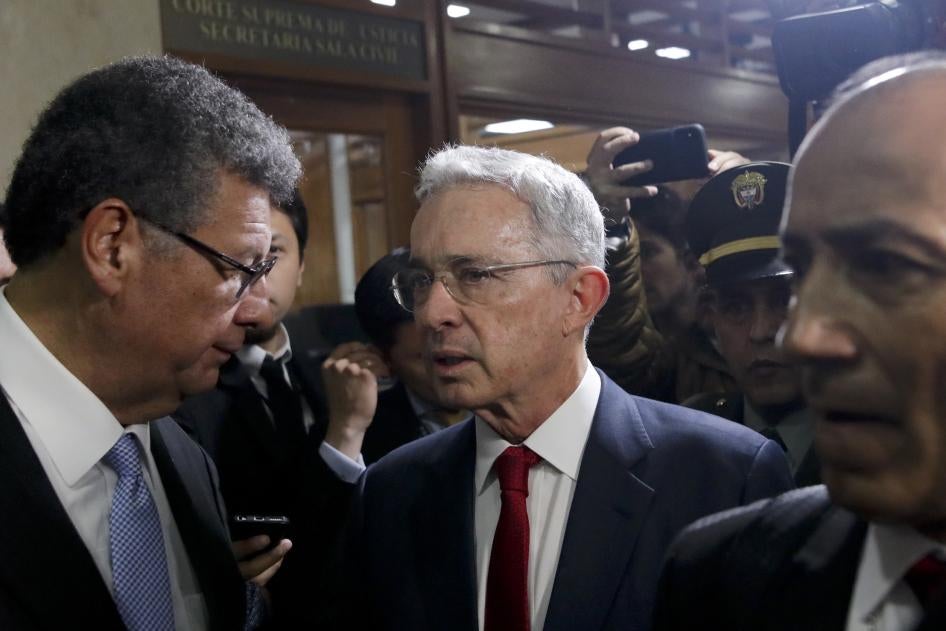
According to the official court records, the ruling was finalized following a comprehensive review of the defense’s appeals, which sought to challenge the consistency of the witness accounts and the interpretation of the evidence gathered by the Prosecutor’s Office. The Supreme Court, acting as the final arbiter in this instance, rejected these challenges, maintaining that the trial court’s evaluation of the facts was legally sound and compliant with due process protections under the Colombian Constitution. You can monitor further updates and official statements regarding this case through the official news portal of the Supreme Court of Colombia.
What This Means for the Colombian Public
The reaction to this verdict has been polarized, reflecting the deep-seated divisions that continue to characterize Colombian political discourse. Supporters of the Uribe family maintain that the judicial process has been politically motivated, arguing that the testimonies used to build the case were coerced or fabricated by individuals seeking benefits within the transitional justice system. Conversely, human rights organizations and victims’ advocates have hailed the decision as a victory for the rule of law, emphasizing that it provides a measure of closure for the families affected by the violence in the 1990s.
The impact of this ruling extends beyond the immediate parties involved, as it sets a precedent for how the judiciary handles cases involving long-standing allegations of paramilitary collaboration. As the nation continues to navigate the complexities of peace-building and reconciliation, the resolution of such high-stakes legal matters is viewed as essential for maintaining public trust in state institutions. The legal system’s ability to process these cases, while navigating intense public scrutiny, remains a vital indicator of the health of Colombia’s democracy.
Key Facts Regarding the Case
- Defendant: Santiago Uribe Vélez
- Primary Charges: Aggravated homicide and conspiracy to commit a crime (paramilitarism).
- Sentencing: 28 years and two months of imprisonment.
- Key Location: Yarumal, Antioquia (related to the “La Carolina” estate).
- Judicial Status: Final conviction upheld by the Supreme Court of Justice.
Next Steps in the Legal Process
Following the ratification of the sentence, the next procedural step involves the formal notification of the penitentiary authorities to execute the detention order. While the defense may explore extraordinary legal remedies, such as a tutelary action—a constitutional mechanism used to protect fundamental rights when due process is allegedly violated—the Supreme Court’s decision is considered a final ruling on the merits of the case. The public and interested parties are encouraged to await official communications from the court’s press office regarding the timeline for the defendant’s surrender to authorities.

As this story continues to develop, it remains a critical point of interest for those following the intersection of law, history, and politics in Latin America. We will continue to monitor the situation for any further official developments or procedural updates from the Colombian judicial branch. We invite our readers to share their thoughts on this significant development in the comments section below, and to share this report to keep others informed on the evolving legal landscape.
Related reading