
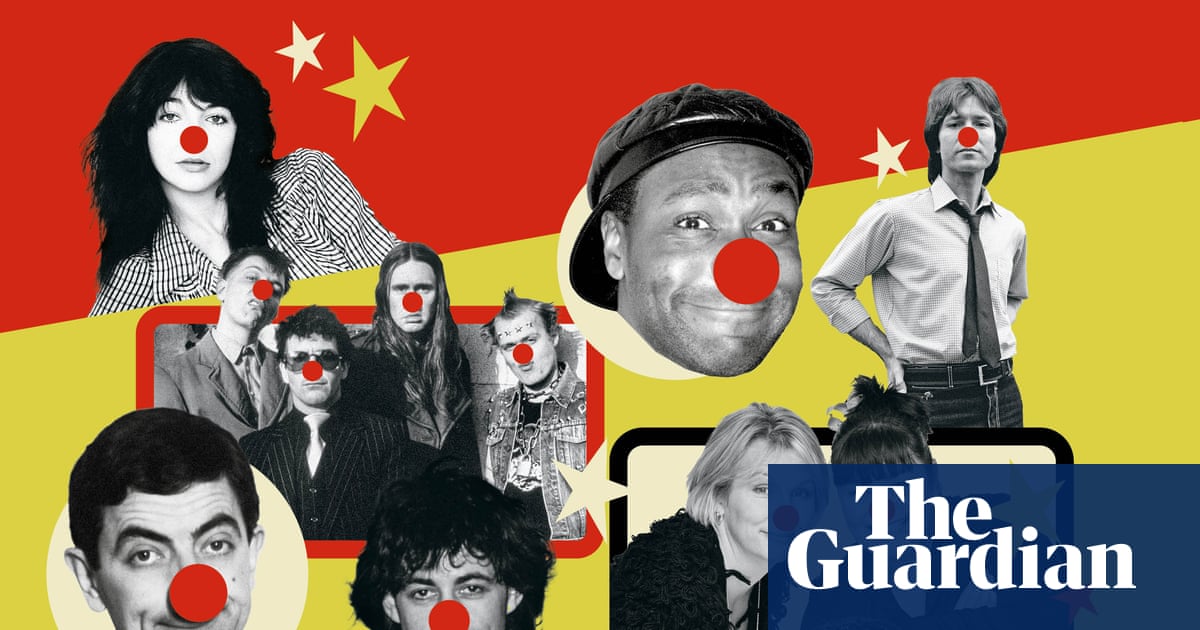
The Sweary, Shambolic Night That Gave Birth to Comic Relief—And Changed Charity Telethons Forever
Forty years ago this month, a ragtag group of British comedians gathered in a tiny Hampshire village with a name too excellent to ignore—Nether Wallop—and staged what would become one of the most influential charity events in television history. What began as a chaotic, unscripted all-nighter at London’s Shaftesbury Theatre in 1986 has since evolved into Comic Relief, a fundraising juggernaut that last month’s 2026 event proved is still going strong, raising £30 million for charity. But the origin story of Comic Relief remains a masterclass in how spontaneity, rebellion, and a refusal to follow the rules can create something extraordinary.
The inaugural Comic Relief telethon was anything but polished. Legendary Scottish comedian Billy Connolly, known for his unfiltered wit, was asked to perform for 15 minutes. His response? “I’ll do as long as I want.” And he did—delivering a set that reportedly stretched well beyond the allotted time, much to the delight (and occasional horror) of the organizers. That spirit of defiance and unpredictability defined the night, setting the tone for what would become a beloved British institution.
At the heart of Comic Relief’s creation were three key figures: comedian and actor Lenny Henry, screenwriter Richard Curtis, and charity worker Jane Tewson. The trio had been inspired by the success of Live Aid, the 1985 global charity concert organized by Bob Geldof and Midge Ure, which had redefined what a showbiz charity event could achieve. But while Live Aid was a meticulously planned spectacle, Comic Relief was born from a desire to do something different—something raw, funny, and unapologetically British.
The Village That Started It All: Nether Wallop and the Birth of a Comedy Revolution
The idea for Comic Relief was first hatched in 1984, not in a boardroom or a television studio, but in the unlikely setting of Nether Wallop, a modest village in Hampshire. The location was chosen, according to those involved, simply because its name made them laugh. The plan was to create a comedy alternative to the Edinburgh Festival, which had long been the go-to destination for British comedy. But this wasn’t just another festival—it was a gathering of what was fast becoming the new British comedy elite, a chance to blend humor with a cause.
The event in Nether Wallop was a precursor to the larger telethon that would follow. It featured early performances from some of the biggest names in British comedy at the time, including Rowan Atkinson, Stephen Fry, and Hugh Laurie. The atmosphere was electric, with performers feeding off the energy of the crowd and each other. But it was the 1986 telethon at the Shaftesbury Theatre that would cement Comic Relief’s place in television history.
The Shaftesbury Theatre Indicate: A Night of Chaos, Comedy, and Unforgettable Moments
The first Comic Relief telethon, broadcast live on BBC1 on February 8, 1986, was a far cry from the slick, highly produced charity events we’re used to today. It was messy, unpredictable, and at times, downright surreal. Among the highlights:

- The Young Ones and Cliff Richard’s “Living Doll”: The anarchic punk-comedy band The Young Ones, known for their absurdist humor, teamed up with pop legend Cliff Richard for a chaotic rendition of his 1959 hit “Living Doll.” The performance was a collision of musical worlds—Cliff’s polished pop sensibilities clashing with The Young Ones’ irreverent, anything-goes energy. The result was a moment so bizarre and hilarious that it became one of the most talked-about segments of the night.
- Kate Bush and Rowan Atkinson’s Duet: Reclusive singer-songwriter Kate Bush, who rarely performed live at the time, was somehow coaxed onto the stage to duet with Rowan Atkinson. The pairing was unexpected, to say the least—Bush’s ethereal, otherworldly vocals alongside Atkinson’s bumbling, physical comedy. The performance was a masterclass in contrasts, and it remains one of the most memorable moments in Comic Relief history.
- Spitting Image’s Prince Andrew Skit: The satirical puppet show Spitting Image contributed a near-the-knuckle sketch involving Prince Andrew, who was then a young royal. The skit was typical of the show’s irreverent style, poking fun at the monarchy in a way that would be unthinkable in today’s more cautious media landscape. It was a reminder of the era’s willingness to push boundaries, even when it came to charity events.
But perhaps the most defining moment of the night came from Billy Connolly. The Scottish comedian, known for his no-holds-barred humor, was asked to perform for 15 minutes. Instead, he took the stage and delivered a set that lasted nearly an hour. His refusal to stick to the script—both literally and figuratively—embodied the spirit of Comic Relief: unfiltered, unpredictable, and utterly unforgettable.
From Scrappy Beginnings to a Fundraising Powerhouse
In its early years, Comic Relief was a gamble. The idea of blending comedy with charity was untested, and there were no guarantees that audiences would embrace it. But the 1986 telethon was a resounding success, raising £1.5 million for famine relief in Ethiopia and Sudan. The money was desperately needed, and the event proved that comedy could be a powerful force for good.
Over the decades, Comic Relief has grown into one of the UK’s most beloved charity initiatives. The biennial Red Nose Day telethon, which alternates with Sport Relief, has become a cultural phenomenon, raising hundreds of millions of pounds for causes both at home and abroad. The 2026 event, held last month, brought in £30 million, a testament to the enduring appeal of the format.
But despite its growth, Comic Relief has never lost sight of its roots. The early spirit of spontaneity and rebellion is still evident in the way the event is run. Performers are encouraged to take risks, and the telethon remains a platform for both established stars and up-and-coming talent. It’s a far cry from the polished, corporate charity events that dominate today’s landscape, and that’s precisely what makes it special.
The Legacy of Comic Relief: Why It Still Matters
Comic Relief’s impact extends far beyond the money it raises. It has changed the way we think about charity, proving that humor and philanthropy can go hand in hand. It has also provided a platform for some of the UK’s most beloved comedians, many of whom got their first big break on the Comic Relief stage. For audiences, it’s a chance to laugh, cry, and experience connected to a cause—all in the space of a few hours.

But perhaps the most enduring legacy of Comic Relief is its ability to adapt. In an era where traditional telethons are increasingly rare, Comic Relief has managed to stay relevant by embracing new formats, new talent, and new causes. From its early days as a scrappy, unscripted experiment to its current status as a fundraising powerhouse, Comic Relief has remained true to its core mission: using comedy to craft the world a better place.
As the organization celebrates its 40th anniversary, it’s worth reflecting on how far it has approach. The 1986 telethon was a product of its time—a moment when British comedy was at its peak, and the world was hungry for something new. Today, Comic Relief continues to evolve, but its spirit remains the same: a little bit sweary, a little bit shambolic, and entirely unforgettable.
What’s Next for Comic Relief?
With the 2026 Red Nose Day telethon now behind us, the focus shifts to the next event. While no official date has been announced for the 2028 telethon, organizers have hinted that it will continue to innovate, with plans to incorporate more digital elements and interactive experiences for audiences. Fans can also appear forward to the return of some of the event’s most beloved segments, as well as new surprises from the next generation of comedians.
For now, though, the legacy of that first chaotic night at the Shaftesbury Theatre lives on. It’s a reminder that sometimes, the best ideas come from taking a risk—and that a little bit of rebellion can go a long way.
Key Takeaways
- Comic Relief was born in 1984 in Nether Wallop, Hampshire, as a comedy alternative to the Edinburgh Festival.
- The first telethon in 1986 raised £1.5 million for famine relief in Ethiopia and Sudan, proving that comedy could be a powerful fundraising tool.
- Unforgettable moments from the inaugural event included The Young Ones performing with Cliff Richard, Kate Bush duetting with Rowan Atkinson, and Billy Connolly’s unscripted, hour-long set.
- Comic Relief has raised hundreds of millions over the decades, with the 2026 event bringing in £30 million.
- The event’s success lies in its spontaneity—performers are encouraged to take risks, and the telethon remains a platform for both established stars and new talent.
- Comic Relief’s legacy is its ability to adapt, staying relevant in an era where traditional telethons are increasingly rare.
What’s your favorite Comic Relief moment? Share your memories in the comments below—and don’t forget to spread the word about this incredible charity initiative!