
What Types of Personal Injuries Are Compensable Under the Law?
Every year, millions of people worldwide suffer injuries due to accidents, negligence, or intentional harm. While not all injuries lead to legal claims, many can be grounds for compensation if they result from another party’s failure to uphold their duty of care—a legal obligation to act reasonably to prevent harm. But what exactly makes an injury “compensable”? The answer lies in a combination of legal principles, medical evidence, and the injury’s impact on a person’s life.
From broken bones to emotional trauma, the law recognizes a wide range of injuries as eligible for compensation. However, the process isn’t automatic. Victims must prove that their injury was caused by another’s negligence, that it resulted in measurable harm, and that the responsible party can be held financially accountable. This article explores the types of personal injuries that courts and insurers typically recognize as compensable, the legal framework behind these claims, and what victims need to recognize to seek justice.
The Legal Foundation: Duty of Care and Negligence
At the heart of every personal injury claim is the concept of negligence. Under most legal systems, including those in the U.S., the U.K., and the E.U., a person or entity can be held liable for injuries if they breached a duty of care owed to the victim. This duty varies by context—drivers must operate vehicles safely, property owners must maintain hazard-free premises, and manufacturers must ensure products are free from defects.

To succeed in a claim, plaintiffs must establish four key elements, as outlined by legal authorities like Nolo and FindLaw:

- Duty of care existed: The defendant had a legal obligation to act (or refrain from acting) in a certain way.
- Breach of duty: The defendant failed to meet that obligation, either through action or inaction.
- Causation: The breach directly caused the injury.
- Damages: The injury resulted in measurable harm, such as medical bills, lost wages, or pain and suffering.
Without these elements, even severe injuries may not qualify for compensation. For example, a slip-and-fall accident in a public park might not lead to a claim if the property owner took reasonable steps to maintain safety. Conversely, a car accident caused by a distracted driver could meet all four criteria, making the victim’s injuries compensable.
Types of Compensable Personal Injuries
Personal injuries fall into several broad categories, each with unique legal and medical considerations. Below, we break down the most common types of compensable injuries, supported by legal precedents and expert analysis.
1. Physical Injuries: The Most Common Claims
Physical injuries are the most frequently cited in personal injury claims. These include:
- Fractures and broken bones
- Soft tissue damage (sprains, strains, whiplash)
- Burns (thermal, chemical, or electrical)
- Head and spinal cord injuries
- Internal organ damage
Medical records, imaging (X-rays, MRIs), and treatment histories are critical in documenting these injuries. The severity of the injury often determines the compensation amount. For instance, a minor fracture that heals within weeks may result in a smaller settlement than a permanent disability requiring lifelong care. Even minor injuries can be compensable if they are directly linked to the defendant’s negligence, as noted by Justia.
2. Traumatic Brain Injuries (TBIs): Invisible but Devastating
Traumatic brain injuries (TBIs) are among the most complex and life-altering injuries. Unlike visible wounds, TBIs may not manifest immediately, and their effects can be long-lasting. Symptoms may include:
- Memory loss or cognitive impairment
- Difficulty concentrating or making decisions
- Mood swings, depression, or anxiety
- Sensory issues (vision, hearing, or balance problems)
Because TBIs often require extensive medical evaluation—including neuropsychological testing—claims involving these injuries tend to be more complex and costly. The U.S. Centers for Disease Control and Prevention (CDC) estimates that TBIs contribute to about 30% of all injury-related deaths in the U.S., underscoring their severity. Compensation may cover ongoing therapy, lost earning capacity, and pain and suffering.
3. Emotional and Psychological Injuries: The Hidden Toll
Not all injuries are physical. Emotional and psychological harm—such as post-traumatic stress disorder (PTSD), anxiety, depression, or emotional distress—can also be compensable, particularly when linked to a traumatic event. For example, a victim of a violent assault may develop PTSD even if they sustained no physical injuries. Similarly, a car accident survivor might experience debilitating anxiety that prevents them from driving again.
Proving emotional injuries can be challenging, as they lack the tangible evidence of physical harm. Courts typically require documentation from mental health professionals, such as psychologists or psychiatrists, to substantiate these claims. In some jurisdictions, emotional distress can be claimed independently of physical injuries, while in others, it must be tied to a physical harm. The American Psychological Association (APA) notes that emotional injuries can be just as debilitating as physical ones, affecting a person’s ability to work, maintain relationships, and enjoy life.
4. Chronic Pain and Long-Term Conditions
Some injuries don’t heal. Chronic pain, limited mobility, or conditions like fibromyalgia or complex regional pain syndrome (CRPS) can persist for years or even a lifetime. These injuries often require ongoing medical treatment, physical therapy, and adaptive devices, all of which can be factored into compensation claims.
For example, a construction worker who suffers a back injury due to unsafe working conditions may develop chronic pain that prevents them from returning to their job. In such cases, compensation may include future medical expenses, lost wages, and diminished earning capacity. The National Institutes of Health (NIH) highlights that chronic pain affects an estimated 20% of adults worldwide, making it a significant factor in personal injury claims.
5. Loss of Function or Mobility
Injuries that result in permanent loss of function—such as paralysis, amputation, or reduced range of motion—can dramatically alter a person’s life. These injuries may affect:
- Independence (e.g., requiring assistive devices or in-home care)
- Ability to work (e.g., a pianist losing finger dexterity)
- Quality of life (e.g., inability to participate in hobbies or sports)
Compensation for these injuries often includes costs for adaptive equipment, home modifications, and vocational rehabilitation. Courts also consider the emotional impact of losing mobility or independence, which can be substantial. For instance, a study published in the Lancet found that spinal cord injuries can reduce life expectancy by up to 20 years, depending on the severity.
6. Scarring and Disfigurement
Injuries that result in visible scars, burns, or other forms of disfigurement can have both physical and emotional consequences. Even after the initial injury heals, the visible effects may persist, affecting a person’s self-esteem, social interactions, and mental health. Common examples include:
- Burn scars from fires or chemical exposure
- Facial scars from lacerations or surgeries
- Amputation-related disfigurement
Compensation for scarring and disfigurement often accounts for both the physical discomfort (e.g., pain from scar tissue) and the emotional distress caused by the altered appearance. The American Burn Association reports that burn injuries result in over 40,000 hospitalizations annually in the U.S., many of which leave lasting scars.
7. Wrongful Death: Compensation for Surviving Family Members
When an injury results in death, the legal claim shifts to a wrongful death lawsuit, filed on behalf of the deceased’s surviving family members. These claims seek compensation for:
- Funeral and burial expenses
- Lost income and financial support
- Loss of companionship and emotional support
- Pain and suffering endured by the deceased before death
Wrongful death claims are governed by specific state or national laws, which vary in terms of who can file (e.g., spouses, children, or parents) and what damages are recoverable. In the U.S., for example, the Cornell Law School Legal Information Institute notes that these claims are typically filed by the deceased’s estate or close relatives.
What Determines Compensation Amounts?
Compensation for personal injuries is not one-size-fits-all. Several factors influence the final settlement or court award, including:
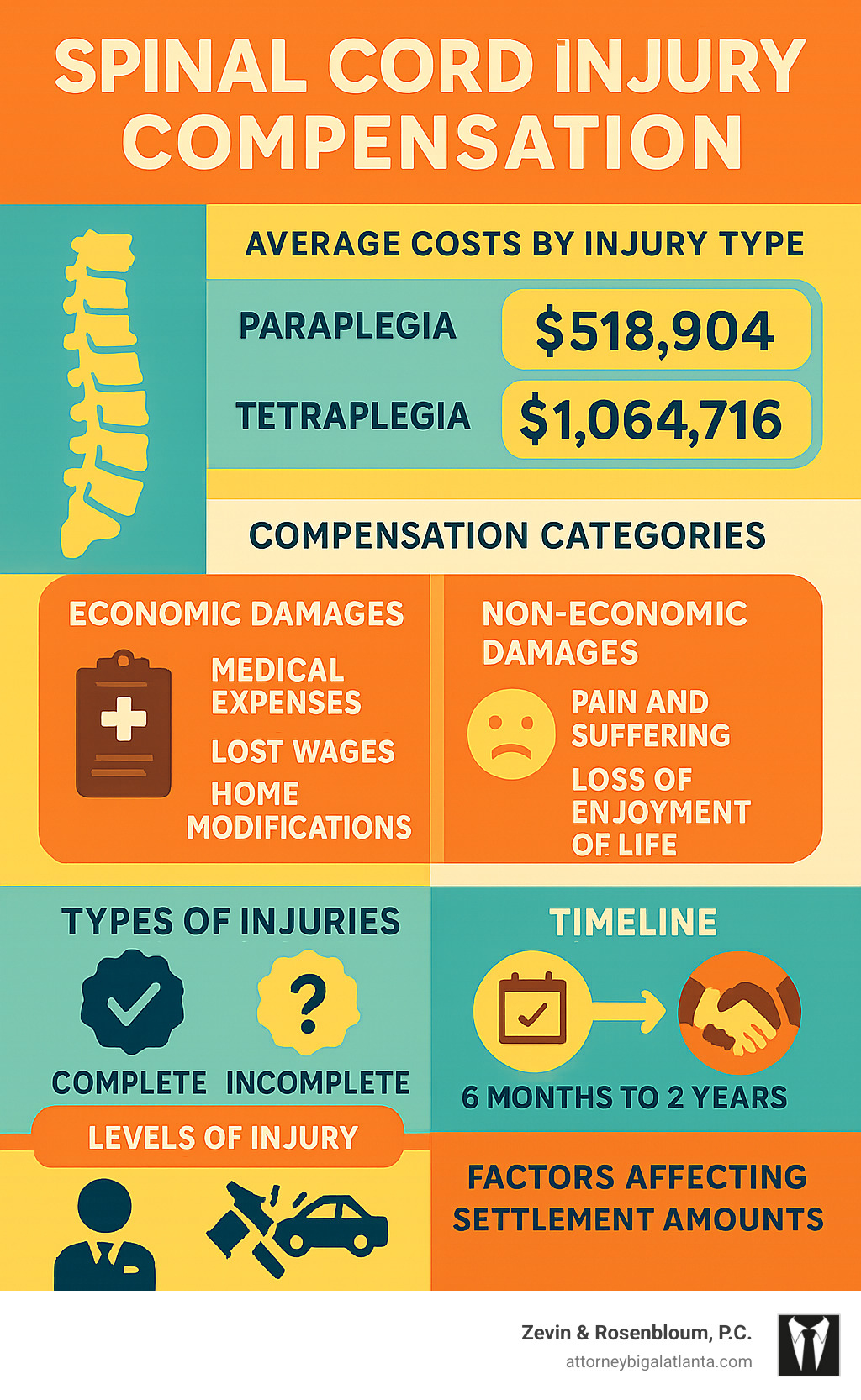
- Severity of the injury: Permanent disabilities or life-threatening conditions typically result in higher compensation.
- Medical expenses: Both past and future medical costs are considered, including hospital bills, rehabilitation, and therapy.
- Lost wages: Compensation may cover income lost due to the injury, as well as future earning capacity if the victim can no longer work.
- Pain and suffering: Non-economic damages account for physical pain, emotional distress, and reduced quality of life.
- Degree of negligence: If the defendant’s actions were particularly reckless or intentional, punitive damages may be awarded to punish the wrongdoer.
For example, a 2023 study by the Insurance Information Institute (III) found that the average bodily injury claim in the U.S. Was approximately $20,235, but settlements for catastrophic injuries (e.g., spinal cord damage) often exceed $1 million.
Key Takeaways for Victims
If you or a loved one has suffered an injury due to another’s negligence, here’s what you need to know:
- Document everything: Medical records, photographs of injuries, witness statements, and police reports are critical evidence.
- Seek legal advice: Personal injury law is complex, and an experienced attorney can help navigate the process, gather evidence, and negotiate with insurers.
- Act promptly: Most jurisdictions have statutes of limitations—deadlines for filing a claim. In the U.S., these typically range from 1 to 6 years, depending on the state and type of injury.
- Don’t settle too quickly: Insurers may offer low settlements early in the process. Consult a lawyer before accepting any offer.
- Consider all damages: Compensation isn’t just for medical bills. Lost wages, pain and suffering, and future expenses should all be factored in.
What’s Next?
Personal injury law continues to evolve, with courts increasingly recognizing the long-term impacts of injuries—both physical and psychological. For victims, understanding the types of compensable injuries and the legal process is the first step toward securing justice. If you’re considering a claim, consult a qualified personal injury attorney to discuss your options and ensure your rights are protected.
Have you or someone you know been affected by a personal injury? Share your experiences or questions in the comments below, and don’t forget to share this article to help others understand their rights.
Keep reading