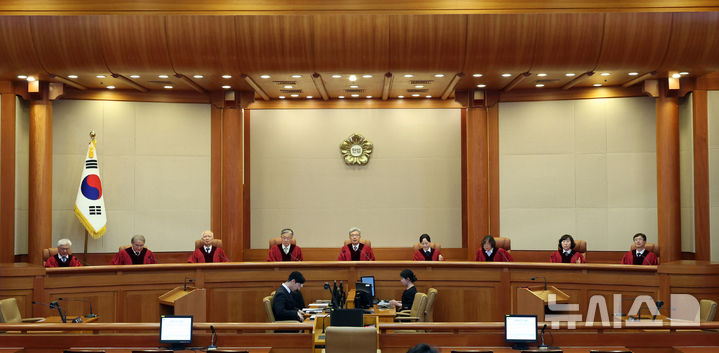
The Constitutional Court of South Korea has reaffirmed the constitutionality of the “five-year, five-attempt” rule for the nation’s bar examination, a decision that maintains the current regulatory framework despite significant internal division among the justices. The ruling, which centers on the Attorney-at-Law Examination Act, addresses the tension between professional entry requirements and the state’s obligation to support maternal protections for candidates facing life-altering personal circumstances.
For aspiring legal professionals, the Constitutional Court of Korea’s decision serves as a definitive closure to ongoing legal challenges regarding the fairness of the bar exam’s eligibility constraints. While the court acknowledged that the rigid structure imposes hardships on certain candidates, a majority of the bench concluded that the legislative intent behind the rule—ensuring the quality of legal services and the efficient management of the bar exam system—remains a compelling public interest.
Understanding the Five-Year, Five-Attempt Rule
Under the current Attorney-at-Law Examination Act, candidates are permitted to sit for the bar examination only five times within a five-year period following their graduation from an accredited law school. This policy, often referred to as the “five-strike” rule, was implemented to prevent the “n-degree candidate” phenomenon, where students might spend decades in repetitive study without entering the workforce, thereby draining social resources and delaying professional entry.
The petitioner in this case argued that the law failed to provide sufficient exceptions for individuals who experience pregnancy or childbirth during their five-year window. The central contention was that the absence of a “pause” or “extension” mechanism for these life events effectively penalizes women, potentially violating the constitutional guarantee of equality and the right to choose a profession.
The Court’s Deliberation and Minority Dissent
The deliberation process revealed a complex judicial landscape. While the court ultimately ruled the provision constitutional, it did so by a narrow margin regarding the required quorum for a declaration of unconstitutionality. According to the court’s official summary, a majority of justices held that there had been no significant change in circumstances since the court’s previous rulings on the matter, which had consistently upheld the law’s validity.
However, the ruling was marked by a notable minority opinion. Several justices argued that the state’s constitutional mandate to protect maternity requires a more flexible approach. These dissenting voices suggested that the current legislative framework, while pursuing a legitimate public goal, does not adequately account for the physiological and social realities of childbirth, creating an undue burden that risks excluding highly capable individuals from the legal profession.
Key Takeaways of the Ruling
- Legal Standing: The “five-year, five-attempt” rule remains fully enforceable under current South Korean law.
- Judicial Consistency: The Constitutional Court maintained that its precedent regarding the efficiency of the legal education system remains valid.
- The Dissenting View: A significant minority of the bench emphasized that maternity protection is a constitutional value that should be balanced against the administrative needs of the bar exam.
- Legislative Future: While the court has affirmed the law’s constitutionality, the existence of a strong minority dissent may encourage future legislative debates regarding potential amendments or hardship exemptions.
Broader Implications for Global Legal Education
The debate surrounding bar examination limits is not unique to South Korea. In many jurisdictions, including parts of the United States and Europe, regulators frequently weigh the need for “gatekeeping” to ensure professional competency against the desire to create more inclusive pathways into the law. In the United Kingdom, for instance, the evolution of the Solicitors Qualifying Examination (SQE) reflects a global trend toward standardizing competency while attempting to remove structural barriers to entry.
For students and stakeholders, this ruling underscores the importance of the legislative process over the judicial process in matters of social policy. Because the court has signaled that the current law is within the bounds of legislative discretion, any future changes to the “five-strike” rule—such as creating specific carve-outs for pregnancy or long-term illness—will likely need to originate from the National Assembly rather than the courtroom.
What Happens Next?
With this decision, the legal status of the current examination constraints is settled. Candidates preparing for the bar exam must continue to plan their academic and personal timelines in accordance with the five-year limit. The Ministry of Justice, which oversees the administration of the exam, is expected to continue its current operations without interruption.
For those tracking legal reforms in Korea, the next step involves monitoring potential discussions within the National Assembly. While the judiciary has deferred to the legislature, the public discourse generated by this case may influence future amendments to the Attorney-at-Law Examination Act. We will continue to provide updates as any legislative proposals regarding exam eligibility are introduced or debated in the parliamentary session.
As a senior editor covering global markets and economic policy, I invite our readers to share their perspectives on how professional licensing systems should balance administrative efficiency with social equity. Please join the conversation in the comments section below.
Keep reading