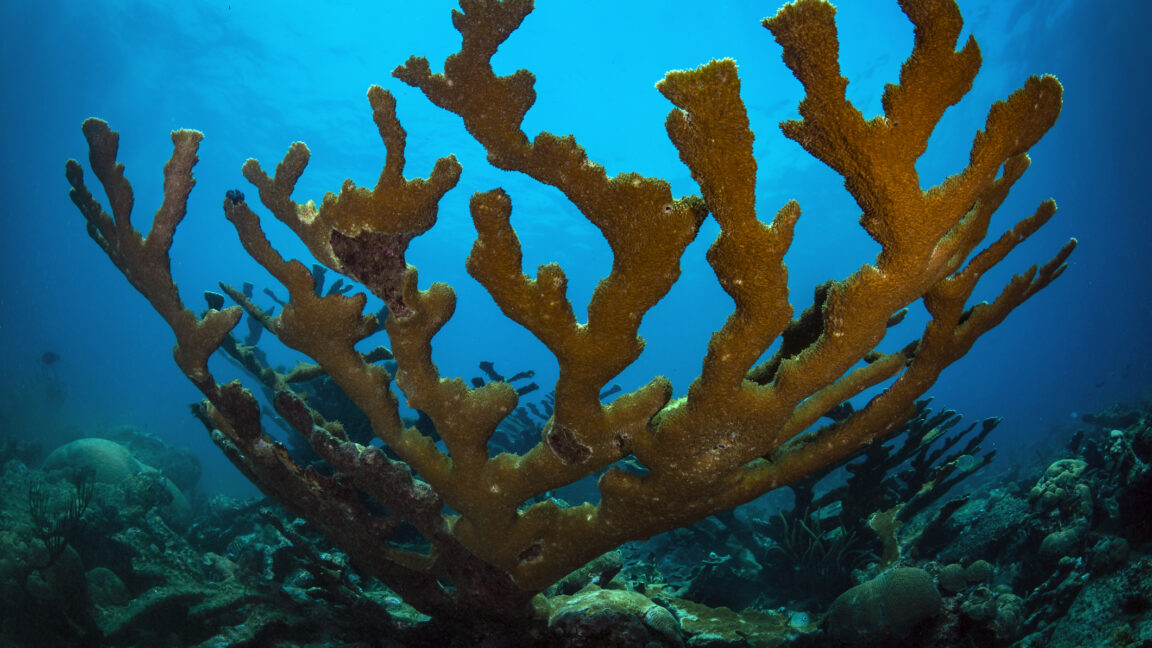
The Florida Reef Crisis: Facing Functional Extinction and the Hope Within Coral DNA
The vibrant Florida Reef, a cornerstone of marine biodiversity, is facing an unprecedented crisis.Recent research paints a stark picture: widespread coral mortality, particularly among key reef-building species, is pushing this vital ecosystem towards functional extinction. but amidst the devastation,a glimmer of hope emerges from the intricate world of coral genetics,suggesting an inherent resilience that may hold the key to future recovery. Is the Florida Reef beyond saving, or can understanding its evolutionary past unlock a path to restoration?
A reef Built on Acropora: Now on the Brink
For millennia, Acropora corals have been the architects of the Florida Reef. These fast-growing species are responsible for the reef’s structural complexity, providing habitat for countless marine organisms.A 2024 study led by Dr. David Cunning at Nova Southeastern University revealed the devastating extent of recent losses. The research, published in Marine Ecology Progress Series, focused on the impact of marine heat waves on Acropora populations.
The findings are alarming. In the Dry Tortugas National Park, the southernmost point of the reef, Acropora coral mortality reached a catastrophic 100%. Further north, in the Lower, Middle, and most of the Upper Keys, mortality rates remained between 98% and 100%. Even in Biscayne National park, a slightly more temperate area, 90% of Acropora corals perished.Only in the northernmost reaches of the reef, around Miami and Broward counties, did mortality rates drop – to a still-meaningful 38% – due to cooler water temperatures.
“What we’re facing is a functional extinction,” explains Dr. Cunning. This doesn’t necessarily mean Acropora corals are entirely gone, but their numbers are so depleted, and their ability to rebuild the reef so compromised, that they can no longer fulfill their ecological role. This has cascading effects throughout the entire ecosystem, impacting fisheries, tourism, and coastal protection. Learn more about the Florida Reef’s ecological importance at the NOAA Florida Reef Resilience Program.
Understanding Coral Resilience: A Deep Dive into Their DNA
While the current situation is dire, it’s crucial to remember that corals have survived numerous mass extinction events over their 460-million-year history. This longevity suggests an inherent capacity for adaptation and resilience. The question is: how? The answer, scientists believe, lies within their genome.
Recent advancements in genomic technology are allowing researchers to unlock the secrets hidden within coral DNA.Claudia Francesca Vaga, a marine biologist at the Smithsonian Institution, and her team have undertaken groundbreaking work in this area. Their research, detailed in Proceedings of the National Academy of Sciences (2023), focuses on “ultra-conserved elements” – stretches of DNA that remain remarkably consistent across vast evolutionary distances.
“There have been studies looking into the evolutionary history of corals, but the difference between those and our work lies in technology,” explains Vaga. By analyzing these conserved elements, her team constructed the most extensive phylogenetic tree of corals to date, tracing the relationships between 274 stony coral species.This allowed them to reconstruct the evolutionary history of corals and identify potential genetic mechanisms that have enabled their survival through past crises.
This research isn’t just about understanding the past; it’s about informing future conservation efforts. Identifying the genes responsible for heat tolerance, disease resistance, and rapid growth could pave the way for targeted breeding programs and assisted evolution strategies. Explore the Smithsonian’s coral research initiatives here.
What Can be done? Practical Steps for Reef Restoration
The Florida Reef crisis demands immediate and multifaceted action. here are some practical steps being taken and potential avenues for future intervention:
* Coral Restoration: Organizations like Coral Restoration Foundation are actively growing corals in nurseries and transplanting them onto degraded reefs. This provides a crucial boost to struggling populations.
* Reducing Local Stressors: Addressing pollution from land-based sources, improving water quality, and managing fishing pressure can enhance coral resilience.
* Genetic Research & Assisted Evolution: Identifying and propagating heat-tolerant coral strains through selective breeding or assisted evolution techniques offers a long-term solution.
* Climate Change Mitigation: Ultimately, the most significant threat to coral reefs is climate change. Reducing greenhouse gas emissions is paramount to stabilizing ocean temperatures and preventing further bleaching events.
* Supporting Sustainable Tourism: Choosing eco-conscious tour operators and practicing
Keep reading