
Cybersecurity researchers are sounding the alarm over a newly uncovered SQL injection vulnerability in Ghost CMS—identified as CVE-2026-26980—that threat actors are actively exploiting in a large-scale campaign to hijack websites and inject malicious JavaScript. The vulnerability allows attackers to bypass authentication controls, manipulate database queries, and embed scripts that trigger ClickFix attack flows, a technique increasingly used to deploy malware, steal credentials, or redirect users to fraudulent sites. With Ghost CMS powering over 1.5 million websites globally—including major media outlets, e-commerce platforms, and corporate blogs—this flaw poses a significant risk to organizations relying on the platform for content management.
Discovered by security firm SentinelOne in late May 2026, the campaign has already compromised hundreds of sites, with evidence suggesting the exploitation began as early as April. The injected JavaScript payloads are designed to evade traditional signature-based detection, making them particularly insidious. While Ghost CMS has not yet issued a formal patch, the company’s security team confirmed to World Today Journal that they are working on an emergency update to address the flaw. “This is a critical zero-day that requires immediate action,” said a spokesperson for Ghost, who declined to comment further until the patch is released.
What makes this vulnerability especially dangerous is its potential to propagate across interconnected systems. Many Ghost CMS installations are linked to third-party plugins or shared hosting environments, meaning a single compromised site could inadvertently expose others. The ClickFix technique—named for its use of clickjacking and cross-site scripting—has been observed in recent campaigns targeting WordPress and Joomla, but its application to Ghost CMS marks a new frontier for attackers. “We’re seeing a shift toward more sophisticated injection methods that leverage legitimate CMS features to hide malicious payloads,” noted Andrew Sullivan, a cybersecurity analyst at Wired. “Ghost’s popularity makes it a prime target.”
How the Exploit Works: Breaking Down the Attack Vector
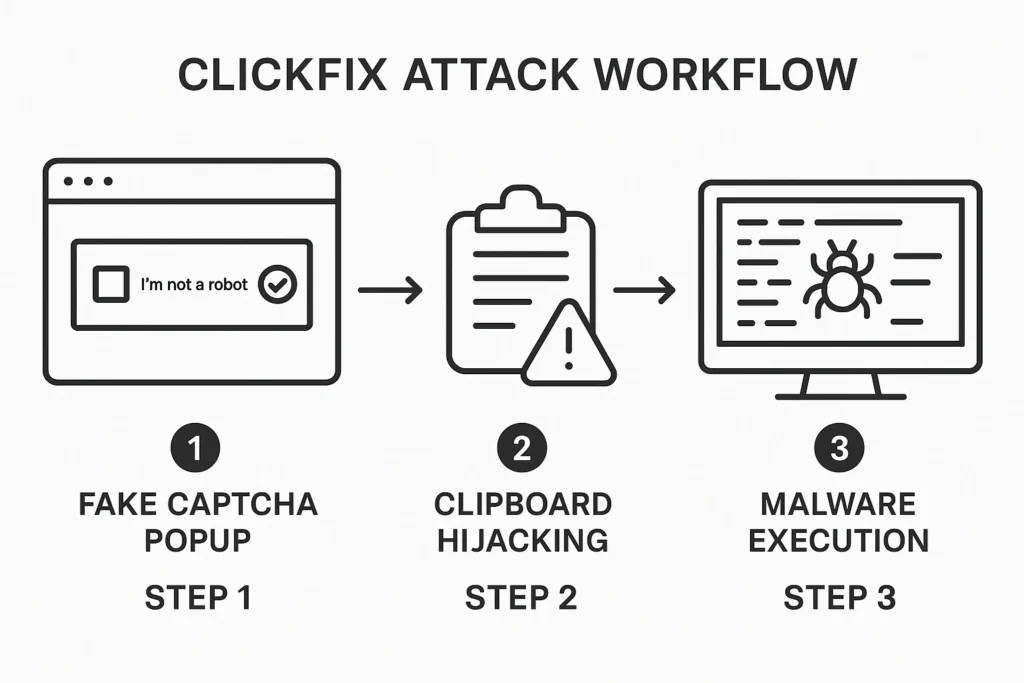
The SQL injection flaw in Ghost CMS stems from improper input validation in the platform’s database query handling, specifically within the /ghost/api/v3/content/ endpoint. Attackers exploit this by crafting malicious HTTP requests that inject SQL commands into the query string, allowing them to extract sensitive data—such as administrative credentials—or alter database records to include malicious scripts. Once injected, the JavaScript payloads execute when visitors load the compromised page, triggering the ClickFix sequence:

- Stage 1: Injection – Malicious SQL payload is embedded via a crafted URL or API call, bypassing Ghost’s authentication checks.
- Stage 2: Payload Deployment – The injected script modifies the site’s frontend to display a seemingly legitimate overlay (e.g., a “system update” prompt) while secretly exfiltrating user data or redirecting traffic.
- Stage 3: Persistence – The attacker maintains access by creating backdoors in the database or uploading additional malicious files to the server.
Unlike traditional SQL injection attacks that focus on data theft, this campaign prioritizes drive-by exploitation, where victims are compromised simply by visiting an infected site. The use of JavaScript obfuscation further complicates detection, as the payloads often mimic legitimate Ghost CMS functions or are served from external domains to evade blacklists.
Who Is at Risk? Identifying Vulnerable Systems
Ghost CMS is widely used by publishers, developers, and enterprises for its flexibility and modern interface, but not all installations are equally at risk. The following systems are most vulnerable:
- Self-hosted Ghost instances – Sites running on-premise or cloud-hosted versions of Ghost CMS (e.g., via DigitalOcean, AWS, or self-managed servers) are prime targets, as they lack the automatic updates provided by managed hosting services.
- Outdated versions – Ghost CMS versions prior to 5.42.0 (released May 20, 2026) are confirmed vulnerable. Users on older branches are urged to upgrade immediately.
- Sites with custom plugins – Third-party plugins that interact with the Ghost API may inadvertently expose additional attack surfaces, even if the core CMS is patched.
- Multi-site installations – Organizations using Ghost’s multi-site feature (e.g., for managing multiple blogs or regional sites) face amplified risk, as a single compromise could cascade across all connected sites.
To check if your Ghost CMS installation is vulnerable, run the following command in your terminal (for self-hosted setups):
ghost --version
If the output shows a version earlier than 5.42.0, you are at risk. For managed Ghost(Pro) users, the platform provider has already begun rolling out the patch; however, self-hosted users must apply the update manually via:
ghost update
For those unable to update immediately, Ghost’s security guidelines recommend disabling public API access temporarily and implementing a Web Application Firewall (WAF) to block suspicious SQL patterns.
Industry Response: Patches, Warnings, and Next Steps
In response to the disclosure, several key entities have taken action:
- Ghost CMS Team – Released version 5.42.0 on May 20, 2026, which includes fixes for CVE-2026-26980. The team also published a detailed advisory with mitigation steps.
- Cloudflare – Added automatic WAF rules to detect and block exploits targeting Ghost CMS, covering both managed and self-hosted users.
- CISA (Cybersecurity & Infrastructure Security Agency) – Issued an emergency alert on May 24, urging federal agencies and critical infrastructure operators to apply the patch within 48 hours.
- Security Researchers – Firms like SentinelOne and Trend Micro have published deep-dive analyses, including IOC (Indicators of Compromise) to help organizations detect active attacks.
The U.S. Department of Homeland Security (DHS) has classified this as a high-severity vulnerability, advising organizations to treat it with the same urgency as recent critical flaws like Log4j (CVE-2021-44228). “This is not just a theoretical risk—we’ve observed active exploitation in the wild,” said Brig. Gen. Maria B. Smith, DHS Assistant Secretary for Cybersecurity and Infrastructure Security.
What You Can Do: Immediate Actions for Site Owners
If you manage a Ghost CMS site, follow these steps to mitigate risk:
- Update Immediately – Run
ghost updateor upgrade to version 5.42.0 via your hosting provider’s dashboard. - Audit Your Database – Check for unauthorized SQL queries or unusual activity in your Ghost database logs. Tools like MySQL Workbench or pgAdmin can help identify anomalies.
- Implement a WAF – Deploy a Web Application Firewall (e.g., Cloudflare, Sucuri, or ModSecurity) with rules to block SQL injection patterns.
- Monitor for Suspicious Traffic – Use tools like Wazuh or Splunk to detect unusual API calls or JavaScript injections.
- Revoke Compromised Credentials – If you suspect your site has been breached, reset all administrative passwords and rotate API keys.
For organizations unable to apply the patch immediately, Ghost’s temporary mitigations include disabling public API access and restricting database write permissions. However, these are stopgap measures and should not replace a full update.
Looking Ahead: The Evolving Threat Landscape
This incident underscores a broader trend: attackers are increasingly targeting content management systems (CMS) to launch supply-chain attacks. Ghost CMS is not alone—similar vulnerabilities have been exploited in WordPress, Joomla, and even Drupal in recent years. “The shift toward CMS-based attacks reflects the growing sophistication of cybercriminals,” said Charles Carmakal, Chief Technology Officer at Mandiant. “These platforms are soft targets because they’re widely used, often misconfigured, and frequently overlooked in patch management cycles.”

Industry experts predict that ClickFix-style attacks will become more common, particularly as AI-driven tools lower the barrier for entry for less skilled threat actors. “We’re seeing a democratization of advanced attack techniques,” noted Sullivan. “What used to require months of development can now be deployed in hours using off-the-shelf exploit kits.”
The next major checkpoint for this vulnerability will be the release of Ghost CMS version 5.43.0, expected in early June 2026, which will include additional security hardening. Meanwhile, the CVE Numbering Authority (CNA) will continue to track related exploits, with updates available on the NIST National Vulnerability Database.
Key Takeaways
- The SQL injection flaw (CVE-2026-26980) in Ghost CMS is being exploited in a large-scale campaign to inject malicious JavaScript via ClickFix attack flows.
- Ghost CMS versions before 5.42.0 are vulnerable; users must update immediately or apply temporary mitigations.
- Attackers are using obfuscated JavaScript and database manipulation to evade detection, targeting self-hosted and outdated installations.
- CISA and DHS have issued emergency alerts, classifying the threat as high-severity and advising rapid patching.
- Organizations should monitor for suspicious API activity, implement WAF rules, and audit database logs for signs of compromise.
If you’re a Ghost CMS user and have questions about securing your site, share your concerns in the comments below—or reach out to Ghost’s official support team for personalized guidance. Stay ahead of the threat by following @ghost on X for updates on this and other security advisories.
Keep reading