
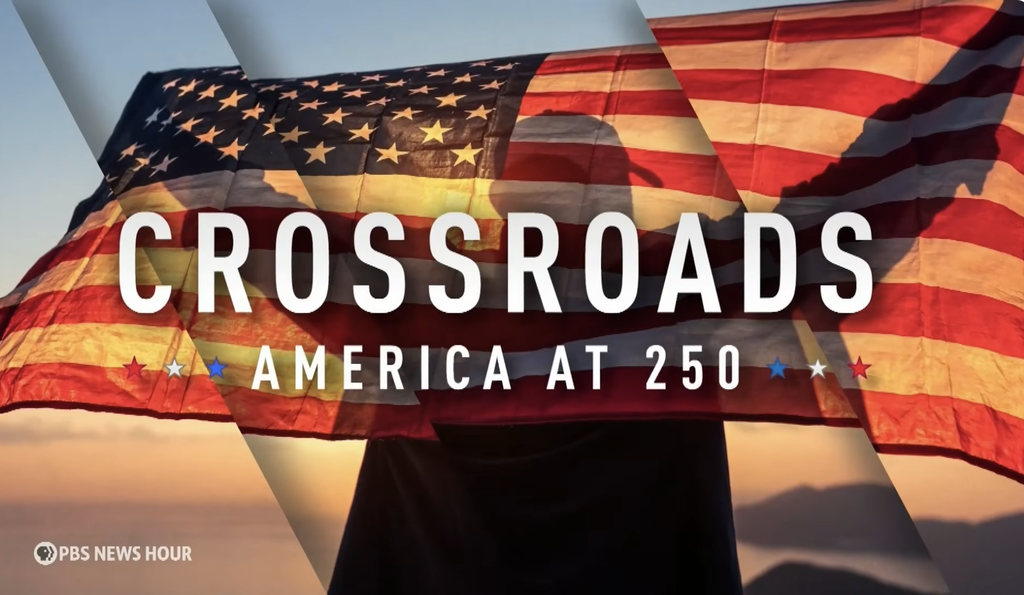
The United States will mark its 250th anniversary on July 4, 2026, an event known as the Semiquincentennial. Current reflections, including the PBS NewsHour series “Crossroads: America at 250,” focus on the tension between the nation’s founding ideals of liberty and the historical reality of slavery and exclusion during the 18th century.
The upcoming anniversary serves as a focal point for historians and journalists to examine the “founding paradox,” a term describing the contradiction of drafting documents that proclaimed universal equality while maintaining a system of chattel slavery. According to the National Archives, the Declaration of Independence established the principle that “all men are created equal,” yet the legal and social structures of 1776 did not extend these rights to Black people, Indigenous populations, or women.
The PBS NewsHour “Crossroads” series uses this milestone to analyze how the American identity has shifted over two and a half centuries. The project explores whether the nation’s original framework can reconcile its aspirational language with its historical failures. This intellectual effort coincides with official preparations led by the federal government to coordinate national celebrations.
How is the U.S. preparing for the 250th anniversary?
The federal government established the U.S. Semiquincentennial Commission to plan and coordinate the 250th anniversary celebrations. The commission is tasked with creating a framework for events that encourage citizens to reflect on the past while looking toward the future. Unlike the Bicentennial in 1976, which focused heavily on patriotic unity during the Cold War era, the 2026 preparations emphasize a more complex, inclusive narrative of the American experience.

The commission’s mandate includes encouraging state and local governments to develop their own commemorative programs. These programs often focus on regional histories that were previously omitted from national narratives, such as the roles of minority groups in the Revolutionary War and the early development of the American economy.
Media organizations have also launched long-form projects to provide historical context. The “Crossroads: America at 250” series, distributed via platforms including Apple Podcasts and Acast, functions as a journalistic inquiry into the evolution of American democracy. The series examines the specific moments where the nation faced existential crises and how those moments redefined the meaning of “liberty.”
What is the “founding paradox” in American history?
The founding paradox refers to the gap between the Enlightenment ideals articulated by the Founding Fathers and the legal realities of the early United States. While Thomas Jefferson wrote that certain rights are “unalienable,” he and many other signatories of the Declaration of Independence were enslavers. This contradiction created a systemic tension that historians argue led directly to the American Civil War.

According to historical records maintained by the Library of Congress, the U.S. Constitution originally protected the slave trade and counted enslaved people as three-fifths of a person for representation purposes. This legal framework stood in direct opposition to the rhetoric of freedom and self-governance that the new nation used to justify its break from British rule.
Modern analysis focuses on how this paradox continues to influence contemporary legal and social debates. The “Crossroads” series suggests that the struggle to align American practice with American ideals is not a deviation from the national story, but is the central theme of the story itself. By examining these contradictions, the series aims to provide a more transparent accounting of the national origin.
Who is overseeing the national celebrations?
The U.S. Semiquincentennial Commission is the primary body overseeing the official federal response. The commission consists of members appointed to ensure a broad representation of American perspectives. Their role is not to organize a single party, but to provide the resources and guidance for thousands of simultaneous celebrations across the 50 states and U.S. territories.
The commission works alongside various non-profit organizations and educational institutions to develop curricula and public exhibits. The goal is to move beyond simple celebration and toward a “national conversation” about the state of the union. This approach acknowledges that the 250-year mark is a moment for critical assessment as much as it is for celebration.
In addition to the commission, the National Park Service and the Smithsonian Institution are expected to play major roles in the 2026 events. These institutions manage the physical sites and artifacts of the founding, providing the primary evidence used by journalists and historians to challenge or support traditional narratives of the American Revolution.
What happens next as 2026 approaches?
As the July 4, 2026, deadline nears, the U.S. Semiquincentennial Commission will release more specific guidelines for local celebrations and official national events. The focus will likely shift from theoretical reflections to the implementation of public festivals, museums exhibits, and educational campaigns.
The “Crossroads: America at 250” series and similar media projects will continue to release segments exploring the intersections of law, race, and power in the early republic. These discussions are designed to prepare the public for a celebration that acknowledges the “unfinished work” of the American experiment.
The next major official checkpoint will be the release of the finalized national program of events by the Semiquincentennial Commission, which will detail the specific ceremonies planned for the capital and the guidelines for state-level observances.
Readers are encouraged to share their thoughts on how the nation should mark this milestone in the comments section below.