Crypto Industry Targets Long-Shot Challenger to Veteran Lawmaker Maxine Waters in California Primary
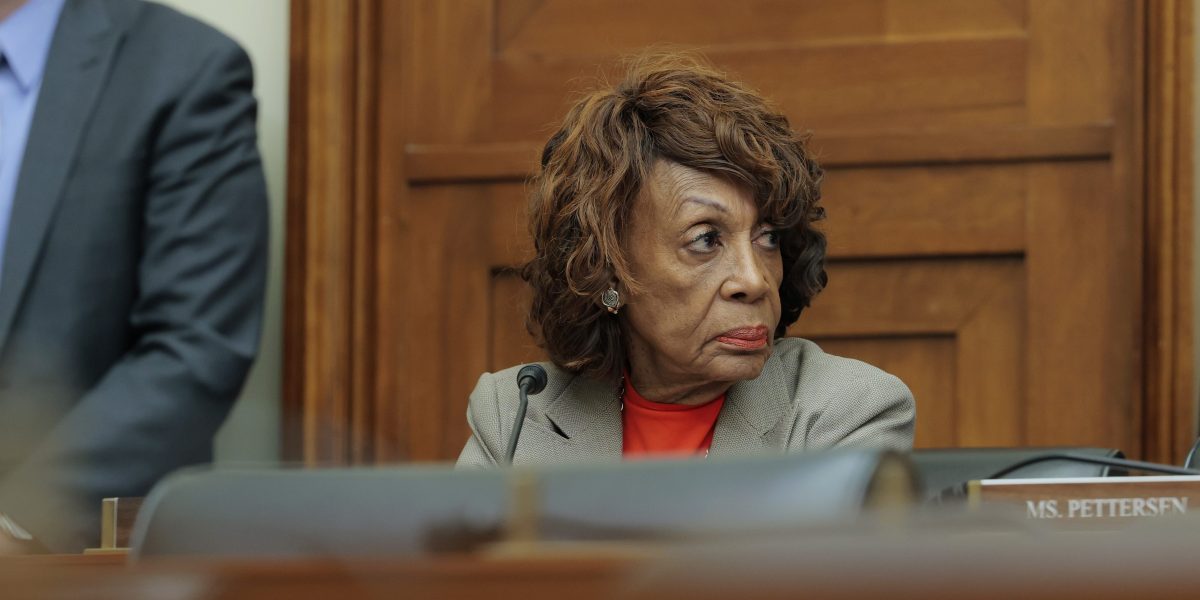
A little-known nonprofit executive has emerged as the latest face of the cryptocurrency industry’s effort to unseat one of its most persistent critics on Capitol Hill. Myla Rahman, 53, is running as a Democratic primary challenger to 87-year-old Rep. Maxine Waters in California’s 43rd Congressional District, a race political analysts widely consider a long shot. Yet Rahman’s campaign has drawn significant attention not for its viability, but for its funding: more than two-thirds of her contributions trace directly to individuals and entities tied to the cryptocurrency sector.
According to Federal Election Commission filings reviewed by World Today Journal, Rahman has reported raising $14,540 since announcing her candidacy in February 2025. Of that total, $10,030 — or approximately 69 percent — came from donors identified in public records as affiliated with cryptocurrency firms, advocacy groups, or executive leadership within the industry. The single largest contribution came from Brad Garlinghouse, CEO of Ripple Labs, who donated $6,600 in March 2025. A second notable gift of $3,500 was made by Colin McLaren, head of government relations at the Solana Policy Institute, a nonprofit that promotes blockchain-friendly regulation.
Although the amount raised is modest compared to the hundreds of thousands typically needed to mount a competitive House campaign, the pattern reflects a broader strategy by crypto interests to influence races where incumbent critics of digital assets are perceived as vulnerable due to age, fundraising disadvantages, or shifting political dynamics. Waters, who has served 18 terms in Congress and is the ranking Democrat on the House Financial Services Committee, has consistently advocated for stricter oversight of cryptocurrencies, stablecoins, and blockchain-based financial products.
Her position places her at the center of ongoing debates over the Clarity Act, a proposed bill backed by many Republicans and crypto advocates that would establish a federal regulatory framework for digital assets under the Commodity Futures Trading Commission rather than the Securities and Exchange Commission. Waters and other Democrats have expressed concern that the bill could weaken investor protections and allow risky practices to proliferate without adequate safeguards.
The crypto industry’s interest in the Waters-Rahman contest is part of a recurring tactic observed in recent election cycles. In 2024, similar efforts were made to fund primary challengers to Sen. Elizabeth Warren of Massachusetts and Rep. Brad Sherman of California, both vocal skeptics of unchecked crypto innovation. Those campaigns, like Rahman’s, ultimately failed to gain traction but underscored the industry’s willingness to invest in symbolic opposition as a signaling mechanism.
Despite her critical stance, Waters has not been entirely insulated from crypto-linked contributions. Her own April 15, 2025, FEC filing showed she had just over $300,000 cash on hand, with recent donations including a $3,300 contribution from Chris Larsen, co-founder of Ripple Labs and a prominent Democratic donor. Larsen gave the amount to Waters on March 6, 2025 — only days after Garlinghouse’s donation to Rahman — highlighting the complex, sometimes contradictory, relationships between industry figures and lawmakers across the political spectrum.
Larsen has also been a significant contributor to national Democratic causes, including a widely reported $2.2 million donation to Kamala Harris’s 2024 presidential campaign, according to financial disclosures filed with the FEC. That contribution was among the largest individual gifts from a cryptocurrency executive to a federal candidate in the last election cycle.
Rahman, who describes herself as a nonprofit executive focused on community development, has not previously held elected office. Her campaign website emphasizes generational change and renewed representation in Congress, framing her candidacy as a response to what she describes as outdated leadership in Washington. She has not responded to multiple requests for comment from World Today Journal, nor has Waters’s campaign office.
California’s primary election is scheduled for June 2, 2025. Unless there is a significant shift in fundraising or voter engagement, Rahman is not expected to advance beyond the initial ballot. Nevertheless, the financial profile of her campaign offers insight into how niche industries seek to leverage procedural openings in the electoral system to amplify their policy objectives, even in races they do not expect to win.
For voters seeking official information about candidate filings, contribution sources, or upcoming election dates, the California Secretary of State’s website provides searchable databases and real-time updates. The Federal Election Commission also maintains a public portal where all federal campaign finance data can be reviewed.
What the Clarity Act Could Mean for Crypto Regulation
The Clarity Act, formally known as the Cryptocurrency Clarity Act of 2025, has been introduced in previous Congresses and reintroduced in early 2025 by Rep. Tom Emmer (R-MN). The bill aims to resolve regulatory uncertainty by determining that most digital assets are not securities under federal law, thereby shifting primary oversight responsibility from the SEC to the CFTC, which regulators and industry advocates argue has more experience with commodities markets.
Supporters say the legislation would provide much-needed clarity for startups and investors, reduce legal risk, and encourage innovation within U.S. Borders. Critics, including Waters and several consumer protection groups, warn that the bill could allow companies to avoid registration, disclosure, and anti-fraud requirements that apply to traditional securities, potentially increasing exposure to scams, market manipulation, and insolvency risks.
As of May 2025, the Clarity Act has not advanced beyond committee consideration in the House. It faces opposition not only from Democrats but also from banking associations and credit unions, which have warned that a shift toward crypto could destabilize traditional financial institutions by encouraging capital flight to less-regulated digital platforms.
The Securities and Exchange Commission has also expressed reservations, noting in public statements that while it supports fostering innovation, it must do so within a framework that protects retail investors. The agency’s ongoing legal actions against major crypto firms, including Ripple Labs, remain central to the broader debate over how digital assets should be classified and supervised.
Ripple’s Legal Battle with the SEC and Its Political Implications
Ripple Labs, the San Francisco-based blockchain company behind the XRP token, has been engaged in a high-profile legal dispute with the SEC since December 2020. The agency alleges that Ripple conducted an unregistered securities offering by selling XRP to investors without fulfilling the disclosure requirements mandated under federal law. Ripple has consistently denied the claim, arguing that XRP functions as a currency rather than an investment contract.
In July 2023, a federal judge ruled that Ripple’s programmatic sales of XRP on public exchanges did not constitute securities transactions, a decision seen as a partial victory for the company. However, the court found that Ripple’s direct sales to institutional investors did violate securities laws, leaving key questions unresolved. The case is currently in a phase regarding remedies and potential penalties, with both sides preparing for further appeals.
The outcome of the Ripple case is widely viewed as a bellwether for how courts will treat other cryptocurrencies under existing securities statutes. A final ruling against the SEC could limit the agency’s ability to pursue similar actions, while a reversal might embolden regulators to expand enforcement efforts across the industry.
Beyond the courtroom, the case has influenced political donations and lobbying strategies. Executives from Ripple and affiliated entities have contributed to lawmakers on both sides of the aisle, reflecting a pragmatic approach to navigating an uncertain regulatory landscape. These contributions are disclosed publicly and must comply with federal contribution limits, which cap individual donations to federal candidates at $3,300 per election as of 2025.
Why Crypto Targets Incumbents in Low-Fundraising Races
Political action committees and individual donors from the cryptocurrency sector have increasingly turned to primary challenges as a low-cost method of signaling disapproval toward lawmakers perceived as hostile to innovation. Unlike general elections, which require substantial resources to compete, primary races — especially those involving long-shot challengers — can be influenced with relatively small investments.
This approach allows industry actors to convey a message without needing to win: that dissent comes with a cost, even if symbolic. Over time, such efforts may contribute to a broader perception that opposing crypto interests carries political risk, potentially discouraging future criticism or encouraging more moderate stances.
Experts in campaign finance note that while these donations are legal and transparent, they raise questions about the influence of concentrated wealth in niche industries on democratic processes, particularly when directed toward candidates with minimal name recognition or organizational infrastructure.
As the June 2 primary approaches, observers will be watching not for an upset in California’s 43rd District, but for any further signs of how crypto interests are adapting their engagement with electoral politics in an era of heightened scrutiny over digital assets, financial innovation, and regulatory balance.
World Today Journal will continue to monitor campaign finance filings, legislative developments, and legal proceedings related to cryptocurrency regulation. Readers seeking real-time updates can follow the official calendars of the House Financial Services Committee and the U.S. District Court for the Southern District of Recent York, where the Ripple-SEC case is being litigated.
Have thoughts on how emerging industries should engage with democratic processes? Share your perspective in the comments below or join the conversation on our social platforms.
Worth a look