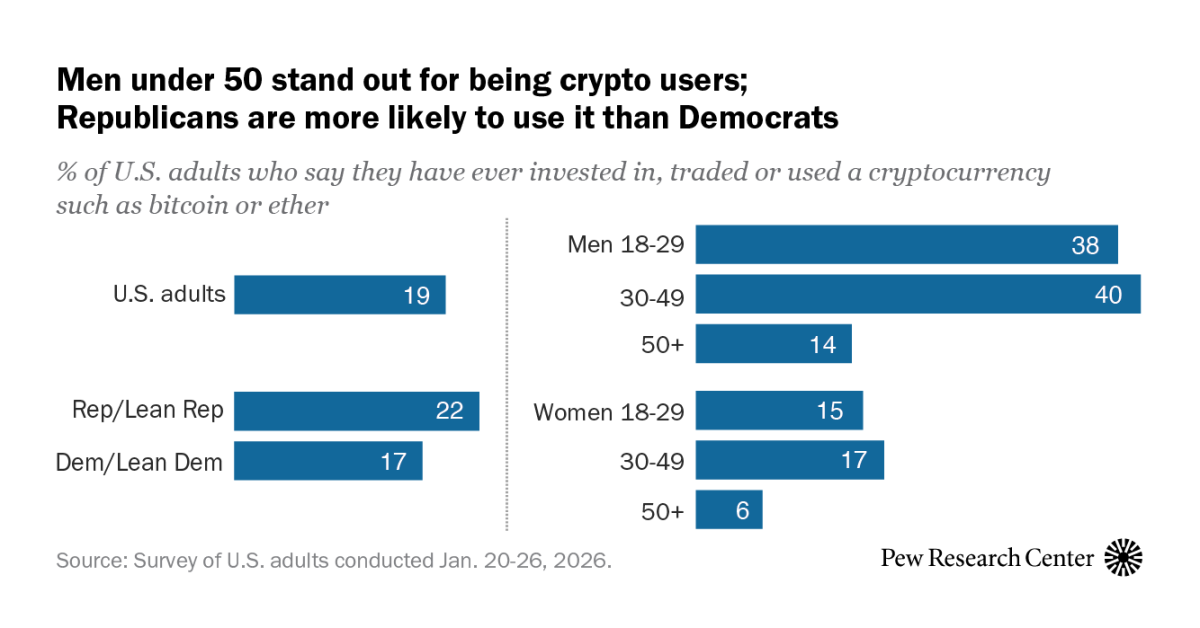
Approximately 1 in 5 Americans have used cryptocurrency, a segment of the population that continues to fluctuate alongside shifting economic landscapes and evolving political discourse. As digital assets gain broader visibility, recent data suggests that engagement with these decentralized technologies is no longer uniform across the American electorate, with notable shifts occurring in how different political affiliations interact with the market.
Cryptocurrency, defined as a digital asset secured by cryptography and managed through distributed ledger or blockchain technology, has moved from a niche interest to a recognized financial category. While traditional financial institutions and global regulators continue to debate the legal status of these assets—classifying them variously as commodities, securities, or currencies—consumer adoption remains a defining feature of the current financial era, according to historical and technical overviews provided by industry documentation. For many users, the primary appeal lies in the ability to execute secure transactions without reliance on traditional banking intermediaries.
Demographic Trends in Digital Asset Adoption
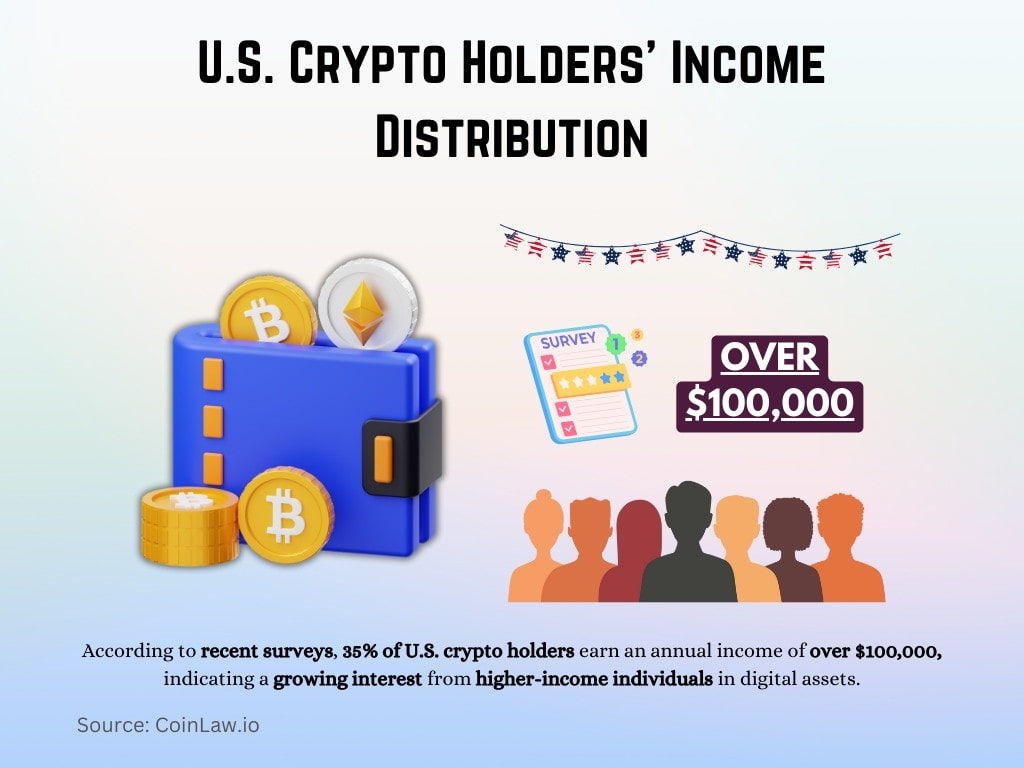
The profile of the average cryptocurrency user is not static. Research into market participation indicates that demographic variables such as age, income, and gender play a significant role in determining who engages with digital tokens. Younger cohorts and individuals with higher disposable incomes have historically demonstrated higher rates of ownership, a trend that persists even as market volatility remains a central concern for investors, as noted in financial analysis from Investopedia.
Beyond simple demographics, political identity has emerged as a distinct variable in recent observations. While cryptocurrency was initially viewed as a technology-first sector, it has increasingly intersected with broader ideological trends. Recent tracking of market sentiment shows that Republican users have shown a measurable uptick in their engagement with digital assets, highlighting a diversification in the user base that was less pronounced in previous years. This shift suggests that the conversation surrounding digital finance is increasingly being integrated into the wider political and economic platform of various voter groups.
Understanding the Market Landscape
For those looking to understand the current market, it is helpful to distinguish between the technology itself and the speculative nature of trading. Cryptocurrency operates on consensus mechanisms, most commonly proof of work or proof of stake, which are designed to control the issuance of new coins and verify ownership records. This infrastructure is what prevents the double-spending of digital assets, a feature that distinguishes them from earlier, less successful attempts at electronic cash dating back to the late 1990s, such as the work of cryptographers like David Chaum.
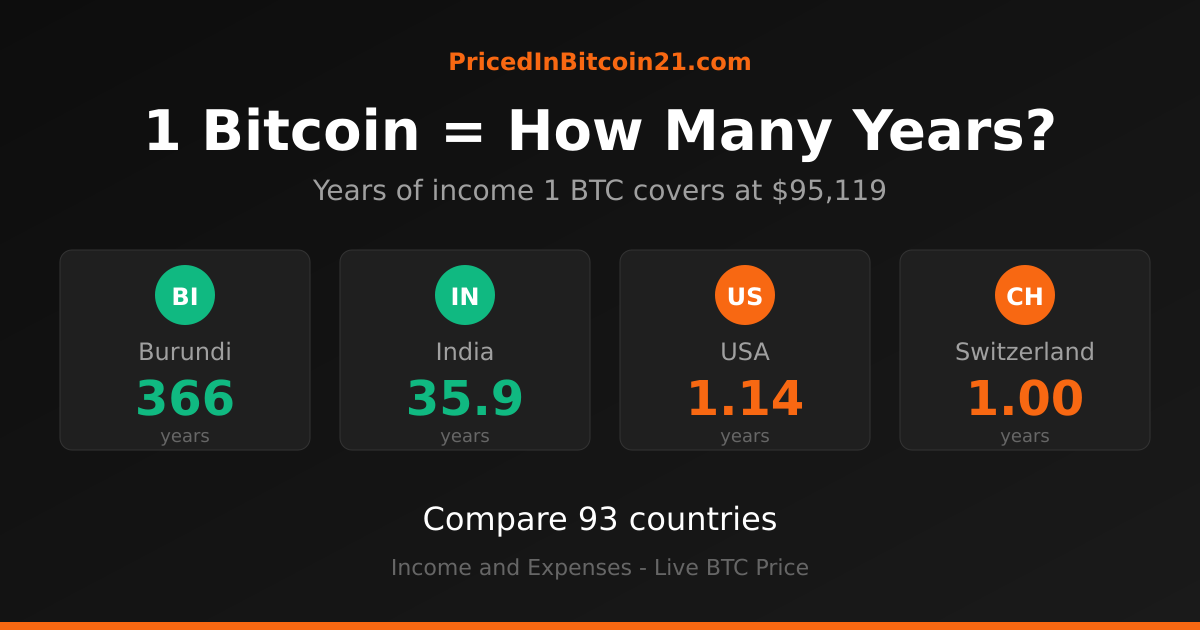
Investors and casual users alike often utilize market capitalization and price trackers to gauge the health of the sector. Bitcoin, the most prominent example of this technology, serves as a primary benchmark for the broader market. As interest in altcoins—alternative cryptocurrencies—rises and falls, market analysts typically look to Bitcoin dominance and exchange inflow data to predict future trends. These indicators are frequently updated by financial platforms to provide real-time visibility into the liquidity and stability of the ecosystem, as seen in market data provided by CoinMarketCap.
What Lies Ahead for Digital Finance
The regulatory path forward remains the most significant variable for the future of cryptocurrency in the United States. While individual states and federal agencies continue to refine their approaches to digital asset oversight, the lack of a singular, unified legal framework means that adoption will likely remain tied to the evolving clarity of these policies. Investors are encouraged to monitor updates from financial regulators regarding the classification of digital tokens, as these rulings directly impact the legality and taxability of holding these assets.
As the conversation matures, the focus is shifting from simple access to the long-term utility of blockchain technology in everyday finance. Whether digital assets will eventually be treated as a standard component of investment portfolios or remain a high-risk alternative depends largely on the ongoing dialogue between developers, government bodies, and the public. Readers interested in the latest policy developments should consult official government agency filings and public records for the most accurate information regarding upcoming legislative sessions or regulatory hearings.
We invite our readers to join the conversation. How has the evolving landscape of digital currency affected your personal or professional financial strategy? Share your thoughts in the comments section below.
Worth a look