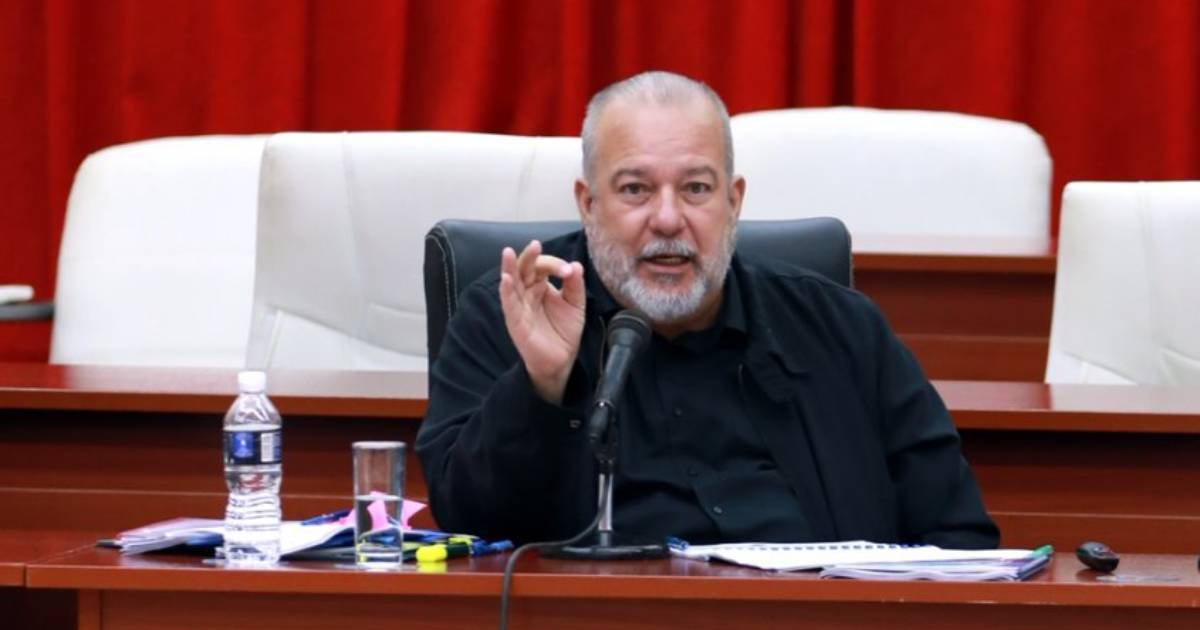
Havana, Cuba – Prime Minister Manuel Marrero is once again appealing to a narrative of resilience in the face of adversity, invoking the phrase “plan contra plan” as Cuba grapples with a deepening energy crisis and widespread fuel shortages. The call to action, delivered via a post on X (formerly Twitter) on February 23, 2026, comes as citizens face increasingly frequent power outages and struggle with limited access to transportation and basic goods. The situation has sparked growing discontent and questions about the government’s ability to address the escalating challenges.
Marrero’s message, accompanied by an image of Cuban national hero José Martí, quoted Martí as saying: “Our enemy obeys one plan: to inflame us, disperse us, divide us, suffocate us. That is why we obey another plan: to teach ourselves in all our might, to tighten, to unite, to outsmart it… Plan against plan.” The post, hashtagged #CubaVencerá (Cuba Will Win), underscores a long-standing strategy of framing difficulties as external attacks requiring national unity. This rhetoric, however, is being met with skepticism as the crisis intensifies and daily life becomes increasingly difficult for ordinary Cubans.
A Nation Paralyzed by Shortages
The current crisis is multifaceted, stemming from a combination of factors including a lack of foreign currency, aging infrastructure, and the ongoing U.S. Embargo. Prolonged power outages, reaching up to 20 hours per day in some provinces, are disrupting businesses, schools, and hospitals. The scarcity of fuel is crippling transportation networks, impacting both public transit and the ability of individuals to commute to work. Essential services, including healthcare and commerce, are severely affected. The economic strain is particularly acute for small and medium-sized enterprises (SMEs), which are struggling to maintain operations amidst the uncertainty.
Last week, Marrero convened a meeting with top government officials to discuss measures to address the fuel crisis. According to reports, the focus of the discussion was on stricter control of resources at the local level. Notably, Marrero acknowledged the growing role of Cuban SMEs in importing fuel, stating, “We must acknowledge that Notice contributions from non-state management forms to ensure the vitality of some important centers.” This recognition, although acknowledging a degree of reliance on the private sector, also highlights the government’s continued struggle to meet the country’s energy needs through state-controlled channels.
The “Plan Contra Plan” Strategy: A Historical Perspective
The “plan contra plan” strategy, repeatedly invoked by Cuban leaders, has deep roots in the country’s revolutionary history. It draws heavily from the writings and philosophy of José Martí, who warned against external forces seeking to undermine Cuban sovereignty. Martí, in a letter written in 1895, cautioned against the expansionist ambitions of the United States and the potential for annexation. As highlighted by Radio Bayamo, Marrero evoked this letter on February 23, 2026, emphasizing its continued relevance in the face of ongoing challenges, particularly the U.S. Embargo.
However, critics argue that the “plan contra plan” rhetoric has become a convenient justification for decades of economic mismanagement and political stagnation. They contend that the focus on external enemies deflects attention from internal problems and hinders meaningful reforms. The repeated invocation of the strategy, they say, offers no concrete solutions to the current crisis and serves only to perpetuate a cycle of blame, and hardship. The lack of transparency surrounding government policies and the limited space for independent economic analysis further fuel these criticisms.
The Role of Private Enterprise
The acknowledgment of the contribution of Cuban SMEs to fuel imports represents a subtle shift in government policy. For years, the Cuban government has maintained tight control over the economy, with limited space for private enterprise. However, in recent years, there has been a gradual expansion of the private sector, driven in part by economic necessity. These SMEs, operating within a complex regulatory framework, have demonstrated an ability to adapt and innovate, filling gaps in the state-controlled economy.
While Marrero’s statement acknowledges the positive role of these businesses, it also underscores the government’s continued reluctance to fully embrace market-oriented reforms. The regulatory environment remains challenging for entrepreneurs, and access to financing and resources is limited. The government’s control over key sectors of the economy, including energy, continues to hinder private sector growth and innovation. The extent to which these SMEs can sustainably contribute to resolving the fuel crisis remains uncertain.
Growing Citizen Discontent
The deepening economic crisis is fueling growing citizen discontent. Prolonged power outages and fuel shortages are disrupting daily life and creating widespread hardship. Social media platforms are filled with complaints and expressions of frustration, with many Cubans questioning the government’s ability to address the challenges. While large-scale protests have been limited, there is a palpable sense of unease and a growing demand for change.
The government has responded to the growing discontent with a combination of repression and limited concessions. Authorities have cracked down on dissent, arresting activists and restricting access to information. At the same time, the government has announced some measures aimed at easing the economic burden on citizens, such as increasing social assistance payments and allowing for greater flexibility in the private sector. However, these measures have been widely seen as insufficient to address the root causes of the crisis.
International Context and the U.S. Embargo
The economic crisis in Cuba is exacerbated by the long-standing U.S. Embargo, which restricts trade and financial transactions with the island. The embargo, first imposed in 1962, has been a major obstacle to Cuba’s economic development. While the Biden administration has taken some steps to ease restrictions on remittances and travel, the embargo remains largely in place. As CiberCuba reported, the Cuban government consistently blames the embargo for its economic woes, framing it as a deliberate attempt to destabilize the country.
However, critics argue that the embargo is not the sole cause of Cuba’s economic problems. They point to decades of economic mismanagement, a lack of diversification, and a rigid political system as contributing factors. The Cuban government’s reliance on subsidized trade with Venezuela, which has declined in recent years, has also exacerbated the crisis. The complex interplay of these factors makes it difficult to isolate the impact of the U.S. Embargo.
Looking Ahead
The situation in Cuba remains precarious. The energy crisis and fuel shortages are likely to persist in the short term, and the government faces a daunting challenge in addressing the underlying economic problems. The role of private enterprise will likely continue to grow, but the extent to which the government will allow for greater economic liberalization remains uncertain. Citizen discontent is likely to continue to simmer, and the potential for social unrest remains a concern.
The next key development to watch will be the government’s implementation of the measures announced during last week’s meeting with top officials. Specifically, the effectiveness of the stricter control of resources and the extent to which the government will support the role of SMEs in importing fuel will be crucial indicators of its commitment to addressing the crisis. Further announcements regarding economic reforms or changes to the U.S. Embargo could also have a significant impact on the situation.
The future of Cuba hinges on the government’s ability to adapt to changing circumstances, embrace economic innovation, and address the legitimate grievances of its citizens. Without meaningful reforms and a willingness to engage in constructive dialogue, the country risks further economic decline and social instability.
Do you have thoughts on the situation in Cuba? Share your perspectives in the comments below.
Worth a look