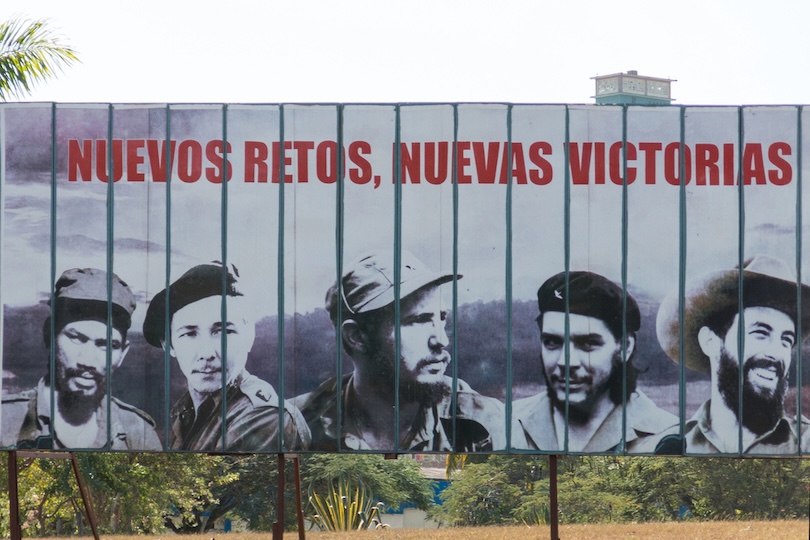
The Looming Crisis in Cuba: A Regime on life Support
For decades, observers have predicted the fall of the Cuban regime, onyl to witness its remarkable, if precarious, survival. While specific timelines remain elusive, a confluence of factors suggests that Cuba is facing an existential crisis unlike any seen before. The traditional mechanisms that have sustained the government – external support, debt financing, foreign investment, and population control – are rapidly eroding, leaving the island nation increasingly vulnerable. This analysis will explore these diminishing resources, assess the regime’s remaining tools for survival, and consider the potential geopolitical ramifications of a potential collapse.
A History of Resilience, Facing a Future of Scarcity
The Cuban government, under the Castro brothers and now Miguel Díaz-Canel, has demonstrated a remarkable capacity to adapt and endure. This resilience has been built on a foundation of Soviet patronage, subsequent support from Venezuela, and a tightly controlled political and economic system. However,the geopolitical landscape has shifted dramatically. The collapse of the Soviet Union in 1991 triggered a severe economic crisis – the “Special Period” – and while Cuba navigated that challenge, it did so with important assistance from Hugo Chávez‘s Venezuela. That lifeline is now fraying.
The current situation is markedly different. unlike past crises, the convergence of multiple failures – economic, political, and international – presents a uniquely dangerous scenario. To predict a definitive collapse would be to repeat the errors of past prognostications. However, to ignore the severity of the current situation would be a critical oversight.
The Shrinking Survival Toolkit: A Detailed Examination
Let’s dissect the key pillars that have historically propped up the Cuban regime and assess their current viability:
(1) Diminished External Support: Cuba’s traditional allies are increasingly unable,or unwilling,to provide meaningful assistance. Russia is consumed by its war in Ukraine and faces international sanctions. Iran is grappling with its own economic and political challenges. Venezuela,once a generous benefactor,is itself in a deep economic and political crisis,unable to sustain the levels of support previously offered. While ideological affinities maintain limited ties with Mexico, Brazil, and spain, these relationships offer only marginal relief and cannot compensate for the loss of major donors like Russia.
(2) Unsustainable Debt Burden: Cuba’s external debt, estimated at nearly $20 billion in 2020, continues to balloon due to unpaid principal and accumulating interest.The country has a long history of default, resulting in a credit rating of 5 – the lowest globally – effectively locking it out of international capital markets. Economy Minister Joaquín Alonso recently acknowledged the debt’s “unsustainable” nature, signaling a deepening financial crisis. Without debt restructuring or significant new financing, the economic pressure will only intensify.
(3) Drying Up Foreign Investment: Foreign investment, crucial for modernization and economic growth, is dwindling. Investors are wary of a government that frequently alters regulations and offers no guarantees of long-term stability. Even China, known for its pragmatic approach to investment, is hesitant to commit significant capital to a rapidly deteriorating economy. In 2025, only 14 new foreign investment ventures were authorized, a stark indicator of the lack of confidence in cuba’s economic future. The regime itself acknowledges the unlikelihood of a rebound in foreign investment.
(4) The Paradox of Mass Exodus: Historically, mass emigration has served as a pressure valve, removing disaffected citizens and potential opposition. However, recent policy shifts, particularly under the Trump administration, have curtailed legal migration pathways to the United States, the traditional destination for cuban migrants. This has led to a surge in desperate attempts to reach other countries,creating a humanitarian crisis and further straining the island’s resources. the closure of established escape routes exacerbates internal tensions.
(5) The Limits of Austerity: The Cuban government has repeatedly implemented austerity measures, reminiscent of the “Special Period.” However, the population has already been pushed to the brink of survival. Further cuts to food and medicine supplies risk triggering widespread unrest and perhaps violent protests.While Cubans have demonstrated a remarkable capacity to endure hardship, there is a limit to their resilience. The potential for food riots,while not guaranteed,is a growing concern.
(6) The Enduring Power of Political Repression: The regime continues to rely on political purges, exemplified by the 1989 execution of General Ochoa, to eliminate perceived threats. This tactic, while brutal, remains a tool for maintaining control.
(7) Violent Suppression of Dissent: As demonstrated during the July 2021 protests, the government is prepared to use force to suppress dissent. The imprisonment of protestors and the targeting of suspected opposition
Related reading