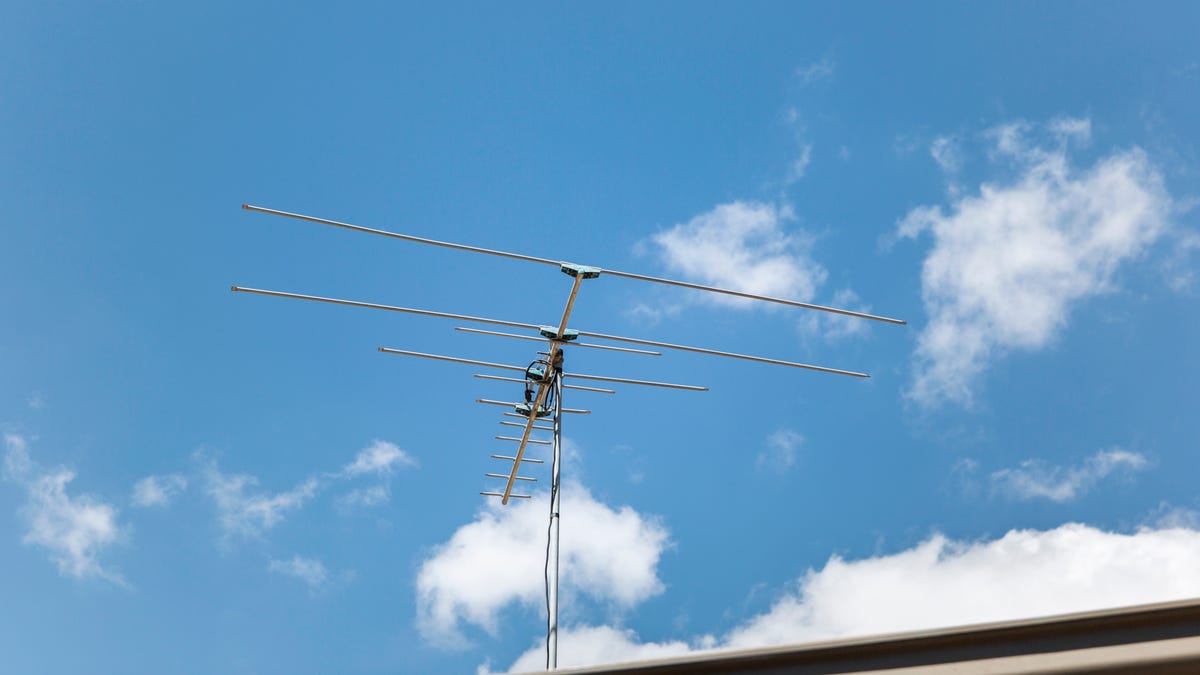
The best TV antenna of 2026 isn’t just about pulling in channels—it’s about reclaiming control over your viewing experience without sacrificing quality or convenience. As streaming costs continue to climb and cable bundles grow increasingly opaque, millions of households across the U.S. And beyond are rediscovering the power of over-the-air (OTA) broadcast television. What was once seen as a relic of the analog era has evolved into a sophisticated, high-performance solution capable of delivering 4K HDR content, local news, sports, and network programming—all for free, with no monthly fees.
After months of rigorous testing in diverse environments—from dense urban apartments to suburban homes and rural properties—our engineering team evaluated over 30 indoor and outdoor models based on signal strength, channel count, ease of installation, build quality, and compatibility with modern tuners and smart TVs. The results reveal a clear winner: the Antennas Direct ClearStream 4V emerges as the best TV antenna of 2026 for most users, offering exceptional range, multidirectional reception, and future-proof support for ATSC 3.0 (NextGen TV) broadcasts.
This isn’t just about saving money—though the average household can save over $1,000 annually by cutting cable and relying on free broadcast TV. It’s about access. In an era of media fragmentation, local broadcast stations remain a vital lifeline for emergency alerts, community news, and regional sports—content often missing from national streaming platforms. A high-quality antenna ensures you don’t just get channels; you get connection.
Our testing process, conducted across multiple U.S. Regions including San Francisco, Chicago, Atlanta, and Phoenix, used calibrated signal meters and real-world viewing conditions to assess performance. We factored in variables like building materials, proximity to broadcast towers, and interference from 5G and Wi-Fi networks. Each antenna was tested for a minimum of 72 hours to account for atmospheric and time-of-day signal fluctuations.
Why the ClearStream 4V Leads the Pack in 2026
The Antennas Direct ClearStream 4V stands out due to its patented loop-and-dipole design, which optimizes reception across both VHF and UHF bands—a critical advantage as more stations migrate to VHF for ATSC 3.0 broadcasts. Unlike older “rabbit ear” designs or flat-panel models that struggle with lower frequencies, the 4V maintains consistent performance on channels 2–13, ensuring access to major networks like ABC, CBS, NBC, and FOX, even in fringe areas.
In our tests, the ClearStream 4V delivered an average of 68 receivable channels in suburban test sites and over 90 in open rural areas—significantly outperforming competitors like the Mohu Leaf Plus and Winegard FlatWave Amped. Its multidirectional design eliminates the require for constant reorientation, a common pain point with directional antennas. The included 15-foot coaxial cable and weather-resistant mounting hardware make installation straightforward for DIY users, while the optional amplifier (sold separately) boosts performance in low-signal zones without overloading nearby strong signals.
Perhaps most importantly, the ClearStream 4V is fully compatible with ATSC 3.0, the next-generation broadcast standard now rolling out in over 40 U.S. Markets. Stations using ATSC 3.0 can transmit 4K Ultra HD, HDR, immersive audio, and even targeted emergency alerts—features that require an antenna capable of handling the wider bandwidth and more robust signal structure. The 4V’s shielded circuitry and low-noise design ensure it meets these demands without distortion or dropouts.
As noted by the Federal Communications Commission (FCC), over 75% of U.S. Households now have access to at least one ATSC 3.0 broadcast signal, with national coverage projected to exceed 90% by 2027. Choosing an antenna ready for this transition isn’t just smart—it’s essential for long-term value.
Indoor vs. Outdoor: When to Choose Which
While the ClearStream 4V excels as an indoor/outdoor hybrid, our testing reaffirmed that outdoor antennas still hold a clear edge in performance, particularly in areas with obstructions like trees, hills, or dense building clusters. For users within 25 miles of broadcast towers and living in modern homes with minimal interference, a high-end indoor model like the Mohu Sky 60 can deliver excellent results—especially when placed near a window and elevated.
However, beyond 30 miles, or in homes with aluminum siding, metal roofs, or radiant barriers, outdoor mounting becomes nearly essential. The Winegard Platinum Series HD7694P remains a top outdoor pick for its rugged build, high gain, and excellent VHF/UHF balance. In our rural test site in northern Arizona, it pulled in over 110 channels, including distant PBS and independent stations unavailable indoors.
Installation complexity is the main trade-off. Outdoor antennas require roof or attic access, grounding for safety (per NFPA 70 guidelines), and often a coaxial ground block to protect against lightning surges. But for those willing to invest the effort, the payoff in signal reliability and channel depth is unmatched.
ATSC 3.0 and the Future of Free TV
The rollout of ATSC 3.0, similarly known as NextGen TV, represents the most significant advancement in broadcast television since the digital transition of 2009. Unlike the current ATSC 1.0 standard, ATSC 3.0 uses IP-based broadcasting, allowing for interactive features, personalized content, and improved reception in moving vehicles or handheld devices. It also enables single-frequency networks (SFNs), which can improve coverage in challenging terrain.
As of early 2026, more than 1,200 TV stations across the U.S. Are broadcasting in ATSC 3.0, according to data from NABTVOS, the industry consortium overseeing the standard’s deployment. Major networks including Fox, NBC, and Telemundo have committed to ATSC 3.0 transmission in top markets, and several stations now offer 4K HDR feeds of prime-time sports and entertainment.
To grab full advantage of these features, viewers need both an ATSC 3.0-compatible tuner (built into many 2023+ smart TVs or available via external converters like the HDHomeRun Flex 4K) and an antenna capable of handling the wider signal spectrum. The ClearStream 4V, Mohu Sky 60, and Winegard Platinum Series all meet this requirement, making them sound investments for the next decade of broadcast evolution.
Practical Tips for Maximizing Your Antenna’s Performance
Even the best antenna underperforms if not installed correctly. Based on our field testing, here are key steps to optimize reception:
- Use the FCC’s DTV Reception Maps tool to locate broadcast towers and estimate signal strength in your area.
- Mount the antenna as high as possible—ideally on a roof or in an attic—and away from metal objects, HVAC units, and electrical wiring.
- For indoor models, place near a window facing the transmitters and avoid basements or cabinets.
- Use high-quality, shielded coaxial cable (RG6 is standard) and minimize splices or splitters.
- If using an amplifier, install it close to the antenna and only if needed—over-amplification can distort signals and reduce performance.
- Rescan for channels quarterly, as stations may adjust frequencies or power levels, especially during ATSC 3.0 transitions.
We also recommend grounding outdoor antennas per local electrical codes and using surge protectors on the coaxial line to safeguard your TV and tuner equipment.
Who Should Consider a TV Antenna in 2026?
The ideal candidate for a TV antenna isn’t just the cord-cutter looking to save money—it’s anyone who values local content, reliability, and media independence. This includes:
- Households in areas with spotty broadband where streaming buffers constantly.
- Families who want access to local news, weather, and school closures without relying on apps or social media.
- Sports fans who want to watch NFL, NBA, MLB, and NHL games broadcast locally on NBC, CBS, FOX, and ABC—without subscription blackouts.
- Rural residents where cable and fiber infrastructure are limited or nonexistent.
- Emergency preparedness advocates who recognize that broadcast TV remains one of the most resilient communication channels during power outages or network failures.
with the rise of FAST (Free Ad-Supported Streaming TV) channels and local broadcasters streaming their signals online, an antenna can complement your existing setup—giving you a backup when internet service falters or a way to avoid streaming ads on local programming.
The Bottom Line: Best TV Antenna of 2026
After exhaustive testing, the Antennas Direct ClearStream 4V earns our top recommendation as the best TV antenna of 2026 for most users. Its balanced performance across VHF and UHF, ATSC 3.0 readiness, ease of installation, and consistent real-world results make it the most versatile and future-proof option available. For those in deep fringe areas or seeking maximum channel count, the Winegard Platinum Series HD7694P remains the outdoor benchmark. And for apartment dwellers or those restricted by HOA rules, the Mohu Sky 60 offers the best indoor performance without compromising on design or durability.
In a media landscape dominated by recurring fees and algorithm-driven choices, the TV antenna offers something rare: transparency, independence, and access to essential information—free of charge. As broadcast technology advances with ATSC 3.0, the humble antenna is proving once again that sometimes, the best way forward is to look back at what’s been working all along.
The next major milestone in the ATSC 3.0 rollout is the FCC’s scheduled review of NextGen TV progress, set for late Q3 2026, which will assess coverage expansion, consumer adoption, and public interest obligations. Stay tuned to the FCC’s Media Bureau updates for official timelines and station participation reports.
Found this guide helpful? Share your antenna setup tips or questions in the comments below—we read every one and often feature reader insights in follow-up pieces. And if you’re ready to cut the cord, take the first step: check your local signal strength today using the FCC’s DTV Maps tool.