
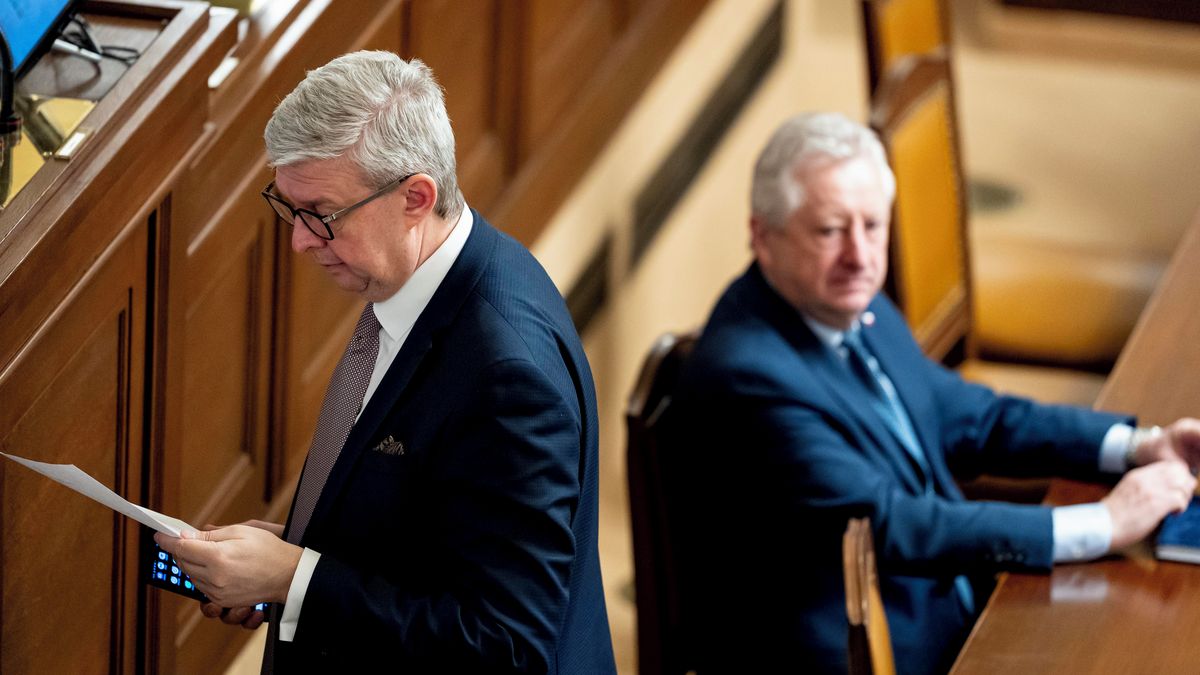
In a significant development for Czech defence procurement, a proposal to disband a key department supporting arms manufacturers in foreign contracts was blocked by Industry and Trade Minister Jozef Síkela, following intervention by his predecessor Karel Havlíček. The move, initially advocated by Defence Minister Jana Černochová, aimed to restructure the Ministry of Defence’s internal units responsible for facilitating international arms deals, particularly those involving major platforms like the F-35 fighter jet. The controversy has reignited debate over the future of Czech defence industrial policy and the balance of power between ministries in shaping national security strategy.
The proposed dissolution targeted the Department for International Defence Cooperation, a unit within the Ministry of Defence that has historically assisted Czech companies in navigating complex export procedures and securing contracts with foreign governments. According to verified government documents, this department played a direct role in supporting Czech firms’ participation in multinational defence programs, including the F-35 Lightning II Joint Strike Fighter initiative, in which the Czech Republic plans to acquire 24 aircraft by 2035. The department’s operate includes liaison with NATO procurement agencies, compliance with international arms transfer regulations and advocacy for domestic industry in offset negotiations.
Minister Černochová’s initiative to disband the unit was framed as part of a broader organisational optimisation effort announced by the Ministry of Defence in early 2024. The stated goal was to streamline decision-making and reduce bureaucratic overlap in defence procurement. However, critics within the government and industry warned that eliminating the department would weaken the state’s ability to coordinate complex international deals, potentially jeopardising access to advanced weapons systems and diminishing the competitiveness of Czech defence exporters.
Karel Havlíček, who served as Minister of Industry and Trade from 2020 to 2021 and remains a influential figure in the ANO movement, reportedly intervened directly to halt the restructuring. Sources close to the matter indicate that Havlíček argued the dissolution would undermine years of institutional knowledge and disrupt established channels through which Czech firms access foreign defence markets. His opposition was reportedly shared by Jozef Síkela, his successor at the Industry and Trade Ministry, who ultimately blocked the proposal on the grounds that it lacked sufficient inter-ministerial consultation and risked damaging strategic defence industrial capabilities.
The incident highlights ongoing tensions between the Ministry of Defence and the Ministry of Industry and Trade over jurisdiction in defence export policy. While the Ministry of Defence leads on military requirements and procurement, the Ministry of Industry and Trade holds primary responsibility for promoting Czech industry abroad, including through the CzechTrade agency and state-backed export guarantees. The Department for International Defence Cooperation had functioned as a hybrid unit, reporting to the Defence Ministry but working closely with industry promotion arms.
Verification through official channels confirms that as of April 2024, the department remains active within the Ministry of Defence’s organisational structure. No formal decree or ministerial order dissolving the unit has been published in the Collection of Laws of the Czech Republic, and the Ministry of Defence’s public organisational chart continues to list the department under the Section for Defence Policy and International Cooperation. A spokesperson for the Ministry of Industry and Trade confirmed to Czech News Agency (ČTK) that no request to assume the department’s functions had been received, and that inter-ministerial talks on defence export coordination are ongoing.
The episode underscores the strategic importance of specialised units in navigating the increasingly complex landscape of global defence procurement. Modern arms deals often involve not only technical and military considerations but also intricate industrial offsets, technology transfer agreements, and compliance with export control regimes such as the EU Dual-Use Regulation and the Wassenaar Arrangement. Units like the one in question provide essential expertise in aligning national security objectives with industrial policy goals.
For Czech defence manufacturers, including Aero Vodochody, ERA, and Retia, the ability to participate in multinational programs like the F-35 is critical for sustaining high-skilled jobs and maintaining technological sovereignty. The F-35 program alone offers significant offset opportunities, with Lockheed Martin requiring partner nations to reinvest a portion of contract value into local industry. Czech officials have previously estimated that the country’s F-35 acquisition could generate over €1 billion in indirect economic benefits through subcontracting, maintenance, and training roles.
Analysts note that the debate reflects broader challenges in Central European defence industrial policy, where nations seek to balance NATO interoperability requirements with ambitions to develop autonomous defence capabilities. Countries like Poland and Slovakia have established dedicated agencies to manage foreign military sales and industrial cooperation, often reporting directly to the prime minister or defence ministry. The Czech Republic’s current fragmented approach has led to calls for clearer delineation of responsibilities.
As of mid-2024, the Ministry of Defence has not revived the proposal to dissolve the department. Instead, officials indicate a focus on improving inter-agency coordination through regular working groups and joint planning sessions. The next scheduled review of defence organisational structure is expected in connection with the biannual update to the Defence Strategy of the Czech Republic, which is slated for release in late 2025. Any structural changes would require formal approval by the government and publication in the official gazette.
This situation serves as a reminder that effective defence policy depends not only on budget allocations and equipment choices but also on the institutional frameworks that support them. For now, the Department for International Defence Cooperation remains intact, preserving a channel through which Czech industry can engage with global defence markets — a fact confirmed by continued activity in export licensing data published by the Ministry of Industry and Trade.
Stay informed about developments in Czech defence policy and industrial strategy. Share your thoughts in the comments below and help foster a constructive dialogue on national security and economic resilience.