
The global digital economy now rests upon a foundation controlled by a remarkably small number of entities. In the United Kingdom and Europe, the transition from on-site servers to the cloud has created a massive dependence on three dominant US-based providers: Amazon Web Services (AWS), Microsoft Azure, and Google Cloud Platform (GCP). This concentration of power has sparked an urgent conversation regarding data sovereignty risk and the political implications of relying on “hyperscalers” for critical national infrastructure.
For many enterprises, the move to these platforms was driven by clear economic and operational advantages. By shifting to the cloud, organizations have seen decreased capital expenditure (CapEx) and reduced infrastructure maintenance. The allure of on-demand resource scalability, increased reliability, and enhanced security has made these US platforms the default choice for developers and governments alike.
However, this efficiency comes with a strategic trade-off. As the “Big 3” continue to dominate the market, the risk of vendor lock-in and the loss of jurisdictional control over data—known as data sovereignty risk—have become central concerns for European regulators. The challenge lies in breaking this stranglehold without sacrificing the technological agility that these platforms provide.
The Architecture of Dependence: Understanding the Big 3
To understand the scale of the dependence, one must look at the maturity and reach of the providers. Amazon Web Services (AWS), a subsidiary of Amazon.com, Inc., currently stands as the market leader. Having evolved from an internal platform to a public offering in 2006 with services like Amazon S3 and Elastic Compute Cloud (EC2), AWS now offers more than 200 fully featured services to a global user base according to industry analysis.
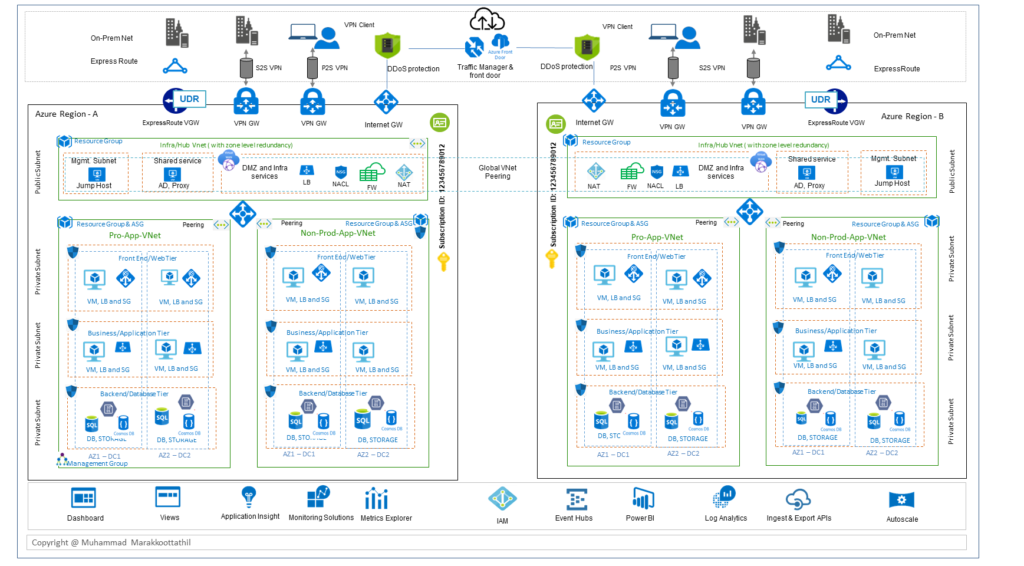
Microsoft Azure and Google Cloud Platform (GCP) have since built competitive ecosystems that mirror much of the AWS catalog. This parity is evident in how these companies map their services to one another. For instance, in the realm of serverless CI/CD, Google Cloud’s Cloud Build competes directly with AWS CodeBuild, CodeDeploy, and CodePipeline, as well as Azure DevOps and GitHub Enterprise per Google Cloud documentation.
This overlap creates a paradox: while the services are comparable, the underlying infrastructure remains firmly under US jurisdiction. Whether an organization uses Google Kubernetes Engine (GKE) or Azure’s container offerings, the reliance on US-based hyperscalers persists.
Why the Stranglehold Persists
The dominance of AWS, Azure, and GCP is not merely a result of first-mover advantage, but of a comprehensive value proposition that is difficult for local European providers to match. The primary drivers for this massive dependence include:
- Operational Efficiency: Lower operational costs and remote access that facilitates global collaboration.
- Performance: Infrastructure optimized for speed and high availability.
- Technological Access: Immediate access to the most up-to-date technology, including advanced AI and container services.
- Scalability: The ability to scale resources on-demand to meet fluctuating workloads.
Because these platforms provide a “one-stop shop” for everything from basic storage to complex multi-cloud management—such as GCP’s Config Connector which allows the management of Google Cloud resources through Kubernetes—the friction of moving to a sovereign alternative is often prohibitively high as detailed in technical service comparisons.
The Risk of Data Sovereignty
Data sovereignty risk refers to the legal and political vulnerability created when a nation’s critical data is stored and processed by entities subject to the laws of a foreign power. In the case of the UK and Europe, the dependence on US hyperscalers means that sensitive data may be subject to US legal mandates, regardless of where the physical data center is located.
The technical capability to avoid Here’s growing, but implementation is slow. Some organizations are exploring multi-cloud environments to distribute risk, utilizing tools like GKE attached clusters to extend Kubernetes to other environments including AWS and Azure according to Google’s documentation. However, while multi-cloud reduces the risk of a single provider’s outage, it does not necessarily solve the problem of US jurisdictional control if all providers are US-based.
Comparing the Primary Cloud Platforms
| Provider | Key Strength | Notable Early Services |
|---|---|---|
| AWS | Market maturity and broadest service range | S3, EC2 |
| Microsoft Azure | Enterprise integration | Azure DevOps |
| Google Cloud (GCP) | Containerization and data analytics | GKE, Cloud Build |
As governments in Europe and the UK evaluate their political responses to these risks, the focus remains on balancing the need for world-class cloud capabilities with the necessity of digital autonomy. The “straightforward mode” of adoption provided by these platforms—as described by some in the developer community on professional forums—has created a legacy of dependence that will accept years of policy and technical shifts to unwind.
The next phase of this evolution will likely involve more stringent requirements for data residency and the promotion of local cloud alternatives that can offer similar scalability without the associated sovereignty risks. For now, the “Big 3” continue to define the boundaries of the digital landscape.
Do you believe data sovereignty is more important than the efficiency provided by US hyperscalers? Share your thoughts in the comments below.