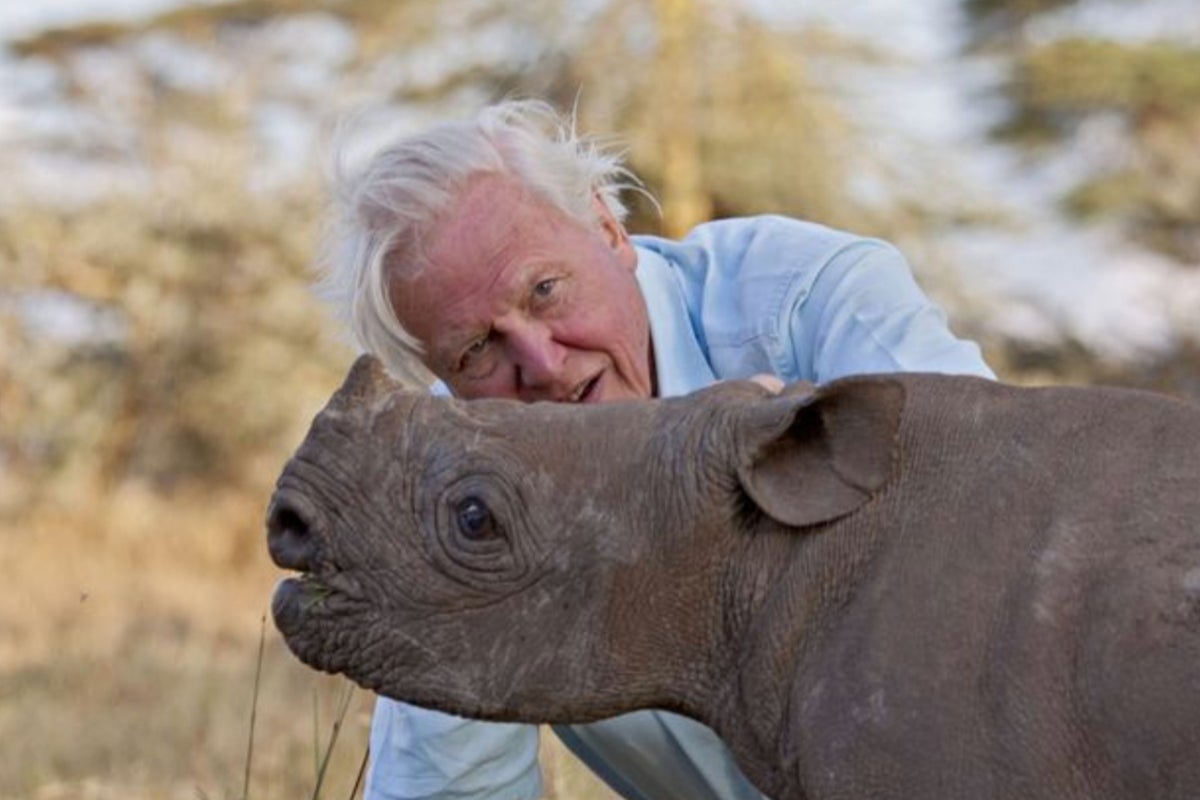
Today, May 8, 2026, marks a milestone that feels as monumental as the natural wonders he has spent a lifetime documenting. Sir David Attenborough celebrates his 100th birthday, a centenary that coincides with a global appreciation for a man who has become the definitive voice of the natural world. From the depths of the midnight zone in the ocean to the highest peaks of the Himalayas, Attenborough has not merely narrated the planet; he has translated the language of nature for billions of people.
For over seven decades, his career has mirrored the evolution of television itself, moving from the grainy black-and-white broadcasts of the 1950s to the breathtaking 8K resolution of the modern era. Yet, despite the technological shifts, the core of his appeal has remained constant: an infectious, childlike curiosity paired with a rigorous scientific discipline. As we honor his century of life, it is the perfect moment to revisit the David Attenborough must-watch TV moments that defined his legacy and shifted the global consciousness regarding conservation.
Throughout his tenure with the BBC Natural History Unit, Attenborough has navigated the delicate balance between being an observer and a participant. His work has evolved from the descriptive “life histories” of the 20th century to the urgent “witness statements” of the 21st. Today, as he enters his second century, his influence extends far beyond the screen, having informed international policy on biodiversity and climate change.
The Comedy of Nature: The Irate Capercaillie
While the world knows Attenborough for his poised and serene delivery, some of his most enduring moments come from the unpredictable—and often humbling—nature of fieldwork. One of the most beloved sequences in his early catalog involves a confrontation with an irate capercaillie, a large forest grouse known for its territorial aggression during mating season.
In this classic encounter, the poise of the seasoned broadcaster is momentarily shattered as the bird, far less interested in the educational value of the segment than in defending its turf, launches a spirited attack. The scene is a masterclass in the “unscripted” nature of wildlife filmmaking, reminding viewers that humans are often the intruders in these environments. It serves as a poignant counterpoint to the high-production polish of his later work, showcasing a raw, humorous vulnerability that endeared him to audiences worldwide.
This specific moment highlights a recurring theme in Attenborough’s career: the respect for the animal’s agency. By allowing these “failures” or surprises to remain in the final cut, he avoids the trap of presenting nature as a curated gallery, instead depicting it as a wild, chaotic, and often indifferent force.
Intimacy in the Wild: The Gorillas of Rwanda
If the capercaillie moment provided the humor, Attenborough’s work with primates provided the soul. His interactions with mountain gorillas in Rwanda stand as some of the most emotionally resonant footage in television history. These moments are not merely about biological observation; they are about the recognition of a shared intelligence and kinship.
Viewers have watched in awe as a young Attenborough, and later an elderly one, navigated the dense foliage of the Volcanoes National Park to find these gentle giants. The footage of him interacting with baby gorillas—characterized by a mixture of profound caution and genuine tenderness—underscores the fragility of these species. The intimacy of these encounters helped transform the mountain gorilla from a distant curiosity into a symbol of the urgent need for habitat protection.
To celebrate his 100th birthday, a new documentary has been released that sees Attenborough returning to Rwanda. This centenary project serves as a reflective bookend to his career, comparing the state of the gorilla populations today with the precarious situation he witnessed decades ago. It highlights the success of community-led conservation and the possibility of species recovery when human will aligns with ecological necessity.
The Scale of Existence: Leatherback Turtles and the Deep Blue
Attenborough’s transition to the ocean—most notably in the Blue Planet series—expanded the scope of his storytelling. One of the most visually arresting and philosophically profound moments involves his “tête-à-tête” with a leatherback turtle. These ancient mariners, which can weigh up to 2,000 pounds, represent a lineage that has survived for millions of years, and Attenborough’s approach to filming them reflects this timelessness.
The imagery of a leatherback turtle gliding through the water, juxtaposed with Attenborough’s hushed, reverent narration, emphasizes the sheer scale of the ocean’s mysteries. These sequences often move beyond simple biology to touch upon the “deep time” of our planet, reminding the viewer that humans are a very recent addition to a world that has functioned perfectly well without us for eons.
However, these moments of wonder are now frequently paired with the stark reality of plastic pollution. The shift in his ocean narratives—from the awe of the leatherback’s migration to the tragedy of a whale stranded on a beach with a stomach full of plastic—marks the most significant pivot in his career. He moved from being the world’s greatest narrator of nature to its most urgent alarm system.
From Observation to Activism: ‘A Life on Our Planet’
In recent years, the “must-watch” moments have shifted from animal behavior to human impact. His 2020 film, *A Life on Our Planet*, serves as his “witness statement.” In this documentary, Attenborough does something he rarely did in his early career: he places himself and his own timeline at the center of the narrative.
The most powerful moments in this work are the data-driven transitions. He uses a ticking clock to show the precipitous decline of global wilderness areas and the rise in atmospheric carbon dioxide since the start of his career. By linking his own aging process to the degradation of the Earth, he creates a visceral sense of loss that a standard scientific report cannot achieve.
This era of his work is defined by a shift in tone. The warmth is still there, but it is now tempered with a stern, grandfatherly urgency. He no longer just describes the “how” of nature; he demands an answer to the “why” of its destruction. This transition has made him a pivotal figure in the climate movement, bridging the gap between academic science and public understanding.
The Evolution of the Natural History Lens
To understand the impact of Attenborough’s TV moments, one must understand the technical revolution he spearheaded. In the 1970s, filming a rare bird required weeks of waiting in a hide with heavy 16mm film that could not be reviewed until it was developed in a lab. Today, he utilizes stabilized drones, remote-operated underwater vehicles (ROVs), and “spy cameras” disguised as animals.
The magic of his later series, such as *Planet Earth* and *Our Planet*, lies in the ability to show the “impossible” shot—the sweeping vista of a tundra or the microscopic detail of a rainforest floor. Yet, Attenborough has always insisted that the technology must serve the story, not the other way around. His ability to weave these high-tech visuals into a coherent, emotional narrative is what separates his work from mere “nature porn.”
His influence on the industry has been absolute. The “Attenborough style”—the slow build-up of tension, the use of silence, and the precise timing of the reveal—has become the gold standard for natural history broadcasting worldwide. He taught the world not just what to look at, but how to see.
Legacy of a Century: Why It Matters Now
As David Attenborough reaches 100, the relevance of his work has never been higher. We are currently living through what scientists call the “Sixth Mass Extinction,” a period of biodiversity loss driven primarily by human activity. Attenborough is more than a broadcaster; he is a living archive of what the world used to look like.
His career provides a baseline for our loss. When he describes the abundance of the oceans in the 1950s compared to the scarcity of today, he is providing a firsthand account of ecological collapse. This makes his current advocacy for “rewilding” the planet not just a suggestion, but a necessity based on a century of evidence.
The impact of his voice is global. By translating complex ecological concepts into stories of individual animals—a single penguin’s struggle or a gorilla’s family bond—he has fostered a global empathy for non-human life. This empathy is the essential precursor to political action.
Key Takeaways: The Attenborough Centenary
- Cinematic Evolution: Moved from 16mm film to 8K resolution, redefining how humans perceive the natural world.
- Emotional Connection: Used intimate encounters with species like the mountain gorilla to foster global conservation empathy.
- The Pivot to Urgency: Transitioned from a descriptive naturalist to a climate activist, most notably in A Life on Our Planet.
- Technical Legacy: Pioneered the use of cutting-edge technology (drones, ROVs) to capture previously unseen wildlife behaviors.
- Global Influence: His voice has become a primary bridge between scientific data and public environmental awareness.
Looking Forward
While we celebrate a century of life, the work Sir David Attenborough has championed is far from finished. The “next checkpoint” for his legacy will be the continued implementation of the conservation goals he outlined in his later works—specifically the protection of 30% of the planet’s land and oceans by 2030, a target supported by various international biodiversity frameworks.
As the world watches his latest centenary documentary from Rwanda, the message remains clear: the natural world is resilient, but it requires our active protection. Sir David has spent 100 years telling us the story of the Earth; it is now up to the rest of us to ensure that story has a future.
How has Sir David Attenborough’s work influenced your view of the natural world? Share your favorite “must-watch” moment in the comments below.