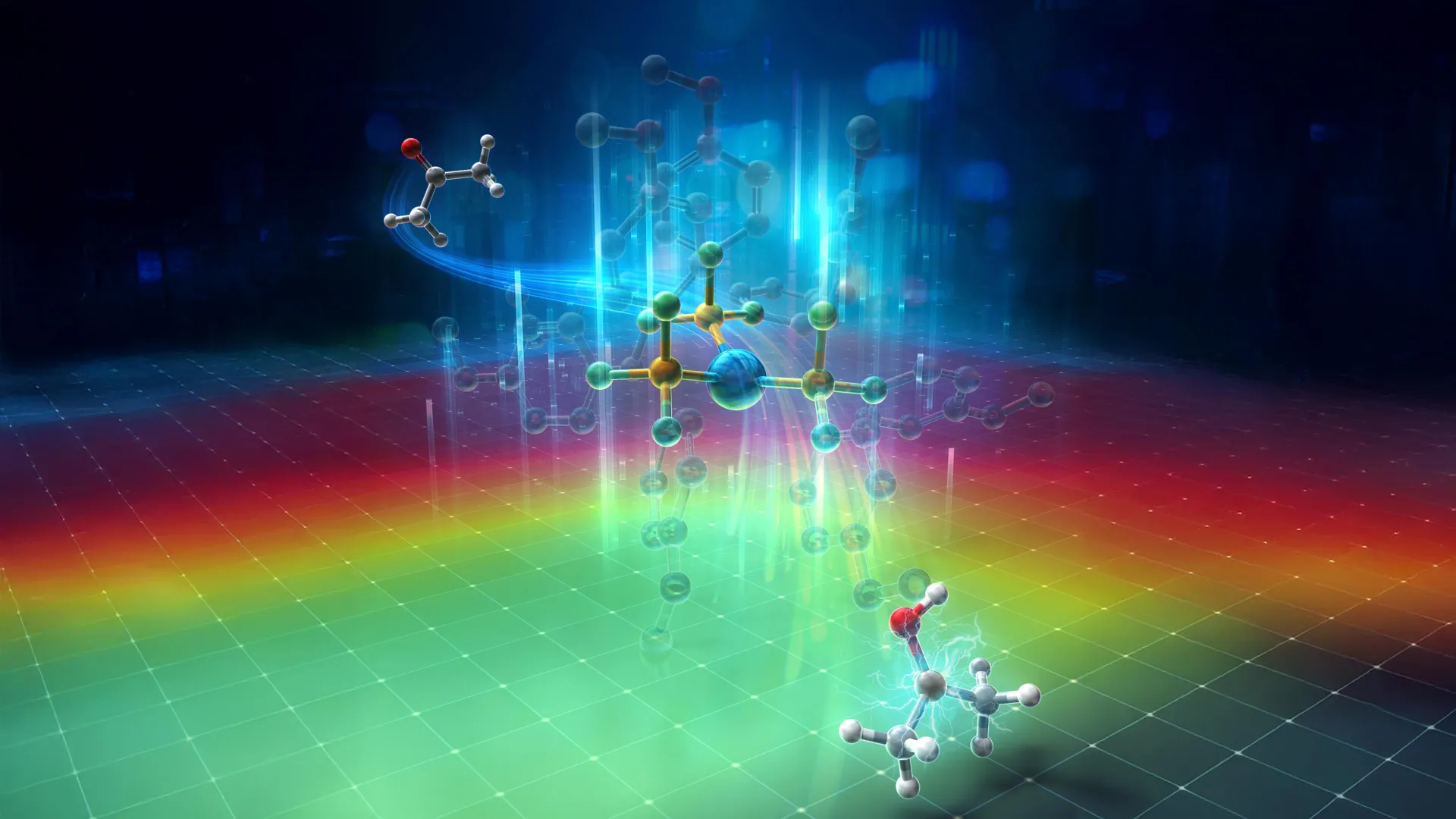
Unlocking Alkyl Ketyl Radical Chemistry: A New Catalytic Strategy for organic Synthesis
Have you ever wondered how chemists create complex molecules,like those found in life-saving pharmaceuticals or innovative materials? A crucial step frequently enough involves manipulating reactive intermediates – fleeting molecular species that exist only briefly during a reaction. Now,a groundbreaking revelation from researchers at the Institute of Chemical Research and Development (ICReDD) at Hokkaido University is poised to revolutionize the field of organic synthesis by finally enabling efficient access to alkyl ketyl radicals,notoriously difficult-to-form intermediates. This breakthrough promises to accelerate research in natural product synthesis and drug discovery.
The Challenge of Alkyl Ketyl radical Formation
Ketones, ubiquitous building blocks in organic chemistry, hold immense potential for forming new chemical bonds.A key reaction involves their one-electron reduction, wich generates ketyl radicals – highly reactive species with unpaired electrons. These radicals are incredibly valuable for constructing complex molecular architectures. However, a meaningful hurdle has long plagued chemists: while reducing aryl ketones (ketones attached to aromatic rings) is relatively straightforward, alkyl ketones (ketones attached to alkyl chains) have proven stubbornly resistant.
Alkyl ketones are far more common than their aryl counterparts, making this limitation a major bottleneck in synthetic chemistry. the difficulty stems from a phenomenon called back electron transfer (BET). When attempting to reduce alkyl ketones,the initially formed ketyl radical quickly donates an electron back to the catalyst,effectively undoing the reduction and leaving the starting material unchanged. This rapid BET prevents the ketyl radical from participating in desired reactions.
A Computational Leap Forward: Virtual Ligand-Assisted Screening (VLAS)
researchers at WPI-ICReDD, led by Associate Professor Wataru Matsuoka and Professor Satoshi Maeda, recognized the need for a new approach. Their previous work had successfully demonstrated light-activated transformations of aryl ketones using a palladium catalyst and phosphine ligands. Though,this system faltered with alkyl ketones.
Instead of embarking on a time-consuming and wasteful experimental trial-and-error process – considering the thousands of available phosphine ligands - the team turned to the power of computational chemistry. They employed a sophisticated technique called Virtual Ligand-Assisted Screening (VLAS), developed in-house at ICReDD.
VLAS analyzes the electronic and steric properties of potential ligands, predicting their ability to promote the desired reactivity. By applying VLAS to a carefully selected set of 38 phosphine ligands, the researchers generated a “heat map” highlighting the most promising candidates. this drastically narrowed the field, saving valuable time and resources.
Learn more about the power of computational chemistry in accelerating materials discovery: https://www.nature.com/articles/s41586-023-06674-x (nature – Computational chemistry is transforming materials discovery)
The Breakthrough: tris(4-methoxyphenyl)phosphine (L4)
Guided by the VLAS predictions, the team focused on three ligands for laboratory testing. The results were conclusive: tris(4-methoxyphenyl)phosphine (P(p-OMe-C6H4)3), designated as L4, emerged as the clear winner.
This ligand effectively suppressed the detrimental back electron transfer process. Crucially, it allowed alkyl ketones to generate stable ketyl radicals, which then readily participated in high-yield chemical transformations. The study, published in the Journal of the American Chemical Society (available open access: https://pubs.acs.org/doi/10.1021/jacs.3c11491), details the methodology and showcases its effectiveness.
Implications for Organic Synthesis and Beyond
This innovative catalytic strategy represents a significant advancement in organic chemistry. it provides researchers with a reliable and accessible method for working with alkyl ketyl radicals, opening up new avenues for:
* Natural Product Synthesis: Constructing complex natural products often requires precise control over radical reactions. This new method provides a powerful tool for achieving this control.
* Pharmaceutical Research: Many drug candidates contain complex structures that can be efficiently assembled using ketyl radical chemistry.
* Materials Science: The ability to manipulate ketyl radicals could lead to the development of novel materials with unique properties.
* Enduring Chemistry: By reducing the need for extensive experimental screening, VLAS contributes to more efficient and environmentally kind chemical research.