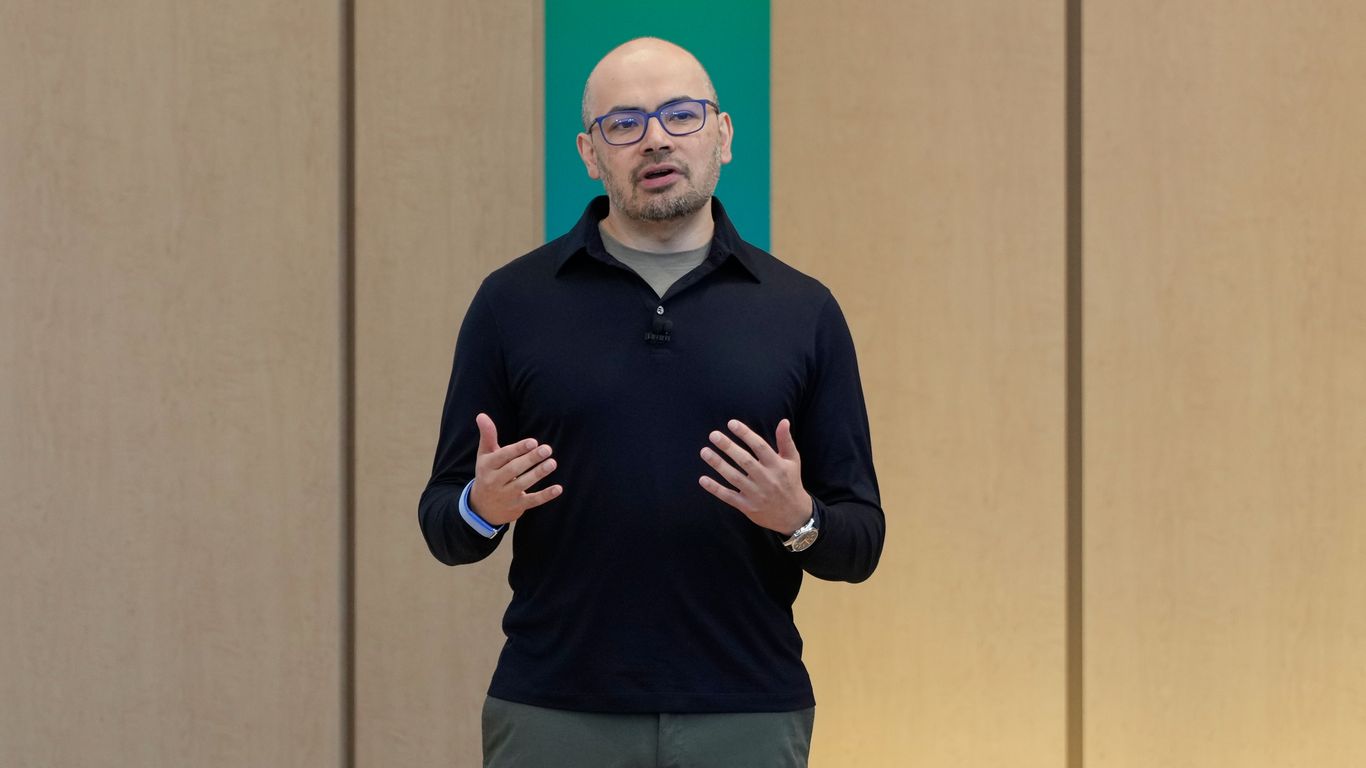
Demis Hassabis, the co-founder and CEO of Google DeepMind, has proposed the creation of a new, industry-funded U.S. regulatory body designed to conduct safety testing on the world’s most advanced artificial intelligence models. In a manifesto titled “A Framework for Frontier AI and the Dawning of a New Age,” the Nobel laureate argues that the rapid advancement of “frontier” AI necessitates a systematic, independent oversight regime to mitigate potential global risks, including cyber threats and biological dangers.
The proposal arrives as technology leaders and the U.S. government grapple with how to manage the pace of AI development. Hassabis’s vision, which he has socialized with members of the current U.S. administration and other industry peers, suggests an organization modeled after the Financial Industry Regulatory Authority (FINRA). Under this framework, frontier AI labs would voluntarily—and eventually, mandatorily—submit their models for pre-deployment safety assessments, ensuring that dangerous capabilities are identified before systems reach the public market.
A Proposed Regulatory Model for Frontier AI
The core of the DeepMind proposal centers on an independent standards body, staffed by technical experts and governed by a board of recognized scientists and industry representatives. According to the framework, this body would serve as a gatekeeper for the most powerful AI systems, which Hassabis defines as “frontier-class” models. These models would undergo rigorous testing for specific risks, such as autonomous cyber-offensive capabilities, the facilitation of biological weapon development, and sophisticated deception techniques.

This approach mirrors the regulatory structure of Wall Street, where the Financial Industry Regulatory Authority (FINRA) operates as a private, industry-funded entity under the oversight of the Securities and Exchange Commission (SEC). By utilizing a similar model, Hassabis suggests that the AI industry could establish a “prestige” standard for safety, where undergoing testing becomes a necessary mark of legitimacy for developers. The proposal emphasizes that these rules would apply universally to all frontier-class systems, regardless of their country of origin or whether the model architecture is open or closed.
The Shift Toward Formal Oversight
The push for structured regulation follows a period of ad hoc interventions by the U.S. government. Last month, the administration took decisive action regarding Anthropic’s “Mythos” and “Fable” models, issuing an export-control order that effectively suspended their deployment. This move forced a period of intense negotiation between the company and government officials, highlighting the lack of an existing, predictable protocol for handling such high-stakes developments.
Following that incident, OpenAI also engaged in negotiations with the U.S. Department of Commerce regarding the release of its GPT-5.6 model. The company ultimately restricted access to government-vetted partners during the initial launch phase to avoid similar regulatory friction. These events have served as a catalyst for industry leaders to seek a more stable, rule-based environment. Anthropic CEO Dario Amodei has similarly advocated for the creation of an agency with the authority to block unsafe models, often comparing the desired level of oversight to that of the Federal Aviation Administration (FAA).
Addressing Risks in a Post-Singularity Landscape
Hassabis describes the current state of AI as being in “the foothills of the singularity,” a threshold where systems may soon possess cognitive powers comparable to the human brain. He characterizes recent AI-driven cyber incidents as “warning shots” and warns that within 18 months, powerful capabilities could be integrated into open-source models that are difficult for any single government to monitor or restrict. The framework aims to stay ahead of these risks by requiring that testing benchmarks are regularly updated to match the evolving capabilities of the technology.
While the proposal remains in the conceptual stage, Hassabis has expressed optimism regarding the reception from the current administration, describing recent discussions as “very positive.” His target is to see such a body operational by the end of the year, a timeline he acknowledges is aggressive. The initiative highlights a growing consensus among top AI labs that the era of self-regulation is reaching its limits, and that formal, binding federal oversight is necessary to ensure the safe development of future systems. As the industry awaits further policy guidance from Washington, the focus remains on whether these voluntary standards can be successfully codified into binding law.
Worth a look