
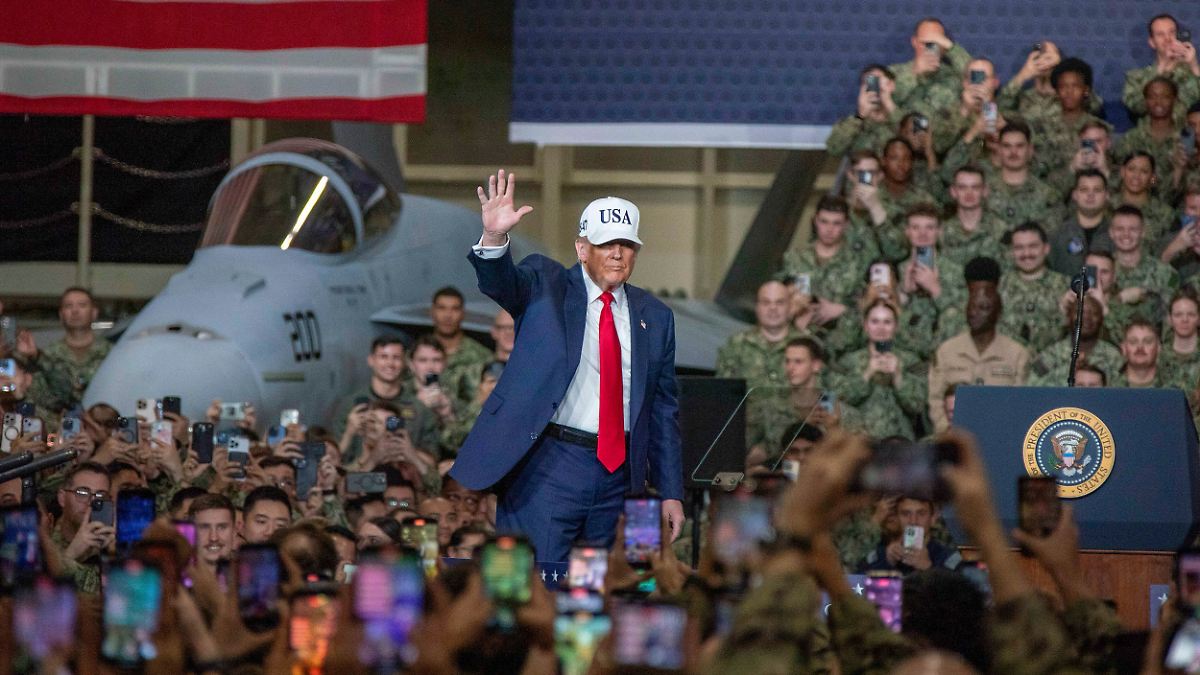
President Donald Trump has proposed a historic surge in military funding, requesting $1.5 trillion for defense spending in his fiscal year 2027 budget proposal. The request, released Friday, represents a 42% increase intended to bolster U.S. Military capabilities amid an ongoing conflict with Iran and a volatile global security landscape CBS News.
The proposal signals a decisive shift in the administration’s fiscal priorities, prioritizing “peace through strength” by aggressively investing in the Pentagon while simultaneously slashing domestic expenditures. To offset the military expansion, the White House is calling for a 10% reduction in non-defense spending, which would amount to a $73 billion cut AP News.
This budget blueprint, prepared by Budget Director Russ Vought, serves as the administration’s roadmap for negotiations with Congress. While the president’s request does not carry the force of law, it outlines a strategic vision to restore what the White House describes as the “readiness and lethality” of the U.S. Armed forces, drawing comparisons to the historic military buildups seen just prior to World War II CBS News.
A Strategic Pivot: The $1.5 Trillion Defense Mandate
The scale of the Trump 2027 budget defense spending request is unprecedented in modern history. By seeking $1.5 trillion, the administration aims to address critical gaps in munitions and hardware that have been exacerbated by the war in Iran. The budget includes $65.8 billion specifically earmarked for the construction of new ships to expand the U.S. Naval fleet CNN.

Beyond hardware, the proposal emphasizes the human element of military readiness. The administration is proposing a 5% to 7% pay raise for troops to maintain morale and recruitment standards during a period of active conflict CBS News.
One of the most ambitious components of the request is the funding for the “Golden Dome.” This planned space-based system of missile defense sensors and interceptors is designed to provide a comprehensive shield against aerial threats, marking a significant evolution in U.S. Strategic defense architecture CNN.
Domestic Trade-offs and the 10% Non-Defense Cut
The administration’s plan to fund this military expansion relies heavily on reducing the federal government’s domestic footprint. The proposed $73 billion reduction in non-defense spending targets programs the White House has characterized as “woke, weaponized, and wasteful” CBS News.
According to the budget proposal, these cuts will primarily impact social services, health care, and housing programs. The administration intends to achieve these savings by shifting various federal responsibilities and programs to state and local governments, arguing that these entities are better positioned to manage such services AP News.
Key Fiscal Shifts at a Glance
| Category | Proposed Change | Financial Impact |
|---|---|---|
| Defense Spending | 42% Increase | $1.5 Trillion Total |
| Non-Defense Spending | 10% Decrease | $73 Billion Reduction |
| Naval Expansion | New Ship Procurement | $65.8 Billion |
| Troop Compensation | Pay Raise | 5% to 7% Increase |
Legislative Hurdles and the Senate Maneuver
Despite the White House’s clear priorities, the final spending levels will be determined by Congress. The budget process is often a contentious negotiation, and lawmakers frequently deviate from the president’s initial proposal. However, the administration has a specific strategy to ensure a significant portion of the defense increase is secured.
Of the $445 billion the administration wants to add to the defense budget, the White House is proposing that $350 billion be passed through a specific legislative maneuver. This tactic, planned by Republicans, would allow the funding to pass with only a simple majority vote in the Senate, bypassing the traditional filibuster threshold CNN.
Budget Director Russ Vought has already begun coordinating with House GOP lawmakers to align the administration’s goals with the upcoming annual appropriations bills. The goal is to provide a clear “road map” for Congress to keep the government funded while implementing these drastic shifts in spending AP News.
Economic and Global Implications
From an economic policy perspective, the 2027 budget represents a massive reallocation of capital toward the defense industrial base. The emphasis on resupplying munition stocks and building a space-based defense system suggests a long-term commitment to high-intensity military readiness, regardless of the administration’s stated desire to eventually wind down fighting in the Middle East CNN.
The decision to cut $73 billion from domestic programs while increasing military spending by over 40% will likely trigger significant debate over the national deficit and the social safety net. By pushing responsibilities to state and local governments, the federal government is effectively altering the financial relationship between Washington and the states, which may lead to varying levels of service delivery across different regions of the U.S.
The global community will be watching closely to see if Congress approves the $1.5 trillion request. Such a level of spending would not only affect U.S. Domestic policy but could trigger shifts in global defense spending patterns as allies and adversaries react to the renewed U.S. Military buildup.
The next critical checkpoint will be the commencement of congressional negotiations over the annual spending bills, which lawmakers aim to finalize later this year. These deliberations will determine how much of the president’s $1.5 trillion vision becomes reality.
Do you believe the shift toward increased defense spending at the expense of domestic programs is the right strategic move for the U.S.? Share your thoughts in the comments below or share this article to join the conversation.