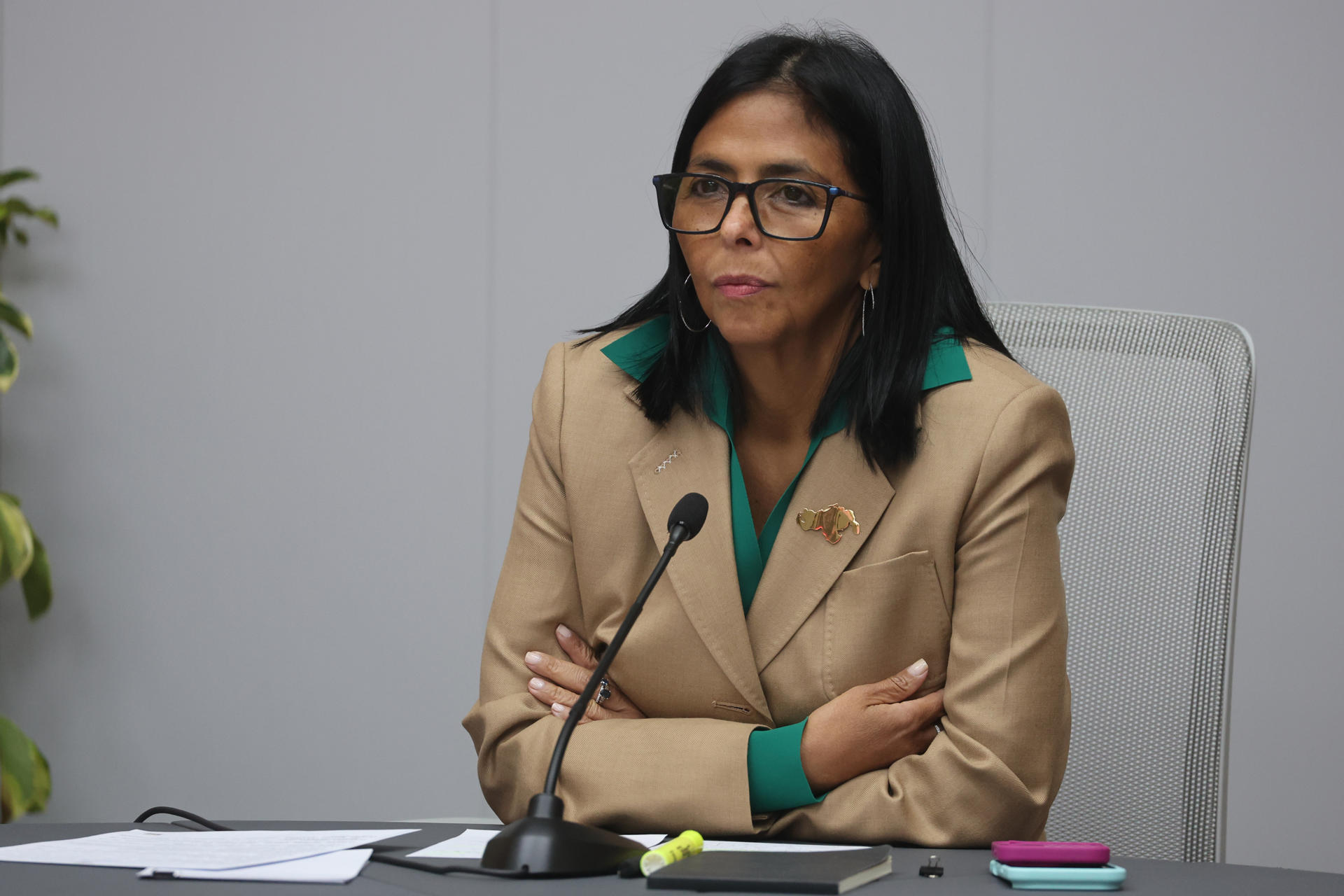
The political landscape in Venezuela has entered a latest and complex phase with the ascent of Delcy Rodríguez to the role of acting president. Taking office on January 5, 2026, Rodríguez now occupies the highest seat of power in a nation defined by deep political polarization and a persistent lack of a clear electoral calendar.
Rodríguez, a seasoned lawyer and diplomat, has spent years as one of the most influential figures within the United Socialist Party of Venezuela (PSUV). Her transition to the presidency follows a long trajectory through the upper echelons of the Venezuelan government, where she has managed everything from foreign affairs to the nation’s oil wealth. As she navigates this new mandate, the international community is watching closely to see how her leadership will affect the country’s stability and its relationship with global powers.
The shift in leadership comes at a critical juncture. For years, Venezuela has been embroiled in a crisis characterized by economic volatility and disputes over democratic legitimacy. With Rodríguez now serving as the acting president, the focus shifts to whether her administration will prioritize structural reforms or continue the existing political strategies of her predecessors.
Her appointment is not merely a change in title but a consolidation of power for a figure who has held nearly every major ministerial portfolio over the last two decades. From the Ministry of Popular Power for Communication and Information to the Ministry of Petroleum and Hydrocarbons, Rodríguez has been the primary architect of the government’s strategic responses to both internal dissent and external sanctions.
A Career of Strategic Portfolios
To understand the current state of the Venezuelan presidency, one must look at the diverse roles Delcy Rodríguez has played under the administrations of Hugo Chávez and Nicolás Maduro. Her versatility has made her an indispensable asset to the PSUV. She first gained significant prominence in the early 2000s, serving as the Minister for Presidential Affairs from February 2006 to August 2006 under President Hugo Chávez Wikipedia.
In the years that followed, her roles became increasingly central to the state’s survival and international image. Between December 26, 2014, and June 21, 2017, she served as the Minister of Foreign Affairs, where she managed the country’s diplomatic relations during a period of intensifying international scrutiny. She later took the helm of the Constituent National Assembly from August 4, 2017, to June 14, 2018, a role that placed her at the center of the government’s efforts to rewrite the nation’s legal and political framework Wikipedia.
Rodríguez’s influence expanded further when she was appointed Vice President of Venezuela on June 14, 2018, a position she held until January 5, 2026. During this tenure, she was often viewed as the primary coordinator between the presidency and the various ministries. Her ability to pivot between roles was further demonstrated when she served as the Minister of Economy and Finance from September 10, 2020, to August 27, 2024, and subsequently as the Minister of Petroleum and Hydrocarbons from August 27, 2024, to March 11, 2026 Wikipedia.
The Economic and Oil Mandate
The management of Venezuela’s oil industry and its broader economy has been the defining challenge of Rodríguez’s recent career. As the Minister of Economy and Finance, she was tasked with navigating a collapsed currency and hyperinflation. Her subsequent move to the Ministry of Petroleum and Hydrocarbons highlighted the government’s recognition that the recovery of the oil sector is the only viable path toward economic stabilization.

By overseeing both the financial and petroleum sectors in quick succession, Rodríguez gained an unparalleled view of the state’s fiscal vulnerabilities. This experience is now the foundation of her acting presidency, as she attempts to balance the need for economic reform with the political necessity of maintaining the PSUV’s grip on power.
Navigating the Acting Presidency
The transition to the acting presidency on January 5, 2026, marks a significant shift in the Venezuelan power structure. While she succeeds Nicolás Maduro in this acting capacity, the nature of her authority is subject to intense debate. The lack of a transparent, universally recognized electoral calendar continues to be a primary point of criticism from opposition groups and international observers.

Rodríguez now finds herself in a position where she must manage a “double tension”: the need to maintain the loyalty of the hardline elements within the Chavismo movement while simultaneously attempting to engage with international actors to alleviate economic pressure. This balancing act is complicated by the fact that her legitimacy is contested by those who demand a return to a strictly democratic electoral process.
Critics argue that the appointment of an acting president without a clear timeline for general elections further distances the government from the will of the people. The absence of a defined electoral schedule creates a vacuum of legitimacy that Rodríguez must fill through administrative reforms or strategic concessions. Still, the history of the current administration suggests that such concessions are often tactical rather than structural.
The Challenge of Political Legitimacy
For the global community, the primary question is whether Rodríguez will use her position to open a genuine dialogue with the opposition. Her track record as a diplomat suggests she is capable of high-level negotiation, but her roles in the Constituent National Assembly and as Vice President were characterized by a firm adherence to the PSUV’s objectives. This duality makes it difficult for external observers to predict if her presidency will be one of opening or further consolidation.
The internal dynamics of the PSUV also play a role. Rodríguez is the sister of Jorge Rodríguez, another powerful figure in the Venezuelan government, creating a sibling duo with immense influence over the state’s legislative and executive functions. This concentration of power within a single family further complicates the prospect of a decentralized or pluralistic political transition.
Key Milestones in the Career of Delcy Rodríguez
To better understand the trajectory that led to the acting presidency, it is helpful to view the sequence of her official appointments. Her career is a map of the most critical nodes of power in the Venezuelan state over the last two decades.
| Position | Term Start | Term End |
|---|---|---|
| Minister for Presidential Affairs | February 2006 | August 2006 |
| Minister of Popular Power for Communication and Information | August 3, 2013 | October 13, 2014 |
| Minister of Foreign Affairs | December 26, 2014 | June 21, 2017 |
| President of the Constituent National Assembly | August 4, 2017 | June 14, 2018 |
| Vice President of Venezuela | June 14, 2018 | January 5, 2026 |
| Minister of Economy and Finance | September 10, 2020 | August 27, 2024 |
| Minister of Petroleum and Hydrocarbons | August 27, 2024 | March 11, 2026 |
| Acting President of Venezuela | January 5, 2026 | Incumbent |
What This Means for Venezuela’s Future
The acting presidency of Delcy Rodríguez represents a gamble on stability over volatility. By placing a trusted, multi-disciplinary operative at the helm, the government is betting that she can manage the country’s economic misery without triggering a total social collapse. However, the “reforms” she proposes are often viewed with skepticism by those who see them as mere adjustments to maintain the status quo.
The impact of her leadership will be felt most acutely by the Venezuelan citizenry, who continue to struggle with the remnants of hyperinflation and a decimated healthcare system. Whether Rodríguez can transition from a “crisis manager” to a “nation builder” remains to be seen. Her success will likely be measured not by her ability to hold power, but by her ability to stabilize the economy and restore a semblance of democratic order.
the international community’s reaction will be pivotal. The United States and European Union have long conditioned the lifting of sanctions on the establishment of a democratic electoral process. Without a calendar for elections, Rodríguez’s administration may find itself unable to secure the international investment and diplomatic relief necessary for a true economic recovery.
The Role of the PSUV and Internal Power Struggles
While Rodríguez appears to be the central figure, she operates within the framework of the PSUV. The party’s internal dynamics are often opaque, but the shift toward her presidency suggests a need for a leader who can communicate effectively with the outside world while maintaining the party’s ideological core. The tension between “reformists” and “hardliners” within the party will likely define the boundaries of what Rodríguez can actually achieve.
If she leans too far toward reform, she risks alienating the military and the party’s most loyalist wings. If she remains too rigid, she risks further isolating Venezuela and deepening the humanitarian crisis. This “double tension” is the defining characteristic of her current mandate.
As the acting president, she is now the face of the Venezuelan state. Her background as a lawyer and diplomat provides her with the tools to navigate these pressures, but the structural problems of the Venezuelan state—corruption, institutional decay, and social unrest—are far larger than any one individual’s skill set.
The coming months will be critical. The world will look for signs of a genuine electoral roadmap, a significant shift in economic policy, or a new diplomatic opening. Until then, the presidency of Delcy Rodríguez remains a period of transition and uncertainty for one of the most volatile nations in the Western Hemisphere.
The next major checkpoint for the administration will be the continued management of the petroleum sector and any official announcements regarding the national electoral schedule. We will continue to monitor official government filings and international diplomatic responses for updates.
Do you believe a change in leadership at the top can resolve Venezuela’s systemic crisis, or is the issue deeper than the individual in power? Share your thoughts in the comments below and share this report with your network.
Keep reading