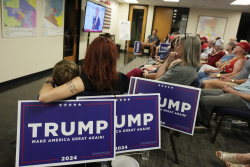
As the 2026 midterm elections approach, a familiar pattern is emerging within Democratic strategists’ attempts to regain lost ground. While acknowledging the economic anxieties of working-class voters, the focus often remains on refining messaging rather than addressing the systemic issues fueling that discontent. This approach, critics argue, represents a recurring misdiagnosis of the core problem and a missed opportunity for substantive change.
The perception that the system is rigged against ordinary Americans isn’t a recent phenomenon. It’s been building for decades, fueled by stagnant wages, rising costs of living, and a sense that economic gains are disproportionately benefiting those at the top. The Illinois primary elections on March 17th, 2026, offered a snapshot of this dynamic, with Lieutenant Governor Juliana Stratton securing the Democratic nomination for the U.S. Senate, a win seen by some as a validation of Governor JB Pritzker’s policies. CNN’s coverage highlights this outcome, but the underlying issues of economic insecurity remain largely unaddressed in the broader political discourse.
The Recurring Narrative of Economic Anxiety
For years, Democratic strategists have identified the economic frustrations of the working class as a key obstacle to electoral success. However, the response has often been to develop more effective communication strategies – crafting messages that resonate with these voters – rather than implementing policies designed to fundamentally alter their economic circumstances. This approach, some argue, treats the symptom rather than the disease. The focus on messaging, while important, can be perceived as disingenuous if not accompanied by concrete action.
This isn’t simply a matter of political rhetoric. The decline of manufacturing, the rise of automation, and the increasing prevalence of precarious work have all contributed to a sense of economic insecurity among working-class families. These trends have eroded the traditional social safety net and left many feeling vulnerable to economic shocks. The current economic climate, marked by persistent inflation and concerns about a potential recession, only exacerbates these anxieties. According to the Associated Press, the 2026 midterm elections will see primary voters selecting nominees for U.S. Senate in 35 states, governor in 36 states, and the U.S. House of Representatives in every state, making the stakes particularly high.
Beyond Messaging: The Need for Systemic Solutions
The challenge for Democrats lies in moving beyond simply acknowledging the problem and offering concrete solutions. This requires a willingness to confront powerful economic interests and challenge the status quo. Potential policy responses could include raising the minimum wage, strengthening unions, expanding access to affordable healthcare and education, and investing in infrastructure projects that create fine-paying jobs. These are complex issues with no easy answers, but they represent a starting point for a more substantive engagement with the economic concerns of working-class voters.
The situation in Texas provides a contrasting example. As reported by NBC News, Republican U.S. Sen. John Cornyn and state Attorney General Ken Paxton are headed to a late May runoff, with former President Trump yet to issue an endorsement despite promising to do so two weeks prior. This internal Republican struggle highlights the complexities of navigating primary elections and the influence of key figures within the party. However, it also underscores the importance of addressing the concerns of the base, a lesson that applies to both parties.
The Role of Trade and Globalization
The impact of trade and globalization on American manufacturing has been a significant factor in the economic anxieties of working-class voters. While trade can create economic opportunities, it has also led to job losses in certain sectors, particularly in manufacturing. Democrats have historically been proponents of free trade, but there is growing recognition within the party that this position needs to be re-evaluated. Finding a balance between the benefits of trade and the need to protect American jobs is a critical challenge.
The debate over trade is not simply an economic one; it also has significant political implications. Voters who have been negatively impacted by trade are more likely to feel alienated from the political system and to support candidates who promise to protect their jobs and livelihoods. This dynamic has been particularly evident in the Rust Belt states, where manufacturing job losses have been concentrated.
The Impact of Automation and Technological Change
Another significant factor contributing to economic insecurity is the increasing pace of automation and technological change. As machines develop into more capable of performing tasks previously done by humans, there is a growing concern that many jobs will be eliminated. This trend is not limited to manufacturing; It’s affecting a wide range of industries, including transportation, retail, and even white-collar professions.
Addressing the challenges posed by automation requires a multi-faceted approach. Investing in education and training programs to help workers acquire the skills needed for the jobs of the future is essential. Exploring policies such as a universal basic income or a job guarantee could also help to mitigate the negative consequences of automation. However, these are controversial proposals that would require significant political will to implement.
Illinois Primaries: A Microcosm of National Trends
The recent Illinois primaries offer a microcosm of the national trends at play. The victories of Lieutenant Governor Stratton in the Senate race and Miller in the House District 2 Democratic primary demonstrate the potential for progressive candidates to succeed. However, the close races in other districts, such as Illinois’ 7th Congressional District where Koppie won the Republican primary with 65.8% of the vote, highlight the continued strength of more conservative forces. These results suggest that the electorate remains deeply divided and that there is no easy path to victory for either party.
the high number of open House seats in Illinois – six in total, all Democratic – due to retirements, as noted by the AP, presents both an opportunity and a challenge for the party. While these open seats offer a chance to recruit new candidates and expand the Democratic base, they also create vulnerabilities that could be exploited by Republicans. The outcome of these races will likely have a significant impact on the balance of power in Congress.
The Influence of Outside Spending
The role of outside spending in the Illinois primaries, particularly by groups like AIPAC, as highlighted by CNN, is also worth noting. These groups often spend heavily to support candidates who align with their policy priorities, and their influence can be significant. The mixed results for these groups in Tuesday’s contests suggest that voters are not always swayed by big money and that grassroots organizing can still be effective.
Looking Ahead: The Road to November
As the 2026 midterm elections draw closer, the challenge for Democrats will be to translate their understanding of working-class anxieties into concrete policy solutions. Simply acknowledging the problem is not enough. Voters want to see evidence that Democrats are willing to fight for their economic interests and to challenge the forces that have contributed to their economic insecurity. The outcome of the November elections will depend, in large part, on whether Democrats can convince voters that they are the party of working families.
The next key date to watch is the late May runoff election in Texas, where Senator Cornyn and Attorney General Paxton will compete for the Republican nomination. The outcome of this race could have significant implications for the balance of power in the Senate. The AP will continue to provide real-time vote counts and race calls as the election unfolds. Stay informed with the latest updates from AP’s Decision Team.
What do you think? Are Democratic strategists truly misdiagnosing the problem? Share your thoughts in the comments below, and please share this article with your network.
Related reading
- Golser Volksfest 2026, SC Rust Comeback & One Love Festival News
- NORAD F-16 Jets Intercept Aircraft Violating Restricted Airspace Near Trump’s Bedminster Golf Club
- Why Hotel Key Cards Stop Working, and It's Rarely Your Phone (daybreakwire.com)
- WALANG PASOK: Class Suspensions Monday, August 10, 2026 Due to Habagat (archyworldys.com)