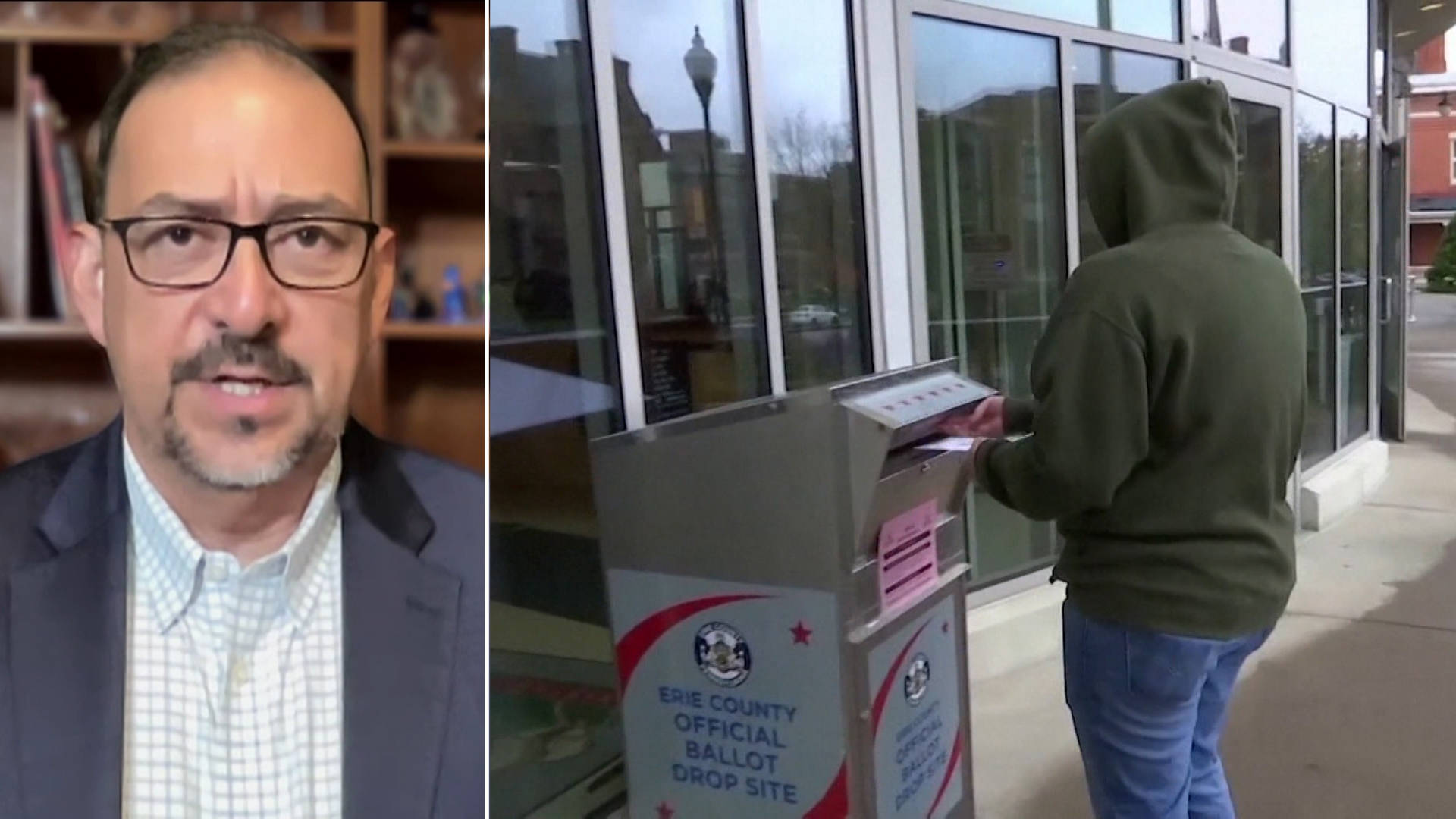
A coalition of 23 states and the District of Columbia has launched a major legal offensive against the White House, filing a lawsuit on Friday, April 3, 2026, to block a sweeping executive order issued by President Donald Trump that targets mail-in voting and seeks to centralize voter eligibility verification via AZFamily/AP.
The legal challenge, led in part by top Arizona officials, argues that the president has overstepped his constitutional authority by attempting to implement widespread changes to state-run election systems. At the heart of the dispute is a directive that would shift the power to verify voter eligibility from the states to the federal government, a move critics describe as a direct threat to the democratic process.
Arizona Secretary of State Adrian Fontes has been one of the most vocal opponents of the measure, characterizing the Trump mail-in voting executive order as a partisan attempt to manipulate the electorate. In statements regarding the legal challenge, Fontes asserted, “What we have is clearly an attempt for the president to pick his own voters” via Democracy Now!.
The conflict comes as states prepare for the upcoming fall elections, with some jurisdictions scheduled to begin mailing ballots as early as September. The sudden imposition of federal verification requirements has sparked fears of widespread disenfranchisement and administrative chaos across the United States.
A Shift in Election Administration: What the Executive Order Mandates
Signed on Tuesday, March 31, 2026, the executive order directs the Department of Homeland Security (DHS) and the Social Security Administration to collaborate on the creation of a national, verified list of eligible voters for every state via KTAR.
Under the terms of the order, the U.S. Postal Service (USPS) would be barred from mailing absentee ballots to any individual who does not appear on this federally approved list. This represents a significant departure from current protocols, where state and local election officials manage voter rolls and determine ballot eligibility based on state law.
Beyond the administrative shifts, the order introduces severe penalties for those managing the process. The lawsuit filed by Arizona and other states highlights that the executive order threatens election workers with jail time if they distribute ballots to individuals not included on the federal eligibility list via AZFamily/AP.
“Trying to Pick His Own Voters”: The Pushback from Arizona Officials
The response from Arizona’s executive branch has been swift and severe. Secretary of State Adrian Fontes has dismissed the order as “unconstitutional” and “a giant pile of bull(expletive),” arguing that the mandate is a gross overreach into the responsibilities of state legislatures via KTAR.
Arizona Attorney General Kris Mayes, who joined the lawsuit alongside Fontes, emphasized that the administration of elections is a state-level prerogative. “States run their elections, not the President of the United States, not the Department of Homeland Security,” Mayes stated, adding that this principle is “bedrock constitutional law” via KTAR.
The criticism extends to the practical expertise behind the order. Former Maricopa County Recorder Stephen Richer suggested that the executive order was drafted by individuals who possess theoretical ideas about election administration but lack actual experience in the field via KTAR.
Fontes further argued that the order is a direct attack on both the voters and the election administrators who maintain the security of the democratic process, stating that the greatest threat to election security is the president’s continued rhetoric regarding the system via AZFamily/AP.
Legal Hurdles and the Race Against the September Deadline
Legal experts and critics have raised several critical concerns regarding the feasibility and legality of the order. A primary point of contention is whether the president possesses the legal authority to direct the operations of the U.S. Postal Service in this manner. According to reporting by the Associated Press, It’s likely that the president lacks the authority to mandate how the USPS handles the distribution of ballots via KTAR.

the timeline for implementation is viewed as nearly impossible. With some states beginning to mail ballots in September, there is very little time for the federal government to accurately compile and verify millions of voter records without committing significant errors via AZFamily/AP.
The lawsuit seeks two primary outcomes from the court:
- A declaration that specific portions of the executive order are unconstitutional.
- An immediate injunction to block the federal government from implementing the order’s restrictions on mail-in voting via AZFamily/AP.
Key Takeaways of the Legal Conflict
| Feature | Executive Order Mandate | Opposition Argument |
|---|---|---|
| Voter Lists | DHS/SSA to create national verified eligibility list. | Unconstitutional seizure of state election power. |
| Ballot Delivery | USPS may only mail ballots to “verified” voters. | President lacks authority to direct USPS in this capacity. |
| Enforcement | Jail time for workers who bypass the federal list. | Intimidation of election administrators. |
| Timeline | Immediate implementation for fall elections. | Insufficient time to ensure list reliability before September. |
As the case moves forward, the courts will have to decide if the federal government can override state-level voter verification processes in the name of “security,” or if such a move violates the constitutional division of power. For millions of voters who rely on mail-in ballots, the outcome of this litigation will determine whether their access to the polls remains under the jurisdiction of their home state or is subject to a federal filter.
The next confirmed step in this legal battle will be the initial court hearings to determine if a preliminary injunction should be granted to block the order before the September ballot mailing window begins.
World Today Journal encourages readers to share this story and leave their thoughts in the comments section below regarding the balance of power between federal and state election administration.
Keep reading
- Repentina caída de Keir Starmer a tan sólo dos años, convierte a Andy Burnham en el …
- Iran suggests MoU ‘suspended’ as 50 killed in US strikes in July
- What Is a 'Blue Slip'? The Senate Custom Trump Wants Gone (daybreakwire.com)
- APRA Re-elects Karani, Mekeme, Ibietan to Lead Continental PR Body, Expands Executive Council (archyworldys.com)