
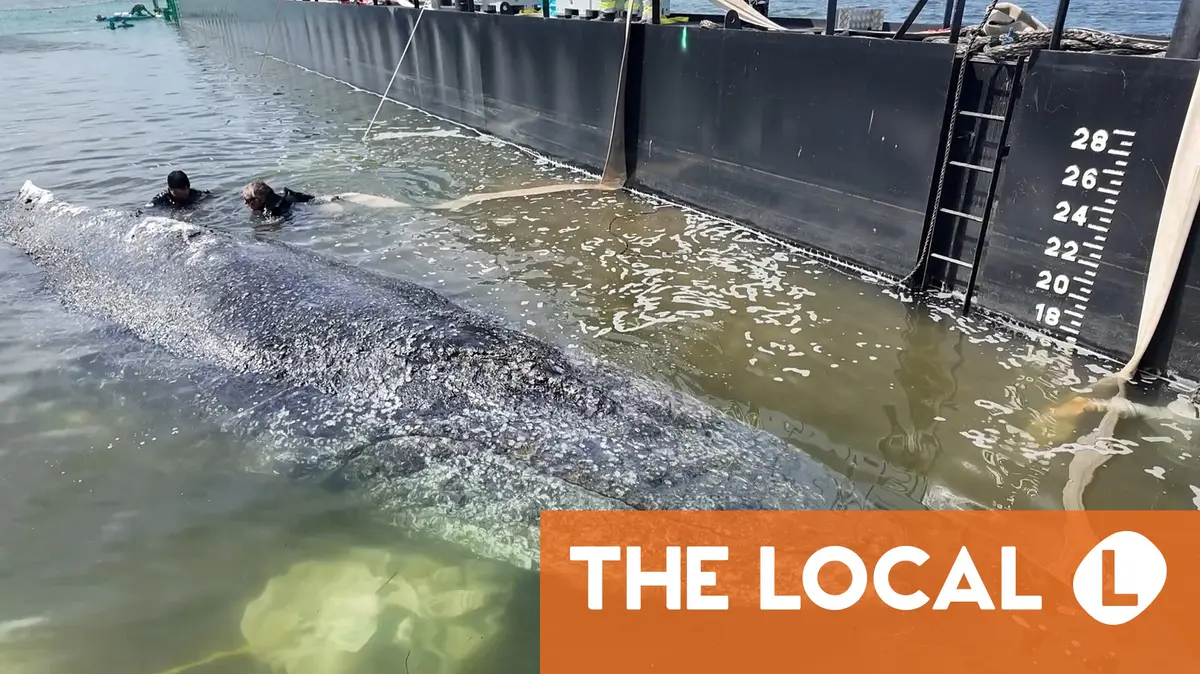
Danish authorities are moving forward with a post-mortem examination of a humpback whale that became the center of a weeks-long rescue drama in the North Sea. The animal, known colloquially as “Timmy” by observers in Germany, died following a high-stakes effort to return it to deeper waters after it had become stranded near the German coastline.
The Danish Environmental Protection Agency confirmed on Thursday that the whale’s carcass, which had been located off the island of Anholt, would be transported to the port of Grenaa. The operation is intended to facilitate a professional examination, allowing researchers and veterinarians to conduct a systematic analysis of the cetacean’s condition. This procedure is standard practice for significant strandings, providing an opportunity for scientific data collection and potential preservation of specimens for museum collections.
A Complex Rescue Operation
The whale’s journey began on March 23, when it was first spotted struggling on a sandbank. The subsequent weeks saw an intense period of intervention, as teams attempted various methods to guide the marine mammal back into open waters. These efforts, which were reportedly funded by private entrepreneurs, drew significant public and media attention, turning the whale’s plight into a widely followed narrative across the region.
Despite the efforts of rescuers, the whale eventually required a more drastic intervention. On May 2, a rescue team successfully transported the humpback via barge into the North Sea in a last-ditch effort to save the animal. Unfortunately, the rescue did not lead to the intended outcome. Authorities confirmed the animal’s death on May 16, after its carcass was discovered near Anholt.
Scientific Investigation in Grenaa
Following the discovery, the whale remained in shallow waters near a popular beach, creating what officials described as a “significant disturbance.” Jane Hansen, an official at the Danish Environmental Protection Agency, noted that the move to the eastern port of Grenaa was necessary because the location offers conditions better suited for the specialized work required for such a large marine mammal.
The transition of the carcass from the island to the port is a delicate logistical operation involving multiple vessels. If the transport is successful, experts are scheduled to conduct the post-mortem on Friday. Should the transfer prove unfeasible due to environmental or technical constraints, the examination and sample collection will instead take place on-site at Anholt. The goal is to perform the same diagnostic procedures typically applied to large whale strandings, which may offer insights into the health and circumstances surrounding the animal’s death.
Public Interest and Expert Critique
The saga of the humpback whale sparked a notable media frenzy, drawing crowds to the Baltic coast and keeping law enforcement busy as they worked to maintain safety perimeters around the rescue sites. The intensity of the public and media interest led to challenging conditions for those involved in the recovery efforts, with reports indicating that some rescuers faced threats during the operation.
The situation also prompted broader discussions among marine experts. Throughout the weeks of rescue attempts, some specialists questioned the viability and ethics of the continued interventions, describing certain efforts as pointless. The upcoming autopsy results may provide further context regarding the whale’s health and the effectiveness of the interventions conducted during the weeks it spent struggling in the region’s coastal waters.

As the scientific community prepares for the examination in Grenaa, the focus remains on the data that can be recovered from the animal. By analyzing the samples, researchers hope to contribute to the collective understanding of humpback whale health and the challenges these creatures face when navigating shallow, human-inhabited coastal environments.
We find no further scheduled official updates at this time. The results of the examination are expected to be compiled by the relevant research and veterinary teams in the coming weeks. We invite our readers to share their thoughts and perspectives on the balance between human intervention and natural wildlife processes in the comments section below.