
Depression is far more than a temporary state of sadness; This proves a complex, pervasive medical condition that transcends borders, socioeconomic status, and age. From the corridors of Berlin to the rural hubs of Sub-Saharan Africa, the global burden of depressive disorders remains one of the most significant challenges to public health in the 21st century. As an internist and medical journalist, I have seen how the gap between the prevalence of this illness and the accessibility of high-quality care continues to widen, despite significant leaps in neurobiological research.
The scale of the crisis is stark. According to the World Health Organization (WHO), an estimated 5.7% of adults globally suffer from depression. This is not a static figure; recent data suggests a continuing rise in incidence, exacerbated by the lingering psychological aftereffects of the COVID-19 pandemic and increasing global instability. When a condition affects over one billion people worldwide, as indicated in recent WHO reports, it ceases to be merely a clinical concern and becomes a systemic economic and social imperative.
While the medical community is witnessing an era of unprecedented innovation—including the emergence of rapid-acting glutamatergic agents and the exploration of psychedelic-assisted therapy—the most urgent demand remains the optimization of existing frameworks. The tragedy of modern mental health is not always a lack of medicine, but a failure of delivery. Improving the accuracy of diagnosis and the consistency of clinical management is often a more efficient strategy for reducing global disability than the pursuit of a “silver bullet” cure.
The Global Landscape: Who is Affected and Why it Matters
Depression does not discriminate by age, but it does manifest differently across the lifespan. In adolescents, it often appears as irritability and social withdrawal; in the elderly, it may be masked by physical ailments or cognitive decline. This versatility makes early detection difficult. When depression goes untreated, it does not simply persist—it evolves, often leading to comorbid anxiety, substance abuse, and, in the most severe cases, suicide.

The burden is not distributed equally. Gender disparities remain a defining characteristic of the disorder, with women being more frequently affected than men. Regional “hotspots” have emerged, particularly in low- and middle-income countries where the “treatment gap”—the percentage of people with a disorder who do not receive care—can exceed 75% in some regions. This disparity is driven by a lack of trained psychiatric professionals and the persistent stigma that prevents patients from seeking help.
From a public health perspective, the cost is measured in “Years Lived with Disability” (YLD). Mental disorders are a leading cause of these YLDs, accounting for approximately 15.6% of all years lived with disability globally. This loss of productivity and quality of life places an immense strain on healthcare systems and families, making the improvement of clinical management a matter of global economic stability.
Evolving Diagnostics and Clinical Management
The path to recovery begins with a precise diagnosis. For decades, the medical community has relied on symptomatic checklists. However, the shift toward “personalized psychiatry” is gaining momentum. The goal is to move beyond a one-size-fits-all approach and instead tailor interventions based on a patient’s specific symptom cluster, genetic profile, and environmental triggers.
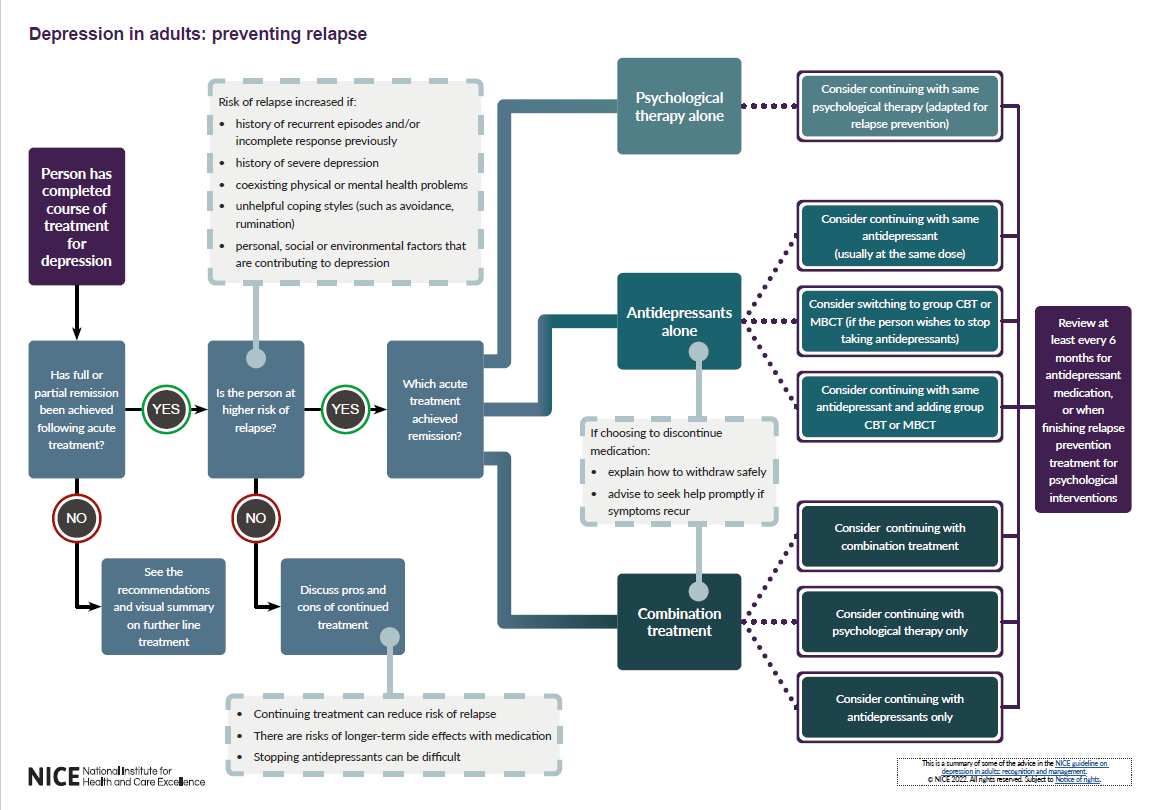
Current clinical guidelines emphasize a stepped-care model. For mild depression, first-line interventions often include psychological therapies—such as Cognitive Behavioral Therapy (CBT)—or supervised physical exercise. For instance, some guidelines suggest that low- to moderate-intensity exercise for 30 to 40 minutes, three to four times per week for at least nine weeks, can serve as an effective monotherapy for mild cases.
For moderate to severe depression, the management typically involves a combination of pharmacotherapy and psychotherapy. The most commonly utilized medications remain Selective Serotonin Reuptake Inhibitors (SSRIs) and Serotonin-Norepinephrine Reuptake Inhibitors (SNRIs). However, the challenge remains the “lag time”—the weeks it often takes for these medications to reach therapeutic levels—during which patients remain vulnerable.
Key Management Strategies Across the Spectrum
| Severity | Primary Intervention | Goal of Treatment |
|---|---|---|
| Mild | Psychotherapy / Exercise / Lifestyle Adjustment | Symptom mitigation and prevention of escalation |
| Moderate | Combination of SSRIs/SNRIs and CBT | Remission of symptoms and functional recovery |
| Severe / TRD | Advanced pharmacotherapy, ECT, or Neuromodulation | Rapid stabilization and crisis intervention |
Medical Innovation: Beyond the Traditional Pill
For a significant portion of the population, traditional antidepressants are insufficient. This is known as Treatment-Resistant Depression (TRD), and it is here that the most exciting medical innovations are occurring. We are moving away from the “monoamine hypothesis”—the idea that depression is simply a lack of serotonin—and toward a deeper understanding of glutamate and neural plasticity.
One of the most significant recent breakthroughs is the approval of esketamine
, a nasal spray that targets the glutamate neurotransmitter pathway. Unlike traditional antidepressants, esketamine can provide rapid symptom relief, sometimes within 24 hours. According to reports from the American Journal of Managed Care (AJMC), esketamine has been approved as a monotherapy for major depressive disorder in patients who have had an inadequate response to two oral antidepressants, with clinical trials showing 22.5% of patients achieving remission by week four, compared to 7.6% in the placebo group.
Beyond esketamine, the FDA is accelerating action on a new class of “perception-altering” medications. On April 24, 2026, the U.S. Food and Drug Administration (FDA) announced regulatory actions to support the development of serotonin-2A agonists, including psychedelic-assisted therapies. These interventions aim to “reset” neural pathways, providing a window of plasticity that allows psychotherapy to be more effective.
neuromodulation techniques like Transcranial Magnetic Stimulation (TMS) are becoming more accessible. By using magnetic fields to stimulate specific nerve cells in the brain, TMS offers a non-invasive alternative for those who cannot tolerate medication or who have not responded to pharmacological interventions.
The Path Forward: Bridging the Gap
While the science of the brain advances, the science of delivery must keep pace. The most sophisticated medication in the world is useless if a patient in a rural village cannot access a clinic or if a teenager in a wealthy city is too ashamed to speak. The “clinical management” of depression must therefore include the dismantling of social stigma and the integration of mental health into primary care.

We are seeing a shift toward “integrated care,” where mental health screenings are as routine as blood pressure checks. By normalizing the diagnosis of depression, we can identify the condition before it reaches a crisis point. This proactive approach—shifting from “crisis management” to “preventative wellness”—is the only way to meaningfully reduce the global burden of the disease.
Key Takeaways for Patients and Providers
- Early Intervention: Depression is highly treatable, but early diagnosis prevents the development of chronic, treatment-resistant patterns.
- Multimodal Approach: The most effective recovery plans typically combine medication, psychotherapy, and lifestyle changes (exercise and sleep hygiene).
- New Options for TRD: For those who do not respond to standard SSRIs, options like esketamine and TMS provide rapid-acting alternatives.
- Global Access: Efforts are underway to reduce the “treatment gap” in underserved regions through community-based mental health initiatives.
The next major milestone in this field will be the continued rollout of the updated Clinical Practice Guidelines for the Treatment of Depression Across Three Age Cohorts, currently being refined by a multidisciplinary panel appointed by the American Psychological Association (APA) in 2025. These updates are expected to further refine how we treat children, adults, and the elderly differently, recognizing that a 12-year-old’s depression is biologically and socially distinct from that of an 80-year-old.
As we continue to unravel the mysteries of the human brain, the goal remains simple: ensuring that no one has to suffer in silence. We invite you to share your experiences or questions in the comments below to help foster a more open conversation about mental health.