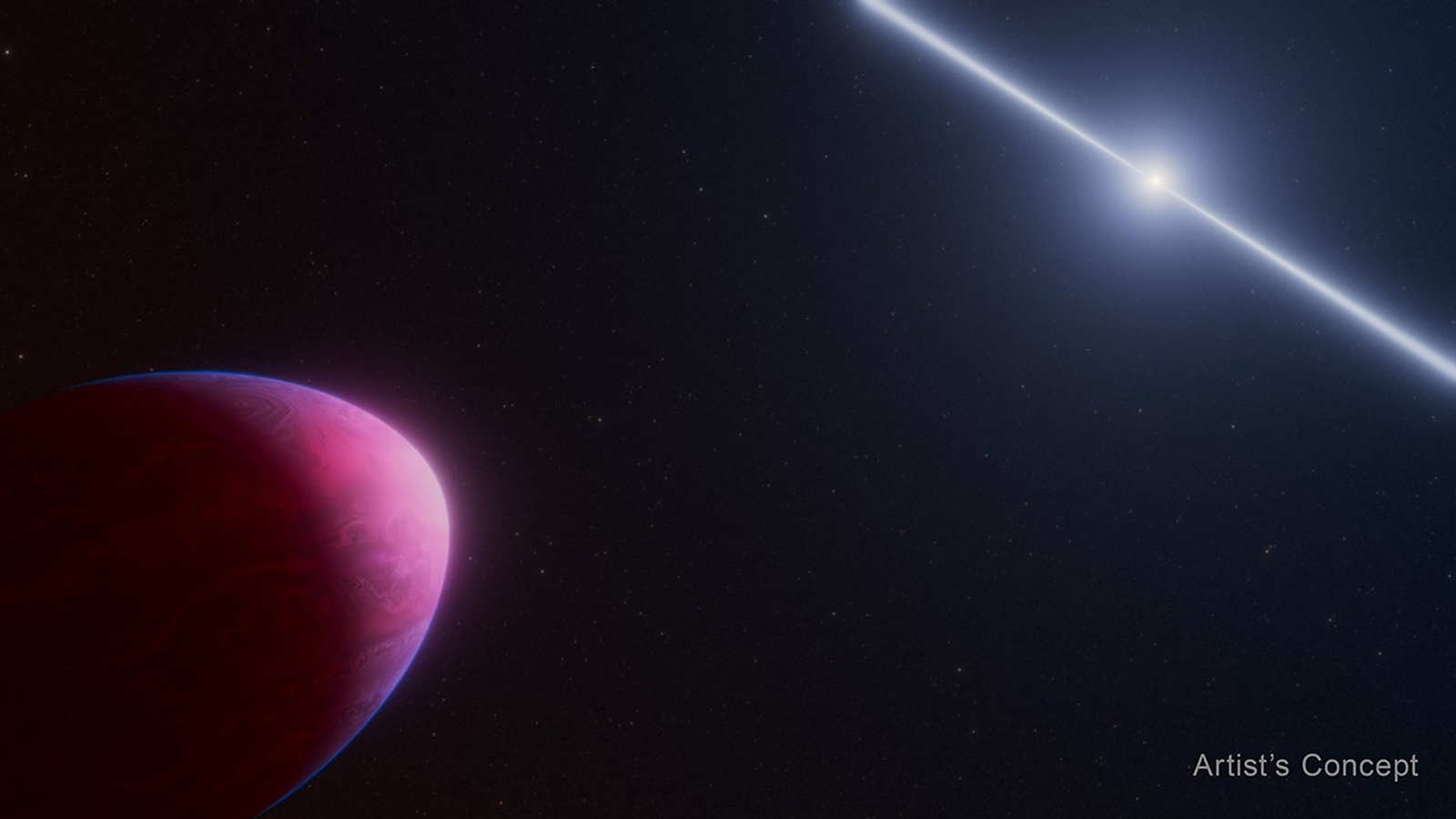
The Diamond Planet: Unraveling the mysteries of Exoplanet PSR J2322-2650b
have you ever wondered what a planet made of diamond might look like? While the idea sounds like science fiction, astronomers are increasingly convinced that exoplanet PSR J2322-2650b – orbiting a pulsar – is largely composed of crystallized carbon. This remarkable discovery, however, presents a profound puzzle, challenging our current understanding of planetary formation and atmospheric composition.
A Black Widow System and a Planetary Anomaly
PSR J2322-2650b resides in a “black widow” system. This means it orbits a pulsar, a rapidly spinning, highly magnetized neutron star. Pulsars are the remnants of massive stars that have gone supernova.
Like the spider it’s named after, the pulsar “consumes” its companion star, stripping away its material.This process, as explained by researchers, causes the pulsar to spin faster and emit powerful radiation, further eroding the nearby star. But how did a planet even form in such a hostile environment?
A planet Unlike Any Other
Lead author Michael Zhang,a postdoctoral fellow at the University of Chicago,highlights the core issue. The planet’s composition is radically different from anything we’ve observed. “Did this thing form like a normal planet? No, because the composition is entirely different,” Zhang stated.
Its extreme carbon enrichment defies known planetary formation mechanisms. Essentially, everything we thought we knew about how planets come to be doesn’t seem to apply here.
Diamonds in the Atmosphere: A Baffling Discovery
Scientists have detected evidence of carbon in the exoplanet’s atmosphere, perhaps in the form of soot or even diamonds. This is notably surprising because extreme heat near stars typically breaks down molecular carbon.
So, how are these carbon crystals present? Researchers are exploring several possibilities, but a definitive answer remains elusive.
The Crystallization hypothesis
One leading theory, proposed by study co-author Roger Romani of Stanford university, suggests that after the planet cooled, carbon and oxygen within its interior crystallized. Pure carbon crystals would then float to the top and mix with helium.
However, this doesn’t explain everything. Romani notes, “Something has to happen to keep the oxygen and nitrogen away,” adding another layer to the mystery.
Key Unanswered Questions
Here’s a breakdown of the central questions surrounding PSR J2322-2650b:
* formation: How did a planet with such a unique composition form in a black widow system?
* Atmospheric carbon: What processes allow carbon to exist in a stable molecular form in such a hot environment?
* Oxygen/Nitrogen Separation: Why are oxygen and nitrogen seemingly absent from the upper atmosphere, allowing carbon crystals to dominate?
The Future of Research
Despite the challenges, scientists are eager to continue studying this remarkable exoplanet. Romani expresses his enthusiasm, stating, “It’s nice to not know everything. I’m looking forward to learning more about the weirdness of this atmosphere. It’s great to have a puzzle to go after.”
PSR J2322-2650b represents a unique possibility to push the boundaries of our understanding of planetary science. As we gather more data, we may unlock new insights into the diverse and ofen unexpected ways planets can form and evolve throughout the universe. This diamond planet is a testament to the fact that the cosmos still holds countless secrets waiting to be discovered.
Sources:
* Zhang,Michael,et al. (Date of Publication). [Original Research Paper Title].[Journal Name].
* Livescience. (Link to Black Widow Spider Article – as provided in original text)
* University of Chicago Astrophysics Department: [Link to Michael Zhang’s Profile – as provided in original text]
* Stanford University Physics Department: [Link to Roger Romani’s Profile – as provided in original text]
Related reading