
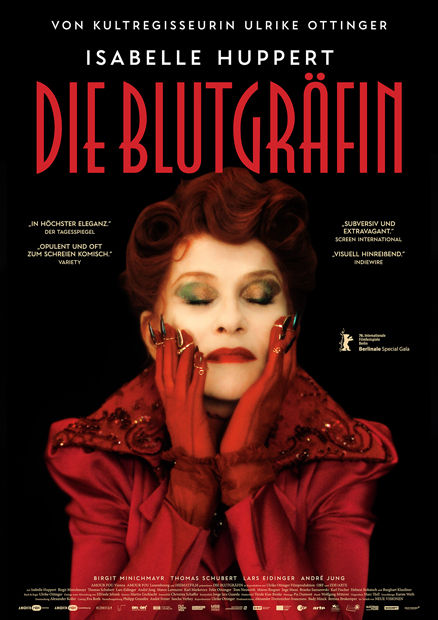
Director Ulrike Ottinger is set to return to the screen with Die Blutgräfin, a dark and humorous vampire comedy featuring French cinema icon Isabelle Huppert in the lead role. The project, which is currently in development for a 2026 release, marks a collaboration between production houses in Austria, Luxembourg, and Germany, aiming to blend the director’s signature avant-garde style with the tropes of the classic vampire genre.
The film, which explores the mythos of the “Blood Countess,” has been categorized by industry observers as a whimsical yet macabre take on gothic horror. While plot details remain under wraps, the involvement of Ottinger—a filmmaker celebrated for her visual flair and unconventional narrative structures—suggests a departure from mainstream horror conventions. The production is a testament to the ongoing European cross-border collaboration in high-concept independent cinema.
The Creative Vision of Ulrike Ottinger
Ulrike Ottinger has long been established as a singular voice in German cinema, known for works that challenge traditional storytelling. Her approach to Die Blutgräfin is reportedly designed to be both “dark” and “entertaining,” according to early project descriptions circulated within the industry. By casting Isabelle Huppert, one of the most prolific and versatile actors in contemporary film, Ottinger signals a focus on character-driven comedy rather than pure genre scares.

Huppert’s career, which spans decades and includes collaborations with directors like Michael Haneke and Paul Verhoeven, often favors complex, intense, and occasionally eccentric roles. Her participation in a project described as a “whimsical vampire comedy” aligns with her history of gravitating toward projects that defy easy classification. For fans of both the director and the actress, this pairing represents a significant cinematic event for the 2026 festival and theatrical calendar.
A European Co-Production
The production of Die Blutgräfin is a multi-national effort, involving financial and creative input from Austria, Luxembourg, and Germany. This structure is common for ambitious European art-house films, allowing for broader funding opportunities and diverse crew participation. By leveraging the resources of three distinct film industries, the production aims to maintain a high aesthetic standard while navigating the logistical requirements of a period-inspired or fantasy-leaning film.

Industry standards for such co-productions typically require adherence to specific cultural and financial criteria set by the participating national film funds. As the project moves toward its 2026 release date, further information regarding its status at European film markets—such as the Berlinale or the Cannes Film Festival—is expected to emerge. These markets often serve as the primary venues for international distributors to acquire rights to high-profile European auteur projects.
What to Expect from the Genre Blend
The term “vampire comedy” has seen various iterations in world cinema, from the satirical to the slapstick. However, Ottinger’s track record suggests that Die Blutgräfin will likely lean into the “whimsical” and “dark” elements rather than broad comedy. The historical archetype of the “Blood Countess”—often associated with the real-life figure Elizabeth Báthory—has been adapted numerous times, but rarely through the lens of a director known for experimental, non-linear art house cinema.
For audiences, the film promises an exploration of the vampire mythos that prioritizes atmosphere and performance over traditional jump-scares or action sequences. The film is currently in the pre-production and development phase. Updates regarding casting, principal photography dates, and official distribution partnerships will be monitored as the 2026 release window approaches.
As we follow the development of this unique project, readers are invited to share their thoughts on the pairing of Ottinger and Huppert. Does this collaboration represent the next evolution of the vampire genre? Please leave your comments below to join the discussion on what promises to be one of the more anticipated European releases of 2026.