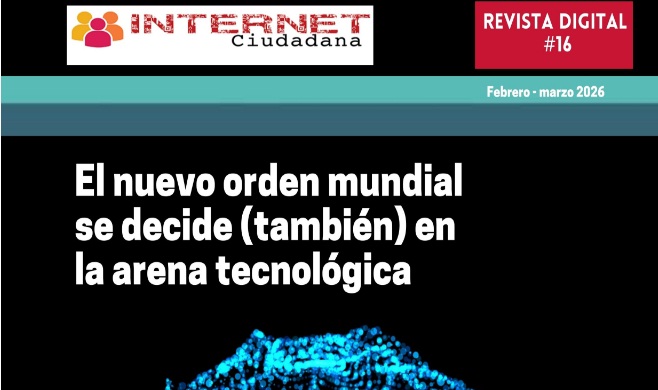
The digital realm is rapidly reshaping the global order, a dynamic explored in the latest edition of the digital magazine Internet Ciudadana. The publication’s sixteenth issue, titled “The new world order is defined (also) in the technological arena,” delves into the complex interplay between technology, geopolitics, and social equity, raising critical questions about access, control, and the future of information.
As technological advancements accelerate, a significant knowledge gap is widening between those with access to resources and those without, exacerbating existing inequalities. This disparity hinders critical analysis of technologies that increasingly permeate daily life. The rise of artificial intelligence further complicates the landscape, challenging the veracity and neutrality of information, leading to a situation where we “use more and more, but understand less and less where what we use leads us,” according to the magazine’s editorial team.
The publication highlights a growing tension between corporate and geopolitical competition for control of the internet and the emergence of democratic alternatives. It emphasizes the importance of supporting and amplifying these alternatives, recognizing that a more equitable digital future requires conscious effort and collaboration. The new issue of Internet Ciudadana aims to contribute to a deeper understanding of the current digital reality and the possibilities for a more just and inclusive technological landscape.
The Digital Divide and the Erosion of Trust
The core argument presented in the latest Internet Ciudadana issue centers on the increasing digital divide. This isn’t simply about access to devices or internet connectivity, but a broader gap in understanding and the ability to critically assess the technologies shaping our world. The proliferation of misinformation and disinformation, amplified by algorithms and social media platforms, poses a significant threat to informed public discourse. A 2023 report by the Pew Research Center found that nearly half of Americans have difficulty distinguishing between factual news reports and opinions.
This erosion of trust is further compounded by the increasing influence of artificial intelligence. AI-generated content, while increasingly sophisticated, can be used to create convincing but false narratives, making it even more difficult for individuals to discern truth from fiction. The potential for manipulation and the spread of propaganda through AI-powered tools is a growing concern for policymakers and researchers alike. The European Union is actively working on regulations to address these challenges, including the Artificial Intelligence Act, which aims to establish a legal framework for the development and use of AI technologies.
Geopolitical Competition and the Search for Alternatives
The magazine also addresses the intensifying geopolitical competition for control of the internet. The dominance of a few large tech corporations, often based in the United States and China, raises concerns about data privacy, censorship, and the potential for surveillance. This competition extends beyond economic interests, encompassing national security and ideological influence. The ongoing debate over TikTok, a social media platform owned by the Chinese company ByteDance, exemplifies these concerns. In February 2024, the House Intelligence Committee passed a bill that could lead to a ban of TikTok in the United States if ByteDance does not divest its ownership.
However, the publication emphasizes that alternatives to this centralized, corporate-controlled internet are emerging. The recently launched Mapeo de Tecnologías Libres, highlighted in the magazine, is a collection of tools, organizations, and resources aimed at empowering individuals and communities to break free from the constraints of monopolistic tech companies. This mapping project seeks to promote the adoption of open-source software, decentralized platforms, and privacy-enhancing technologies.
Grassroots Innovation and Technological Sovereignty
The magazine also spotlights innovative initiatives emerging from grassroots movements. The publication notes developments led by Brazilian peasant organizations, such as the Landless Workers’ Movement (MST), with support from China, that prioritize community needs and social justice. These initiatives demonstrate a commitment to leveraging technology for positive social change, rather than solely for profit. The MST, founded in 1984, has a long history of using technology to organize and advocate for land reform and social justice in Brazil.
the issue explores advancements in technology driven by feminist and Southern perspectives, alongside an examination of how Wikipedia addresses contentious topics. Wikipedia, a collaborative, multilingual, free online encyclopedia, has faced ongoing challenges in maintaining neutrality and accuracy, particularly on sensitive subjects. The platform’s community-based editing process, while generally effective, is susceptible to bias and manipulation. A 2021 study by the Oxford Internet Institute found that Wikipedia articles on women are significantly shorter and less comprehensive than those on men, reflecting systemic gender biases in the encyclopedia’s content.
The Role of Digital Rights in Latin America
The magazine features contributions from Derechos Digitales, a Latin American organization dedicated to promoting digital rights. Gastón Wahnish, Communications Officer at Derechos Digitales, analyzes the increasing digitization of the agricultural sector and the resulting “datification” of rural areas. This process, while offering potential benefits in terms of efficiency and productivity, also raises concerns about data privacy, control, and the potential for exploitation of farmers. Rafael Bonifaz, leader of the Latin American Program for Digital Resilience and Defense (LAREDD), reflects on the impact of the European Union’s Digital Markets Act (DMA) on the decentralization of digital communications. The DMA, which came into effect in May 2023, aims to curb the power of large tech companies and promote competition in digital markets.
The DMA designates certain large tech companies as “gatekeepers” and imposes obligations on them to ensure fair access to their platforms and data. This legislation has the potential to reshape the digital landscape, but its effectiveness remains to be seen. The European Commission is currently monitoring the implementation of the DMA and is prepared to impose significant fines on companies that violate its provisions.
The publication concludes with a call to action, urging readers to engage with these critical issues and support the development of a more democratic and equitable digital future. The challenges are significant, but the potential for positive change is immense. The next key date to watch is the upcoming review of the DMA by the European Commission in early 2027, which will assess its impact and identify areas for improvement.
What are your thoughts on the future of the digital world? Share your comments below and help us continue the conversation.