
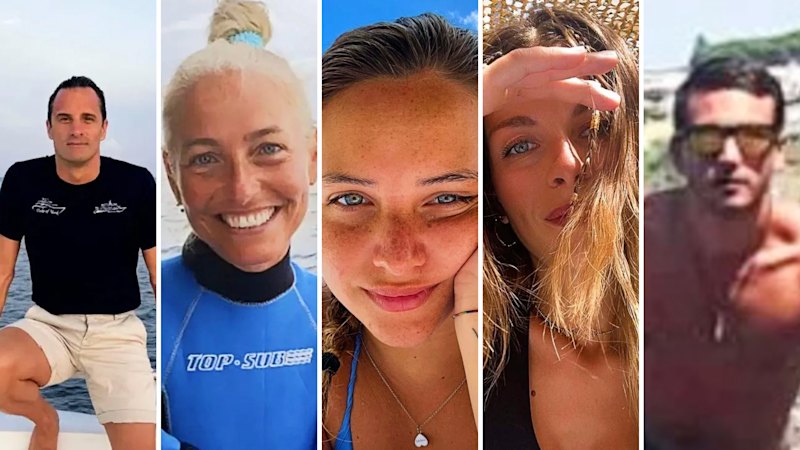
Tragedy in Vaavu Atoll: Five Italian Divers Perish in Maldives Cave Accident
A specialized diving expedition in the Maldives has ended in tragedy following a fatal accident in an underwater cave system. Five Italian nationals, including prominent academic researchers and a professional dive instructor, died while exploring the depths of the Vaavu Atoll, leaving the international scientific and diving communities in mourning.
The incident occurred on Thursday morning near Alimathaa Island, approximately 100 kilometers south of the capital, Malé. According to reports from the Italian Ministry of Foreign Affairs, the group was attempting to explore caves at a depth of approximately 50 meters when the accident occurred. The recovery operation, described as high-risk by local authorities, has faced significant challenges due to the extreme depth and the technical complexity of the cave environment.
The victims have been identified as a team of researchers from the University of Genoa and their support staff. Among the deceased are Monica Montefalcone, an associate professor of ecology, and her daughter, Giorgia Sommacal. They were joined by marine biologist Federico Gualtieri and research fellow Muriel Oddenino. The fifth victim was identified as Gianluca Benedetti, a dive instructor and boat operations manager who was supporting the team.
The group was operating from the Duke of York, a luxury liveaboard vessel. A distress call was received by the Maldivian Coast Guard’s maritime coordination center at 1:45 p.m. On Thursday, triggering a massive search and rescue operation involving the Maldives National Defence Force (MNDF), which deployed boats, aircraft, and specialized dive teams to the site.
A Devastating Loss for Marine Science
The death of Professor Monica Montefalcone represents a significant loss to the field of marine ecology. A recognized expert in her field, Montefalcone served as the scientific director of the “Mare Caldo” project, an initiative dedicated to monitoring the critical effects of warming seas on Italian marine habitats. Her work was instrumental in understanding how rising ocean temperatures shift biodiversity and threaten fragile aquatic ecosystems.
In addition to her work in Italy, Montefalcone was a coordinator for research activities focusing on Maldivian reefs, utilizing the region’s unique geography to study coral resilience. While the team was composed of academic professionals from the University of Genoa, officials have indicated that this specific exploratory cave dive was not believed to be part of an official university research project, suggesting it may have been a private exploration conducted during their time in the region.
The National Institute of Geophysics and Volcanology, alongside the university, issued statements expressing deep condolences to the families and colleagues of the five victims, highlighting the profound impact of the loss on both the academic community and the families involved.
The Challenges of the Recovery Operation
The recovery effort has been fraught with danger, primarily due to the depth and configuration of the cave system. The Maldives National Defence Force (MNDF) confirmed that one body was recovered from within the cave system at a depth of approximately 60 meters. The remaining four divers are believed to be in the same vicinity, but the environment has made retrieval efforts perilous.
Mohamed Hussain Shareef, a spokesperson for the Maldivian presidency, emphasized the extreme nature of the site, stating that the cave is so deep that even divers equipped with the highest-grade gear typically avoid approaching it. The search operation has been described as “high-risk” because of the physical constraints of the cave and the physiological pressures exerted on rescue divers at those depths.
The MNDF continues to coordinate with the Maldives National Defence Force and international partners to ensure the safe recovery of the remaining victims. However, the operation remains subject to weather conditions and the inherent risks of deep-water cave penetration.
Understanding the Risks of Deep Cave Diving
The tragedy underscores the extreme dangers associated with cave diving, which is widely considered one of the most technical and hazardous forms of scuba diving. Unlike open-water diving, cave diving removes the possibility of a direct vertical ascent to the surface in an emergency, meaning divers must navigate back through the same tunnels they entered.
At the depths reported in this incident—between 50 and 60 meters—divers face several critical physiological and environmental threats:
- Nitrogen Narcosis: At depths exceeding 30 meters, the increased partial pressure of nitrogen can cause a narcotic effect, impairing judgment, coordination, and cognitive function, which can lead to fatal mistakes in a confined space.
- Decompression Sickness: Deep dives require precise decompression stops to allow nitrogen to leave the bloodstream safely. Any deviation from these protocols, or a forced rapid ascent, can cause bubbles to form in the blood and tissues, leading to paralysis or death.
- Silt-outs: In cave environments, a single misplaced fin kick can stir up fine sediment (silt), reducing visibility to zero in seconds. This can lead to disorientation and the inability to find the exit.
- Equipment Failure: The high-pressure environment increases the risk of gear malfunction. Technical divers typically carry redundant systems, but the complexity of a cave system can turn a minor equipment issue into a catastrophic event.
Because of these factors, technical cave diving requires specialized training and certification far beyond standard recreational diving. The depth at which the Italian team was operating falls well into the realm of technical diving, requiring specific gas blends (such as Trimix) to mitigate narcosis and oxygen toxicity.
Official Investigations and Next Steps
The Italian Ministry of Foreign Affairs, through the Ministry of Foreign Affairs and International Cooperation, has confirmed that the cause of death remains under investigation. Authorities are working to determine whether the accident was caused by equipment failure, environmental factors, or a breach of safety protocols.
Investigators will likely examine the dive logs and the equipment used by the team to reconstruct the events leading up to the distress call. The role of the Duke of York crew and the dive instructor, Gianluca Benedetti, will also be part of the broader inquiry to understand the planning and execution of the dive.
As the Maldives continues its recovery efforts, the international diving community is reminded of the necessity of strict adherence to safety margins when exploring underwater caves. The loss of five lives in a single incident serves as a stark warning about the unforgiving nature of the deep ocean.
The next official update is expected from the Maldivian Coast Guard and the Italian Embassy in Malé once the recovery of all five bodies is completed and preliminary forensic reports are available.
World Today Journal encourages readers to share this story and leave their condolences for the families of the deceased in the comments section below.