
DNA‘s New Role: Revolutionizing Drug Creation with the Building Blocks of Life
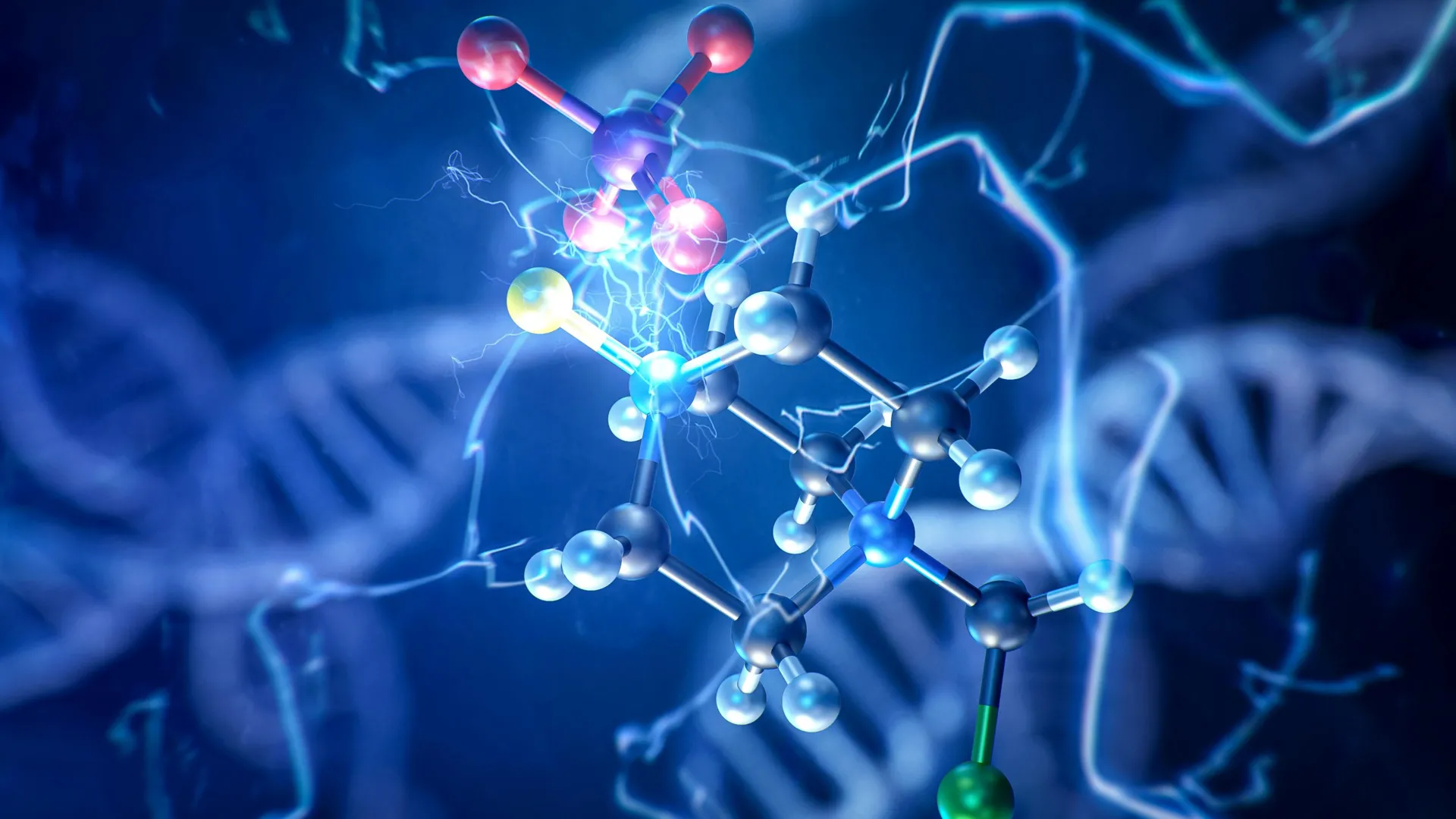
Could the very molecule that defines life hold the key to creating better, more sustainable medicines? Researchers at the National University of Singapore (NUS) have made a groundbreaking revelation revealing that deoxyribonucleic acid (DNA) isn’t just a carrier of genetic information – it’s a powerful tool for directing chemical reactions with unprecedented precision. This innovation promises to streamline drug development, reduce waste, and pave the way for a new era of “green chemistry” in pharmaceutical manufacturing.
The Chirality Challenge in Drug Development
Many medications are chiral molecules. This means they exist as two non-superimposable mirror images, much like your left and right hands. While seemingly identical, these mirror images – known as enantiomers – can have drastically different effects within the body. One enantiomer might deliver the therapeutic benefit we seek, while the other could be inactive, or even harmful.
Think of it like a lock and key. Only one key (enantiomer) will fit the lock (biological target) correctly. Producing drugs with a high degree of enantiopurity – meaning containing almost exclusively the desired mirror image – is a significant hurdle in pharmaceutical development. Traditional methods frequently enough involve complex and wasteful processes to seperate or selectively create the correct enantiomer.This is where DNA steps in with a surprisingly elegant solution.
How DNA Phosphates Act as Molecular Guides
The NUS team, led by Assistant Professor Zhu Ru-Yi from the Department of Chemistry, discovered that specific regions of DNA, especially its phosphate groups, can act as guiding ”hands” for chemical reactions. These phosphate groups carry a negative charge, naturally attracting positively charged molecules – a principle well-established in biological systems where DNA and proteins interact.
The researchers hypothesized that this attraction could be harnessed to control chemical reactions in a laboratory setting. Their experiments confirmed that DNA’s phosphate groups can effectively pull in and align reacting molecules, ensuring they interact in a specific orientation. This process, known as ion pairing, dramatically increases the selectivity of the reaction, favoring the formation of the desired enantiomer.
“Nature never uses DNA phosphates as catalysts, but we have shown that if designed properly, they can act like artificial enzymes,” explains Asst Prof Zhu. This is a pivotal insight, transforming our understanding of DNA’s potential beyond its biological role.
Unlocking the mechanism: PS Scanning and Computational Validation
To understand which phosphate groups were responsible for this guiding effect, the team developed a novel experimental technique called “PS scanning.” This meticulous process involved systematically replacing individual phosphate sites within the DNA molecule with similar substitutes and observing the impact on reaction selectivity.
When a phosphate swap reduced the desired outcome, it pinpointed that specific site as crucial for guiding the reaction. To further validate their findings, the team collaborated with Professor Zhang Xinglong from The Chinese University of Hong Kong. Professor Zhang’s team utilized sophisticated computer simulations, confirming the experimental results and providing a detailed molecular-level understanding of the process.
This rigorous approach, combining experimental innovation with computational modeling, underscores the scientific rigor and credibility of the research. The findings were published in the prestigious journal Nature Catalysis on October 31, 2025. https://www.nature.com/natcatal/
The Promise of Green Chemistry and Sustainable Drug Manufacturing
The implications of this discovery extend far beyond simply improving enantiopurity. the DNA-guided method offers a pathway towards more sustainable and efficient chemical manufacturing, particularly for complex pharmaceuticals.
Traditional chemical processes frequently enough rely on harsh chemicals,generate significant waste,and consume significant energy. By leveraging the inherent properties of DNA, this new approach minimizes waste, reduces the need for environmentally damaging reagents, and potentially lowers production costs. This aligns with the growing global emphasis on ”green chemistry” principles – designing chemical products and processes that reduce or eliminate the use and generation of hazardous substances.
The NUS team is now focused on expanding the request of DNA phosphates to the design and production of a wider range of chiral compounds, accelerating the development of next-generation drugs.
Could this be the future of pharmaceutical manufacturing? The potential is certainly compelling.
Evergreen Insights: the Future of biomolecular catalysis
The use of biomolecules like DNA as catalysts represents a paradigm shift in chemistry. While enzymes have long been utilized for their catalytic properties, harnessing the specific functionalities of DNA – beyond its structural role – opens up entirely new avenues for reaction control and selectivity. This research isn’t just about improving drug production; it’s about fundamentally rethinking how we approach chemical synthesis. Expect to see further exploration into utilizing other components of nucleic acids (like bases and sugars) for catalytic purposes, and the development of increasingly sophisticated DNA-based catalysts tailored to specific chemical transformations. The convergence of biology and chemistry is poised





