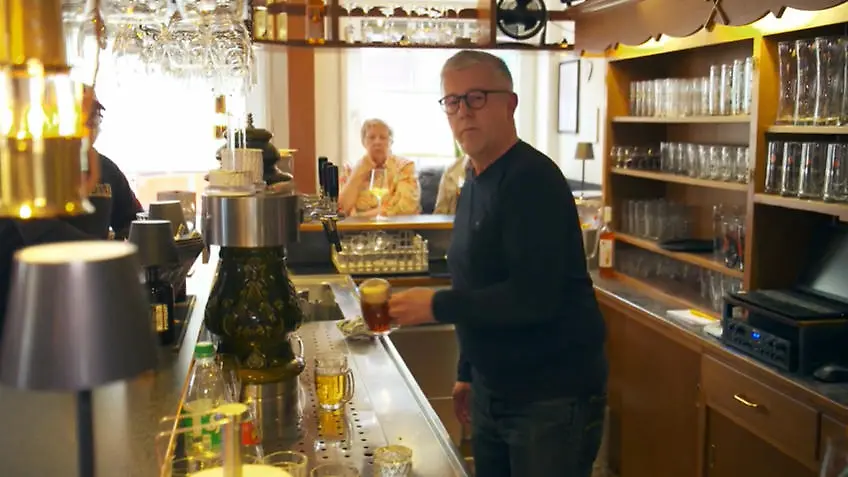
In the industrial heart of Germany’s Ruhrgebiet, the traditional neighborhood pub—the Kneipe—has long served as more than just a place to buy a drink. For generations, these establishments were the social glue of working-class communities, acting as informal town halls where neighbors shared burdens, celebrated wins, and ensured that no one in the block was truly alone. However, as the region shifted away from its coal and steel roots, these hubs began to vanish, a phenomenon known locally as Kneipensterben, or the death of the pubs.
While most see this as a simple shift in consumer habits or economic decline, Dr. Christian Busch sees it as a public health crisis. A general practitioner based in Bottrop, Dr. Busch has taken an unconventional approach to preventative medicine. Rather than relying solely on prescriptions and clinical consultations, he has stepped behind the bar, taking over a local pub to ensure that his community retains a vital space for social connection.
By blending his role as a physician with that of a pub landlord, Dr. Busch is actively combating the decline of neighborhood pubs, recognizing that social isolation is often as detrimental to long-term health as chronic physical illness. His effort represents a grassroots experiment in social prescribing, where the remedy for loneliness is not a pill, but a place to belong.
The Medical Case for the Neighborhood Pub
For Dr. Christian Busch, the decision to save a pub in Bottrop was not a mid-life crisis or a hobby, but a professional observation. In his daily practice as a family doctor, he witnessed the tangible effects of loneliness on his patients. In the Ruhrgebiet, where the disappearance of industrial workplaces removed many traditional social structures, the Kneipe was often the last remaining safety net for the elderly and the marginalized.
Medical literature has increasingly linked social isolation to severe health outcomes. According to the World Health Organization, social connection is a fundamental determinant of health, and loneliness can increase the risk of premature death on a scale comparable to smoking or obesity. For many of Dr. Busch’s patients, the loss of a local meeting spot meant a transition from a vibrant social life to total isolation, which often manifested in the clinic as depression, anxiety, or exacerbated cardiovascular issues.
Dr. Busch recognized that while he could treat a patient’s hypertension in his office, he could not treat the loneliness that contributed to their stress levels if they had nowhere to proceed after they left the clinic. By preserving a local pub, he created a space where patients could maintain the social bonds that are essential for mental resilience.
Fighting ‘Kneipensterben’ in the Ruhrgebiet
The Ruhr area, once the industrial engine of Germany, is currently grappling with the cultural fallout of its economic transformation. The Kneipe was traditionally the center of the Stammtisch culture—a reserved table for regulars who met daily. As these pubs close, the “third place” (the social surroundings separate from the two usual social environments of home and the workplace) disappears.

The decline is driven by several factors: changing drinking habits among younger generations, the rise of digital communication, and the economic pressure of rising rents and energy costs. In Bottrop, as in other cities across the region, the closure of a single pub can abandon a “social void” in a neighborhood, particularly for older residents who lack digital literacy and rely on face-to-face interaction.
Dr. Busch’s intervention is a direct challenge to this trend. By maintaining the pub, he provides a low-threshold environment where people from different social strata can interact. This environment fosters a sense of community cohesion that is often missing in modern urban planning, where residential zones are strictly separated from social zones.
The Intersection of Medicine and Hospitality
Operating a medical practice and a pub simultaneously requires a delicate balance of professional boundaries and community engagement. Dr. Busch does not turn his pub into a clinic. there are no examinations performed over beer. Instead, the pub serves as a space for “informal health promotion.”
In the pub, the power dynamic of the doctor-patient relationship shifts. In the clinic, the doctor is the authority; in the pub, he is a peer and a host. This shift allows for a different kind of trust to develop. When people feel seen and heard in their social environment, they are often more open to health advice and more likely to seek medical facilitate before a condition becomes critical.
This approach mirrors a growing trend in global healthcare known as social prescribing. In this model, healthcare providers refer patients to non-clinical services—such as community gardens, art classes, or social clubs—to improve their overall wellbeing. Dr. Busch has essentially internalized this model by providing the destination himself.
The Impact of Social Isolation on Public Health
To understand why a physician would invest in a pub, This proves necessary to look at the clinical impact of social disconnection. The psychological and physiological effects of loneliness are profound:
- Cognitive Decline: Socially isolated individuals are at a higher risk of developing dementia and experiencing faster cognitive decline in old age.
- Immune Response: Chronic loneliness can trigger systemic inflammation and weaken the immune response, making individuals more susceptible to infectious diseases.
- Mental Health: The absence of a social support system is a primary driver of clinical depression and anxiety disorders.
- Cardiovascular Stress: Loneliness is associated with increased blood pressure and a higher risk of heart disease.
A Blueprint for Community Resilience
Dr. Busch’s efforts in Bottrop highlight a critical gap in modern healthcare: the failure to address the social determinants of health. While high-tech medical innovations are essential, the most effective “medicine” for many is often a sense of belonging and a consistent social circle.

His work suggests that the survival of traditional community spaces is not just a matter of nostalgia or cultural preservation, but a matter of public health. When a neighborhood pub closes, the community loses more than a business; it loses a diagnostic tool for loneliness. In a pub, a regular’s absence is noticed immediately, often alerting friends or neighbors that someone may be ill or in need of help—a form of community monitoring that no digital app can replicate.
For the residents of Bottrop, Dr. Busch provides a rare sanctuary where the social fabric is intentionally mended. His dual role as Arzt und Wirt (Doctor and Landlord) serves as a reminder that health is holistic, encompassing not just the absence of disease, but the presence of connection.
Key Takeaways: The Social Health Connection
- The ‘Third Place’ Effect: Neighborhood pubs act as vital social hubs that prevent isolation, particularly among the elderly in industrial regions.
- Clinical Link: Social isolation is linked to increased risks of cardiovascular disease, dementia, and depression.
- Social Prescribing: Dr. Busch’s approach exemplifies “social prescribing,” where community engagement is used as a tool for health improvement.
- Community Monitoring: Traditional pubs allow for informal health checks, as the absence of a regular is quickly noticed by the community.
As the Ruhrgebiet continues to evolve, the struggle against Kneipensterben remains a struggle for the mental and physical health of its citizens. Dr. Christian Busch’s initiative proves that sometimes the most effective medical intervention happens far away from the examination table, over a shared table in a neighborhood pub.
There are currently no scheduled public hearings or official policy changes regarding the subsidies of community hubs in Bottrop, but local health advocates continue to monitor the impact of social spaces on regional wellbeing. We encourage our readers to share their thoughts on the role of community spaces in health in the comments below.
Keep reading