

For Sharif Abdel Kouddous, the geography of conflict is a familiar map. From the streets of Cairo and the ruins of Syria to the volatile landscapes of Libya and Iraq, the award-winning journalist has spent nearly two decades capturing the friction between power and people. Yet, as he reflects on the current devastation in the Levant, he describes a level of erasure that defies previous experience. The task of documenting war crimes in Gaza and Lebanon has grow more than a professional assignment. It’s a race against the total annihilation of a society’s physical and archival memory.
As an editor for DropSite News, Kouddous has navigated the precarious intersection of independent reporting and high-stakes geopolitics. His work focuses on the gap between the sanitized narratives often presented by legacy media institutions and the visceral, unfiltered reality experienced by those on the ground. In an era where conflict is livestreamed via smartphones, the struggle is no longer just about getting the story out, but about ensuring that the evidence of systemic violence is preserved in a way that can eventually meet the standards of international legal accountability.
The scale of the current crisis is unfathomable. Since the escalation of hostilities on October 7, 2023, the Gaza Strip has seen a level of urban destruction that human rights organizations describe as unprecedented in the modern era. The challenge for journalists like Kouddous is to translate these macro-statistics—thousands of deaths and the collapse of entire city blocks—into human stories that the global public can comprehend and feel.
The Digital Witness: A Livestreamed Crisis
Kouddous argues that the current conflict in Gaza represents a pivotal moment in the history of journalism. For the first time, a potential genocide is being documented in real-time by the victims themselves. Through the heroic, often fatal, efforts of Palestinian journalists and residents, the world has seen a “livestreamed genocide” that bypasses traditional editorial filters. This shift has exposed a profound disconnect between corporate media narratives and the ocular proof provided by social media feeds.
The reliance on local journalists is not a choice, but a necessity. For much of the conflict, international media outlets have been largely barred from entering Gaza independently, forcing them to rely on Palestinian stringers who are themselves displaced, starving, and grieving. This creates a symbiotic but dangerous relationship where the local journalist acts as both the primary witness and the only conduit for information to reach the outside world.
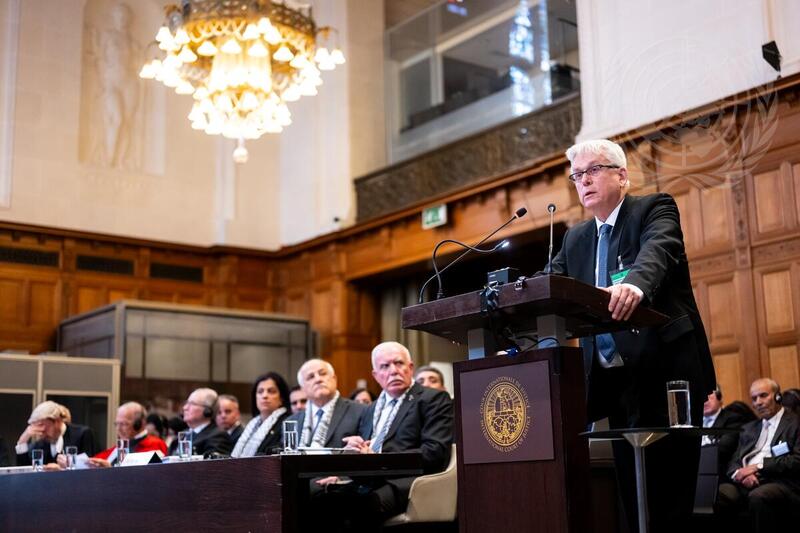
This documentation is critical because, as Kouddous notes, the definition of genocide involves not only the act of killing but the creation of conditions designed to bring about the physical destruction of a group. The systematic bombing of bakeries, water desalination plants, and every single hospital in the strip serves as a documented pattern of erasing the capacity for life to exist. These details are now central to the case brought by South Africa against Israel at the International Court of Justice (ICJ), which has issued provisional measures to prevent genocidal acts.
Microcosms of Devastation: The Human Cost
To move beyond the numbness of casualty counts, Kouddous utilizes long-form documentary work to create “microcosms” of the larger war. By following specific families, the abstract nature of “collateral damage” is replaced by the concrete reality of loss. One of the most harrowing examples is the case of Hind Rajab, a six-year-old girl who became a global symbol of the conflict’s cruelty. Trapped in a car with her dead relatives, Hind spent hours on the phone with the Palestine Red Crescent Society, pleading for rescue before she too was killed.
Such stories highlight the arbitrary nature of the violence. Kouddous describes accounts of “summary executions” where ground troops separate men and boys from women and girls, executing the former at point-blank range. These are not the results of stray missiles or mistaken targets, but what he describes as a deliberate policy of terror designed to break the will of the population.
The devastation extends to the very infrastructure of survival. The imposition of a starvation policy—where aid is throttled and distribution centers are targeted—has turned the basic require for food into a death trap. According to reports from the United Nations, thousands of children in northern Gaza are facing famine, a condition that Kouddous argues is a weapon of war.
The Press Vest as a Bullseye
Perhaps the most alarming trend for a journalist is the evolving status of the press vest. Traditionally, the blue “PRESS” insignia served as a shield, a signal of neutrality and protection under international law. In Gaza, Kouddous asserts that the vest has been transformed into a “bullseye.” The targeted killing of journalists is a strategic move to blind the world to the realities of the ground campaign.
The numbers are staggering. The Committee to Protect Journalists (CPJ) has documented the highest number of journalist fatalities in a single conflict year since they began tracking data in 1992. The loss of colleagues like Hossem Shabet, whom Kouddous spoke with just hours before his assassination, adds a layer of personal grief to the professional duty. This environment of risk creates a “chilling effect,” where the only remaining witnesses are those who have nothing left to lose.
This targeting is not limited to the press. The systematic destruction of universities, libraries, and cultural archives suggests an attempt to erase the Palestinian intellectual and historical record. For Kouddous, documenting these losses is an act of resistance. If the archives are destroyed and the witnesses killed, the history of the conflict will be written solely by the victors.
A Sea Change in Global Perception
Despite the bleakness of the reporting, Kouddous observes a significant shift in the global political landscape. He recalls the era of the second Intifada (2000–2005), when supporting Palestinian rights was often viewed as a fringe or “anti-progressive” position in Western capitals. Today, that dynamic has flipped. Palestine has become a definitional issue for a new generation of activists, particularly in the United States and Europe.
This shift is visible in the fracturing of traditional political alliances. From university encampments to general strikes in Italy over weapons shipments, the movement has evolved from a demand for a “two-state solution” to a broader critique of Zionism as a settler-colonial ideology. Kouddous argues that the “metropole” of the conflict is no longer just Tel Aviv or Gaza City, but Washington, D.C., where the military and financial backing of the United States sustains the operation.
The emergence of groups like Jewish Voice for Peace and the “Not In Our Name” campaign demonstrates that the opposition to the war is not monolithic. By framing the conflict through the lens of apartheid and international law, activists are successfully challenging the narrative that the violence is a simple matter of “self-defense.”
The Psychological Toll of the Witness
Reporting on such extreme violence takes a profound toll on the journalist. Kouddous describes a constant oscillation between rage and despair. The paradox of his position is that while he is not always on the ground, the daily communication with those who are—the hunger, the displacement, the screams of children—creates a secondary trauma. There are moments, he admits, where he questions the utility of journalism in the face of such overwhelming power.

What keeps him going is the demand from the victims themselves. The people of Gaza continue to call on the world to broadcast their voices, not for the sake of the journalists, but for the sake of the record. This archival impulse is what transforms journalism from mere reporting into a political act. By documenting the “unfathomable,” journalists provide the evidence necessary for future truth and reconciliation commissions or war crimes tribunals.
Kouddous views the current moment as a crossroads: a choice between the total annihilation of a people or a fundamental reordering of the global power structure. He believes that while the physical destruction is nearly complete, the moral authority of the settler-colonial project has been shattered beyond repair.
Key Takeaways on the Documentation of the Conflict
- The Role of Local Press: Palestinian journalists are the primary witnesses, often operating without international protection or access to basic necessities.
- Systemic Erasure: Documentation shows a pattern of targeting “life essentials,” including hospitals, bakeries, and water infrastructure, to make Gaza uninhabitable.
- Targeting of Journalists: The conflict has seen an unprecedented number of journalist deaths, signaling a deliberate attempt to suppress on-the-ground reporting.
- Global Political Shift: There is a growing international movement that views the conflict through the lens of settler-colonialism rather than a territorial dispute.
- The Importance of Archives: Independent reporting serves as a critical legal record for future international prosecutions of war crimes.
The world now awaits the final rulings and further orders from the International Court of Justice, which will determine whether the international community can move beyond condemnation toward concrete action to stop the violence. The next critical checkpoint will be the ICJ’s ongoing deliberations on the merits of the genocide case, which could lead to binding mandates for the cessation of hostilities.
World Today Journal encourages readers to share this analysis and join the conversation in the comments below. How should the international community balance the need for journalistic access with the safety of those reporting from war zones?