
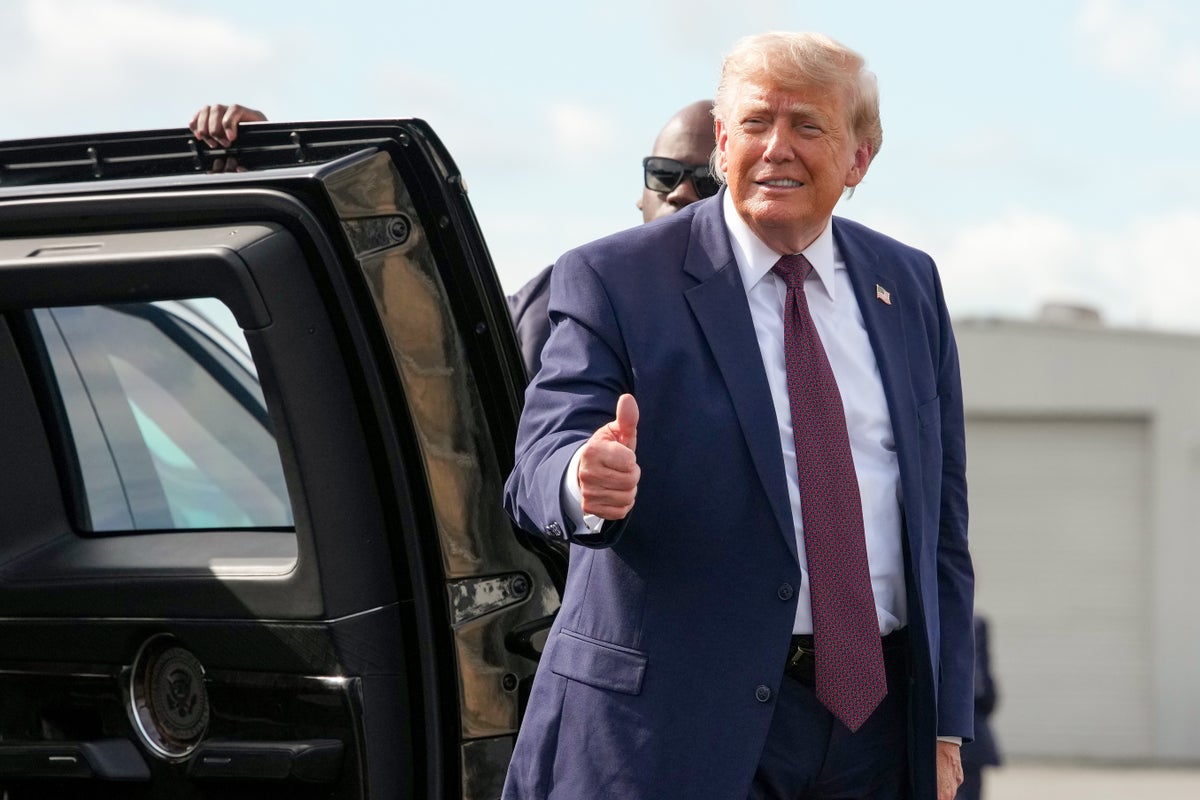
Former President Donald Trump publicly claimed credit for the victory of a candidate in a recent South Carolina primary, despite having issued endorsements for both contenders in the same race. The ambiguity of his messaging, delivered via his Truth Social platform, highlights the complexities of political endorsements in competitive Republican contests.
In the lead-up to the South Carolina primary election, Trump posted a message on his Truth Social account declaring, “With either one you can’t go wrong,” while explicitly urging his followers to “Vote for Pam or Alan.” The post referenced Pam Herren and Alan Mitchell, who were vying for the same seat in the Oconee County Board of Education. Following the election results, Trump characterized the outcome as a successful validation of his influence, despite the dual-endorsement strategy that effectively neutralized his ability to pick a single winner.
The Mechanics of the Dual Endorsement
The strategy of endorsing multiple candidates in a single race is an unconventional approach in American electoral politics. According to Reuters reporting on political campaign tactics, such moves are often designed to ensure that the eventual winner is someone who has been vetted or at least acknowledged by party leadership, thereby minimizing the risk of a political loss for the endorser. By backing both Pam Herren and Alan Mitchell, Trump ensured that regardless of which candidate secured the majority of votes, he could claim a victory for his preferred political brand.

In the specific context of the Oconee County race, the candidates represented different factions of local voter interest. Public records maintained by the South Carolina State Election Commission confirm that school board races are non-partisan, yet they frequently draw significant interest from national political figures looking to influence local education policy. The dual endorsement served as a hedge, allowing the former president to remain aligned with the local party base without alienating supporters of either individual candidate.
Political Strategy and Voter Perception
Analysts suggest that the use of dual endorsements serves as a tool for maintaining perceived influence. When a political figure endorses two individuals in the same contest, the statistical probability of “backing the winner” increases to 100%. This maneuver, while mathematically sound for the endorser’s record, often creates confusion among voters who look to high-profile figures for clear guidance on candidate selection.

The Associated Press has previously noted that in various local and state-level races across the United States, candidates often vie for the “Trump endorsement” as a primary marker of legitimacy. When a candidate receives such an endorsement, it can lead to a measurable surge in campaign donations and volunteer engagement. By splitting his support, Trump navigated the competitive landscape of the South Carolina primary while insulating himself from the potential optics of a defeat.
The Impact on Local Governance
The influence of national figures in local school board elections has become a significant trend in the post-2020 political environment. According to the National Public Radio coverage of school board elections, these contests have shifted from community-focused management to ideological battlegrounds. In Oconee County, the involvement of a former president underscores the nationalization of local administrative roles.
For voters, the challenge remains in discerning between local policy priorities—such as curriculum standards, budget allocations, and infrastructure maintenance—and the broader political narratives pushed by national actors. The official results of the Oconee County election are cataloged and available for public review through the Oconee County Board of Voter Registration and Elections. These records provide the definitive count of how local constituents ultimately decided the race, independent of the endorsements received by the candidates.
What Happens Next
The next major checkpoint for local electoral oversight in South Carolina involves the certification of subsequent special election cycles and the preparation for the next general election cycle. Voters interested in tracking how these endorsements translate into policy decisions are encouraged to attend upcoming board meetings, which are open to the public and documented via official minutes on the county website. For those looking to participate in future electoral processes, registration deadlines and candidate filing requirements are updated regularly by the state commission.
The debate over the role of national endorsements in local races is expected to continue as the next election cycle approaches. We invite readers to share their perspectives on the impact of national political figures in local governance in the comments section below.