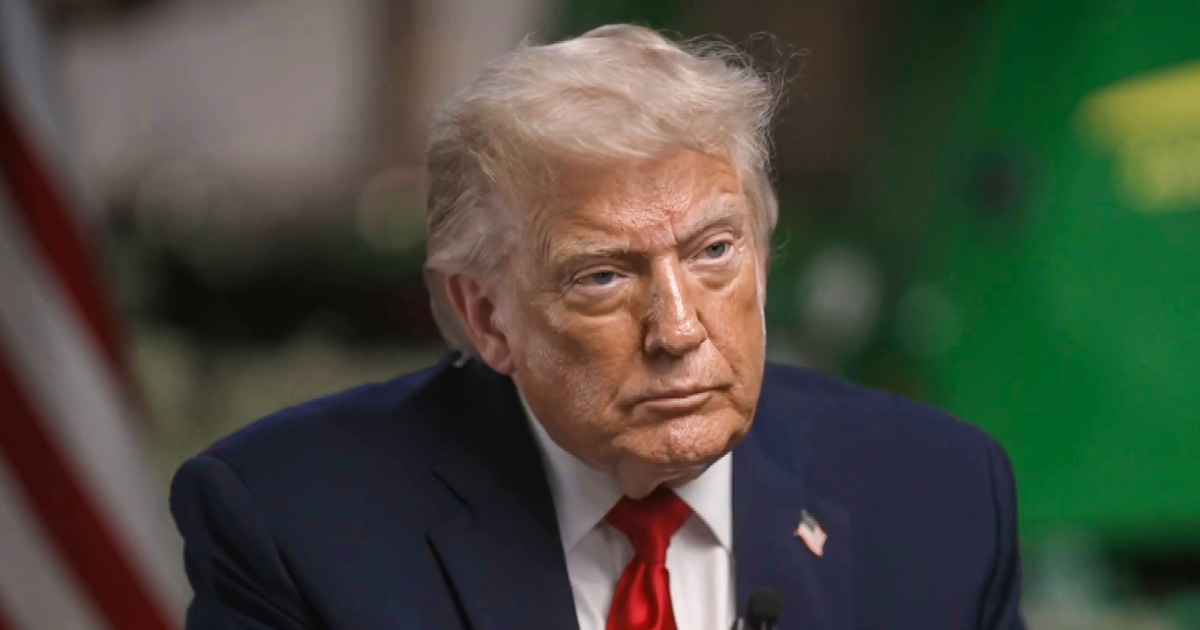
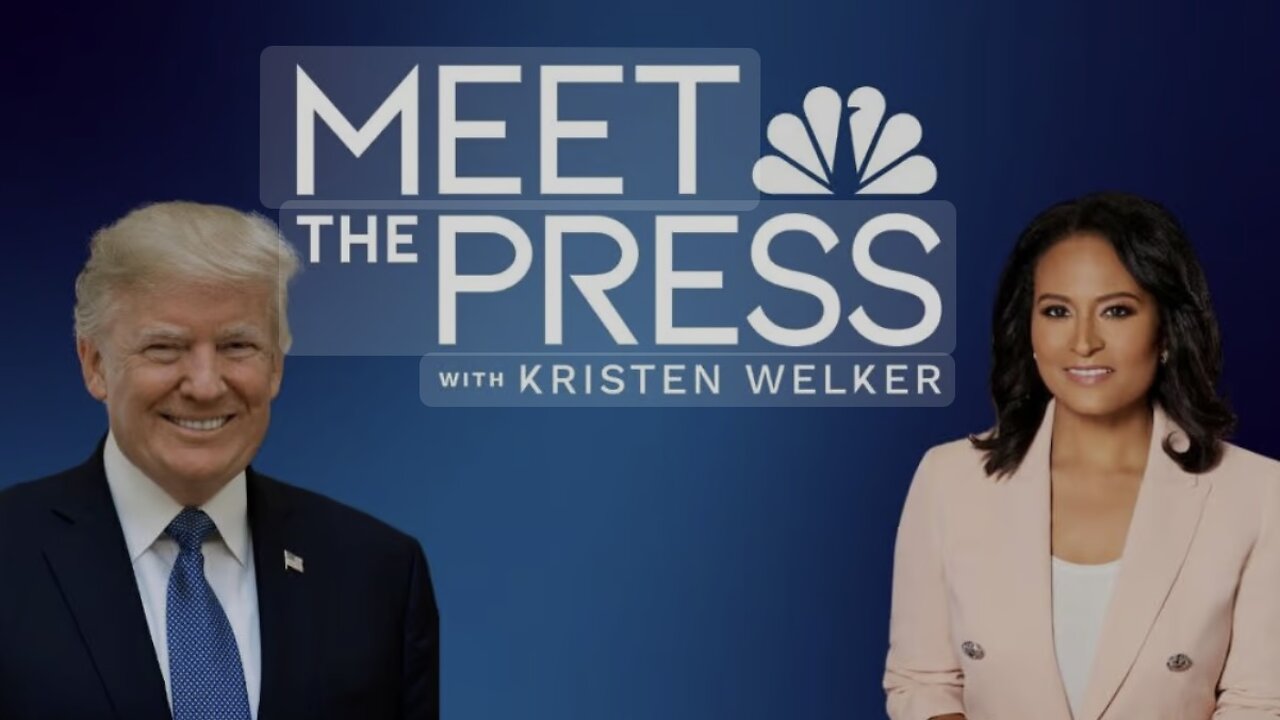
President Donald Trump’s September 2023 interview on NBC News’ Meet the Press concluded abruptly following a series of pointed exchanges with host Kristen Welker. The encounter, which took place at the former president’s golf club in Bedminster, New Jersey, drew significant public attention after the interview was cut short amid clashes over fact-checking and the overall tone of the conversation. According to NBC News, the discussion covered a wide range of topics, including the 2020 election, the January 6 Capitol attack, and ongoing legal challenges facing the former president. The full transcript and video of the interview are available via the official NBC News report.
The interview marked Kristen Welker’s debut as the moderator of Meet the Press. Throughout the session, Welker frequently challenged the former president’s statements regarding the integrity of the 2020 election and his actions surrounding the transfer of power. As the interview progressed, the tension between the two became increasingly apparent, culminating in the former president’s decision to end the segment. While reports circulated regarding the circumstances of the departure, official coverage from the network documented the exchange as part of a broader, contentious sit-down interview. Background on the moderator’s transition to the program can be found in the network’s official programming announcements.
The Dynamics of the Interview
The interaction highlights the evolving challenges of conducting high-profile political interviews in an era of heightened polarization. By directly addressing claims regarding the 2020 election results, Welker utilized the network’s editorial prerogative to provide real-time context for the audience. The former president, in turn, characterized the questioning as unfair, a sentiment he has expressed in numerous media appearances throughout his political career. For viewers, the event serves as a case study in the friction between political figures and traditional media gatekeepers.

The conversation touched upon several sensitive policy and legal areas, including the federal investigations into the handling of classified documents and efforts to overturn election results. As noted in the indictment filed by the Department of Justice, these legal matters involve complex constitutional questions that remain central to the ongoing public discourse surrounding the 45th president’s legacy. The interview underscored the difficulty of reconciling divergent narratives regarding the state of American democracy during a single broadcast segment.
Fact-Checking and Media Responsibility
The role of the interviewer in modern political journalism often centers on the tension between allowing a subject to speak freely and the responsibility to correct factual inaccuracies. In this instance, the use of fact-checking became a focal point of the narrative, with supporters of the former president arguing that the questioning was overly adversarial, while media critics praised the network for maintaining rigorous standards. This debate is not new; it reflects a long-standing trend in how major networks approach interviews with high-ranking officials.
According to data from the Pew Research Center, public trust in news organizations remains fractured, with audiences increasingly self-selecting into media ecosystems that mirror their existing political views. This environment complicates the task for moderators who attempt to bridge the gap between competing factual realities. The Meet the Press interview serves as a clear illustration of how these pressures manifest during live broadcasts.
Contextualizing the Political Landscape
To understand why this interview drew such intense interest, one must consider the broader context of the 2024 presidential campaign cycle. During the period leading up to the election, the former president maintained a strategy of bypassing traditional media outlets in favor of alternative platforms, podcasts, and direct communication with his base. However, appearances on long-standing programs like Meet the Press remain significant for their reach and the institutional weight they carry in the Washington political establishment.
Official records from the Federal Election Commission show that campaign media strategies in recent years have increasingly prioritized direct voter engagement to mitigate the impact of traditional media scrutiny. This shift has altered the traditional “check and balance” relationship between the press and the executive branch. As the political calendar moves toward the next major electoral milestones, the precedent set by such interviews will likely continue to influence how candidates interact with journalists and how voters consume campaign information.
The next major checkpoint for public discourse on these issues will be the upcoming federal court proceedings related to the various indictments currently facing the former president. Updates on these legal schedules are maintained through the United States Courts official portal, which provides public access to case dockets and hearing calendars. We encourage readers to share their thoughts on the role of the press in our comments section below.
Worth a look
- Los Reyes Cartel Leader Arrested in Michoacán Amid Blockades and Violence
- Eintracht Frankfurt Talk: YouTube-Diskussion über SGE-Siege und Auswärtsfahrten
- Israel’s Foreign Ministry Strategy: Interview With Lior Haiat (world-today-news.com)
- BP Q2 Profit Hits $5.7 Billion Amid Trump Criticism of Big Oil Windfalls (time.news)