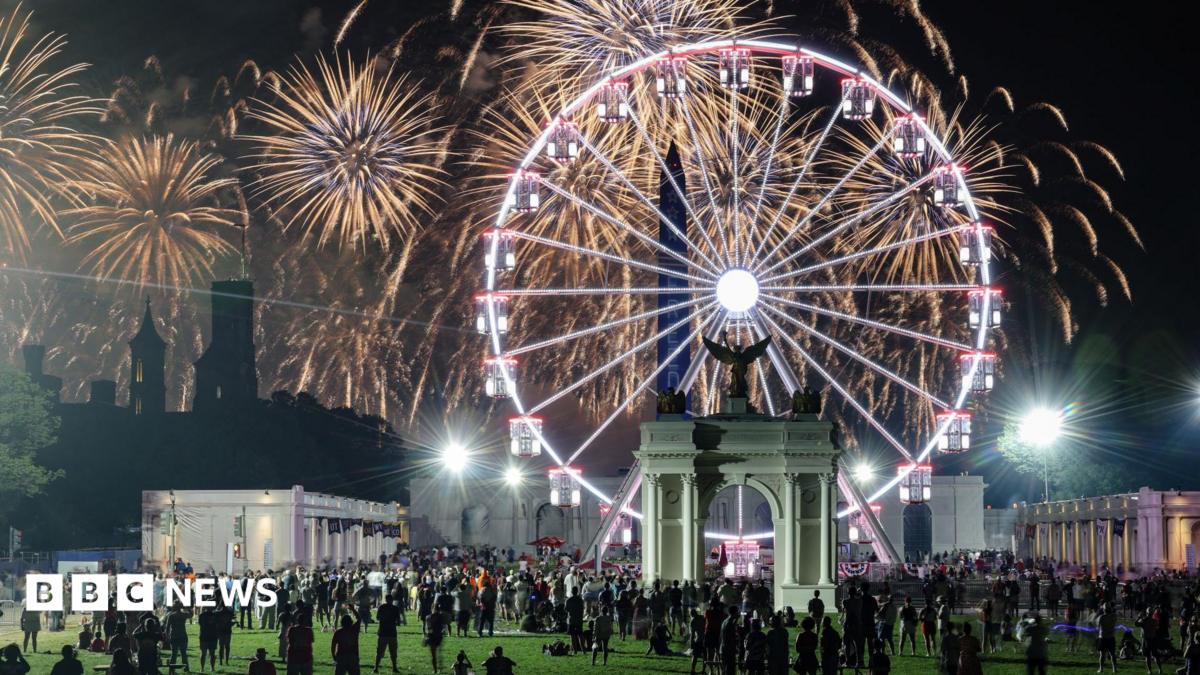
The United States observed its 250th anniversary of the signing of the Declaration of Independence with a series of nationwide celebrations, including aerial displays, fireworks, and public addresses. While the milestone triggered large-scale commemorations, festivities in several regions were disrupted by severe weather patterns, leading to the cancellation of outdoor events in parts of the Midwest and the Northeast.
The 250th anniversary, often referred to as the Semiquincentennial, served as a focal point for both civic pride and political discourse. In Washington, D.C., and across various state capitals, local officials balanced historical tributes with contemporary political messaging. According to National Park Service records, the day was marked by the traditional recognition of military veterans and the reading of founding documents, alongside presidential remarks that touched upon the nation’s current policy trajectory.
National Commemorations and Presidential Remarks
During his address, President Donald Trump emphasized the themes of American exceptionalism and historical continuity. Speaking to a crowd of supporters and veterans, the President connected the 1776 founding to his current administrative agenda, framing his policy goals as a preservation of the nation’s core values. As reported by the White House, the speech included specific mentions of strengthening national sovereignty and honoring the contributions of those who served in the armed forces throughout the nation’s history.

The President’s remarks were positioned as a bridge between the American Revolutionary era and modern political challenges. By highlighting the sacrifices of veterans, the administration sought to cultivate a narrative of unity, even as political observers noted the inclusion of partisan policy objectives within the commemorative framework. This approach reflects a broader trend of utilizing significant national anniversaries to reinforce executive priorities, a practice documented by the American Presidency Project.
Impact of Extreme Weather on Festivities
While the national capital proceeded with its scheduled events, the 250th birthday was impacted by a series of intense weather systems. The National Weather Service issued severe thunderstorm warnings for large swaths of the country, citing the risk of high winds, lightning, and localized flooding. These conditions forced municipal authorities in cities such as Chicago and New York to postpone or cancel fireworks displays and outdoor concerts to ensure public safety.
The logistical challenges posed by the weather highlighted the difficulty of planning large-scale national events in an era of increasing climate volatility. In regions affected by the storms, local emergency management agencies reported that the decision to cancel was made in consultation with public safety officials, prioritizing the prevention of injuries during high-density public gatherings. According to data from the Federal Emergency Management Agency, the cost of managing event security and weather-related disruptions for such milestones often falls on local municipalities, requiring careful coordination with federal partners.
Historical Context and Future Milestones
The 250th anniversary follows a long tradition of commemorative events in the United States, dating back to the Centennial in 1876. Historians note that each major anniversary has served as a mirror for the nation’s state of affairs at the time. For example, the Bicentennial in 1976 occurred shortly after the conclusion of the Vietnam War and the Watergate scandal, leading to a focus on national healing and reconciliation. In contrast, the current anniversary has been characterized by a more polarized political environment, as analyzed by researchers at the Smithsonian Institution.
Looking ahead, the U.S. government has established the U.S. Semiquincentennial Commission to oversee the multi-year planning process leading up to the official July 4, 2026, date. The commission is tasked with coordinating efforts across all 50 states, ensuring that the legacy of the founding era is recognized while addressing the evolving demographics and values of the modern American public. The next major update from the commission is expected following the upcoming quarterly budget hearing in Congress.
Readers are encouraged to monitor local municipal websites for updates on rescheduled celebrations and to share their own experiences of this historic milestone in the comments section below.