The Enduring Echoes of Colonialism: Why Brian Friel’s Translations Resonates Across Continents
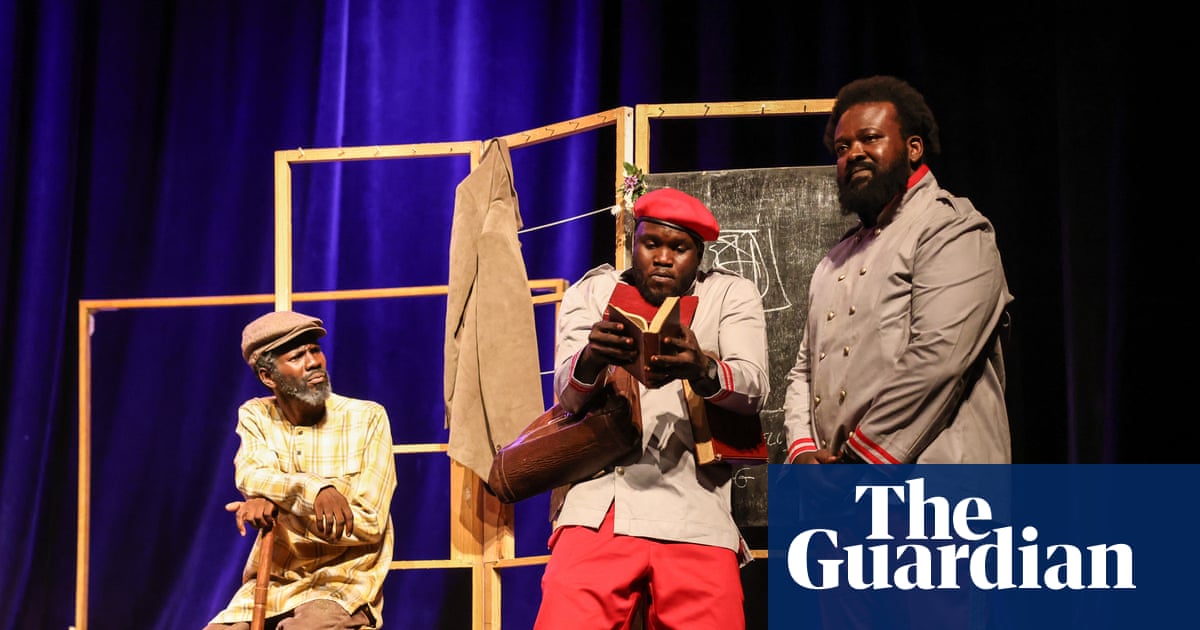
The power of theater lies in its ability too illuminate universal truths, and Brian Friel’s Translations is a prime example. This poignant play, recently staged with striking resonance in Senegal, delves into the complexities of cultural identity, colonial legacy, and the very act of naming the world around us. But why does a story rooted in 19th-century ireland strike such a chord in West Africa? Let’s explore the enduring relevance of Translations and its surprising connections.
A Story of Shifting sands
At its heart, Translations portrays a clash of cultures in rural Ireland. British soldiers are tasked with mapping the Irish countryside, concurrently anglicizing Gaelic place names.this seemingly bureaucratic act becomes a symbol of cultural erasure, forcing characters to confront questions of loyalty, language, and belonging.
The play beautifully captures the tangled emotions that arise in the wake of colonial rule. You see this embodied in the relationship between Yolland, a British soldier drawn to Ireland, and Máire, an Irish woman yearning for prospect through English fluency. Their connection highlights the nuanced and often contradictory feelings that emerge when cultures collide.
Senegal’s Parallel Story
Interestingly, the production in Senegal wasn’t simply a geographical relocation of the play. It tapped into a deeply felt ancient parallel. Aminata Diol, the actress portraying Máire, drew a direct line to the signares of Saint-Louis, Senegal.
These were women of mixed African and European descent who navigated a similar landscape of colonial relationships and cultural negotiation. They, like Máire, existed in a space between worlds, grappling with the allure of a new language and the potential for a different life.
Modernity Versus Tradition: A Universal Struggle
The tension between embracing modernity and preserving tradition is a central theme in Translations. Manus, a character fiercely committed to Gaelic, refuses to speak English, representing a resistance to cultural assimilation. Conversely, young Máire views English as a gateway to a future in america.
This dynamic isn’t unique to Ireland or Senegal. You find it echoed in countless communities worldwide, where individuals and societies wrestle with the forces of globalization and the desire to maintain their heritage. It’s a struggle that resonates deeply with anyone who has ever questioned their place in a changing world.
Beyond Black and White
historians like Breandán Mac Suibhne emphasize that Translations avoids simplistic narratives. It acknowledges the complexities of colonial situations, recognizing that both choice and coercion play a role. This nuance is crucial.
Colonialism wasn’t simply a story of oppressors and oppressed. It involved intricate power dynamics, individual agency, and unexpected alliances. The play doesn’t shy away from these ambiguities, offering a more honest and compelling portrayal of history.
A Question of Distance
The play’s staging in Senegal prompts a powerful question: how far apart are west Africa and the west of Ireland, really? The answer, it seems, is not very far at all. Both regions share a history shaped by colonialism, linguistic shifts, and the enduring struggle to define cultural identity.
Translations serves as a potent reminder that these experiences,though geographically distant,are profoundly interconnected. It’s a testament to the play’s enduring power that it can spark such meaningful dialog across continents.
Ultimately, Translations isn’t just a play about Ireland. It’s a play about us – about the human experience of navigating a world shaped by history, language, and the search for belonging. And that’s a story that will continue to resonate for generations to come.