
The geopolitical tension surrounding the Strait of Hormuz has escalated into a global energy crisis, leaving industrialized nations grappling with volatile fuel prices and unstable supply chains. While the conflict is centered in the Middle East, the ripple effects are being felt acutely in East Asia, where energy security is inextricably linked to economic stability.
Tong Zi-xian, the Chairman of Pegatron Corporation and a co-founder of ASUS, argues that Taiwan must not “waste” this energy crisis. Instead, he contends that the current instability should serve as a critical catalyst for the government to re-evaluate the integrity and appropriateness of its national energy policies.
The crisis is compounded by a volatile diplomatic environment. According to reports, U.S. President Donald Trump has continued to issue stern warnings to Iran, while Iran has responded with a hardline stance, intentionally expanding the scope of the crisis. Though recent reports indicate a temporary two-week ceasefire between the U.S. And Iran, the underlying energy risks remain unresolved.
For Taiwan, the crisis highlights a precarious dependency on natural gas. Tong warns that while Taiwan is geographically distant from the actual combat zones, the energy crisis is unavoidable, and the island faces a more severe power challenge than its neighbors, Japan and South Korea, due to specific policy decisions made over the last decade.
The Natural Gas Dependency Trap
A central point of Tong’s critique is Taiwan’s “ambiguous” energy policy over the past ten years, which attempted to simultaneously pursue nuclear phase-outs and carbon reduction. This strategy led to a massive increase in the reliance on liquefied natural gas (LNG) for power generation. Tong notes that the shift toward natural gas was not a successful “energy transition” but rather a result of a power gap created by the decision to abandon nuclear energy in a region where expanding green energy is difficult due to high population density and limited land.
The statistical shift in energy composition is stark. According to Tong, the proportion of natural gas used for power generation in Taiwan rose from 30% in 2015 to 50% by 2026 [1]. This high level of dependency makes Taiwan’s power grid significantly more vulnerable to supply disruptions and price shocks compared to neighboring countries.
Tong asserts that the experiences of the last four years—marked by the Russia-Ukraine war and the conflicts involving Iran—have proven that natural gas is the energy option with the lowest resilience, the most unstable supply, and the highest cost. He argues that this reliance offsets Taiwan’s competitive advantages and threatens the stability of its electricity supply, which is vital for its highly industrialized economy.
Economic Prosperity and the Need for Nuclear Power
Tong Zi-xian has emphasized that economic prosperity without peace and stability is like a “sandcastle,” easily washed away by external shocks. To fortify the nation’s energy resilience, he has repeatedly urged the government to reconsider the reopening of nuclear power plants, specifically mentioning the potential for restarting Nuclear Plants 2 and 3 [2].
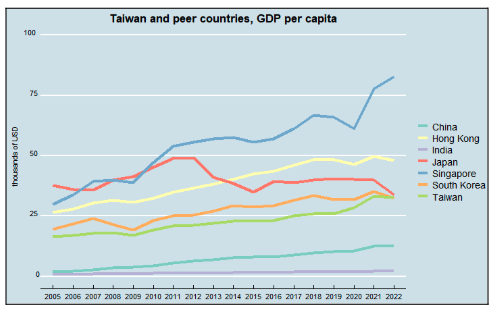
The urgency of this shift is underscored by the shared challenges faced by Northeast Asian economies. Tong identifies three primary reasons why Taiwan, South Korea, and Japan are particularly vulnerable during global energy crises:
- High Industrialization: All three nations are advanced, highly industrialized economies where both civilian life and industrial production require massive, uninterrupted supplies of electricity.
- Geographic Constraints: The physical limitations of these islands or peninsulas develop the rapid scaling of renewable energy sources challenging.
- Import Reliance: A heavy dependence on imported energy sources makes them susceptible to disruptions in critical maritime corridors like the Strait of Hormuz.
The Strategic Imperative for Energy Reform
From a strategic perspective, Tong argues against an “AQ attitude”—a reference to a psychological defense mechanism of pretending a loss is a victory—where officials might dismiss the crisis by claiming that “the whole world is facing the same problem.” He believes that the same crisis affecting everyone is precisely why Taiwan must act decisively to fix its specific vulnerabilities rather than hiding behind global trends.
The current situation serves as a stress test for the “energy transition” slogans of the past decade. Tong suggests that the current instability proves that the transition was merely a slogan and not a viable policy. By relying on the most volatile energy source (natural gas) to fill the gap left by nuclear power, Taiwan has increased its risk profile during a period of heightened geopolitical instability.
Key Takeaways on Taiwan’s Energy Crisis
- Increased Vulnerability: Natural gas usage for power generation rose from 30% in 2015 to 50% in 2026, increasing exposure to price shocks.
- Resilience Deficit: Natural gas is identified as having the lowest resilience and most unstable supply among energy options.
- Proposed Solution: Re-evaluating the nuclear phase-out policy and considering the restart of Nuclear Plants 2 and 3 to ensure power stability.
- Regional Context: Taiwan faces a potentially more severe power challenge than Japan and South Korea due to its specific energy mix.
As the international community continues to monitor the Strait of Hormuz and the diplomatic maneuvering between the U.S. And Iran, the focus for Taiwan remains on internal policy adjustments. The immediate checkpoint for observers will be the expiration of the reported two-week ceasefire between the U.S. And Iran, which will determine if the immediate threat to shipping lanes subsides or if the energy crisis deepens.
World Today Journal encourages readers to share this analysis and join the discussion on global energy security in the comments section below.